Can Air Conditioning Help During Wildfire Smoke?
7 min read
1217 words
When wildfire smoke blankets your community, creating a hazy sky and filling the air with fine particles, your first instinct is likely to shut everything down and stay indoors. But as you close your windows and doors, an important question comes up: Can air conditioning help during wildfire smoke, or could it make indoor air quality worse?
The short answer is that your air conditioner can be a helpful tool during wildfire smoke events, but only when it is used correctly. While an AC system is not a replacement for a dedicated air purifier, it can play an important role in keeping your home comfortable and reducing exposure to outdoor smoke.
Understanding how your air conditioning system works, what type of filter you use, and how outdoor air enters your home can help you make safer choices when wildfire smoke affects your area.
Can Air Conditioning Help During Wildfire Smoke?
An air conditioner’s main purpose is to cool your home, not to clean the air. However, a properly maintained HVAC system can contribute to better indoor air quality during wildfire smoke events.
It Helps Maintain a Comfortable Indoor Temperature
Wildfires often occur during hot summer weather, making it unsafe to simply turn off your cooling system and wait out the smoke. Running your AC allows you to keep windows and doors closed while maintaining a comfortable indoor temperature.
Keeping your home cool is especially important for older adults, young children, people with certain health conditions, and pets.
It Can Filter Some Airborne Particles
When air passes through your HVAC filter, some particles can be captured. A higher-quality filter can help remove more airborne pollutants compared with basic filters.
For better filtration during wildfire smoke events, use a compatible high-efficiency HVAC filter, run your fan to circulate indoor air, and replace dirty filters regularly.
It Does Not Automatically Remove Wildfire Smoke
A standard air conditioner is not designed to completely remove wildfire smoke. Many basic AC filters are made to capture larger particles such as dust and household debris, not the extremely small PM2.5 particles found in wildfire smoke.
PM2.5 refers to fine particulate matter that is small enough to travel deep into the respiratory system. Because these particles are so tiny, additional filtration may be needed.
How Wildfire Smoke Gets Into Your Home
Even when you stay indoors, wildfire smoke can enter your home through small openings and ventilation systems.
Common entry points include open windows and doors, gaps around windows and frames, fireplaces and chimneys, bathroom and kitchen exhaust fans, HVAC systems with outdoor air intakes, and poorly sealed ductwork.
Those tiny PM2.5 particles can affect indoor air quality and may worsen symptoms for people who are sensitive to smoke exposure.
How to Optimize Your HVAC System During Wildfire Smoke
For Homes With Central Air Conditioning
Use the Recirculate Setting
During wildfire smoke events, set your HVAC system to recirculate indoor air whenever possible.
This prevents your system from constantly pulling smoky outdoor air into your home.
Avoid settings that introduce fresh outdoor air unless recommended by your HVAC professional.
Upgrade Your HVAC Filter
Your HVAC filter is one of the most important parts of your wildfire smoke protection plan.
Basic fiberglass filters provide limited protection against smoke particles. A higher-efficiency filter, such as a MERV 13 filter, can capture much smaller particles when your HVAC system is designed to handle it.
MERV ratings measure how effectively a filter captures airborne particles.
Before upgrading your filter, check your HVAC manufacturer’s recommendations, make sure your system can handle increased airflow resistance, and replace filters according to the manufacturer’s schedule.
For Other Types of Air Conditioners
Window Air Conditioners
Window AC units vary in how they handle outdoor air.
Close any fresh-air or vent settings, make sure the unit is sealed tightly around the window, use weather stripping to reduce air leaks, and consider adding a portable HEPA air purifier.
Portable Air Conditioners
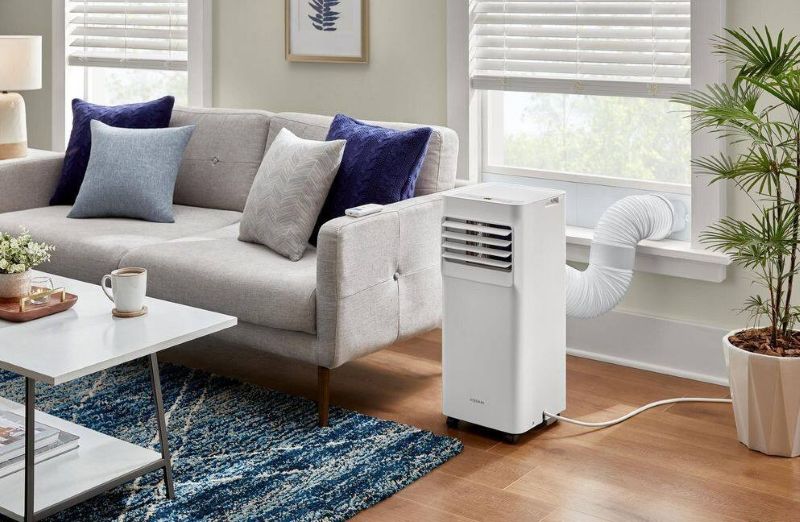
Portable AC units can be more complicated because they often require an exhaust hose.
Depending on the model, they may recirculate indoor air, exhaust warm air outdoors, or allow some outdoor air exchange.
Check your manufacturer’s instructions and keep windows closed as much as possible. Seal gaps around the exhaust hose installation if needed.
Should You Turn Off Your Air Conditioner During Wildfire Smoke?
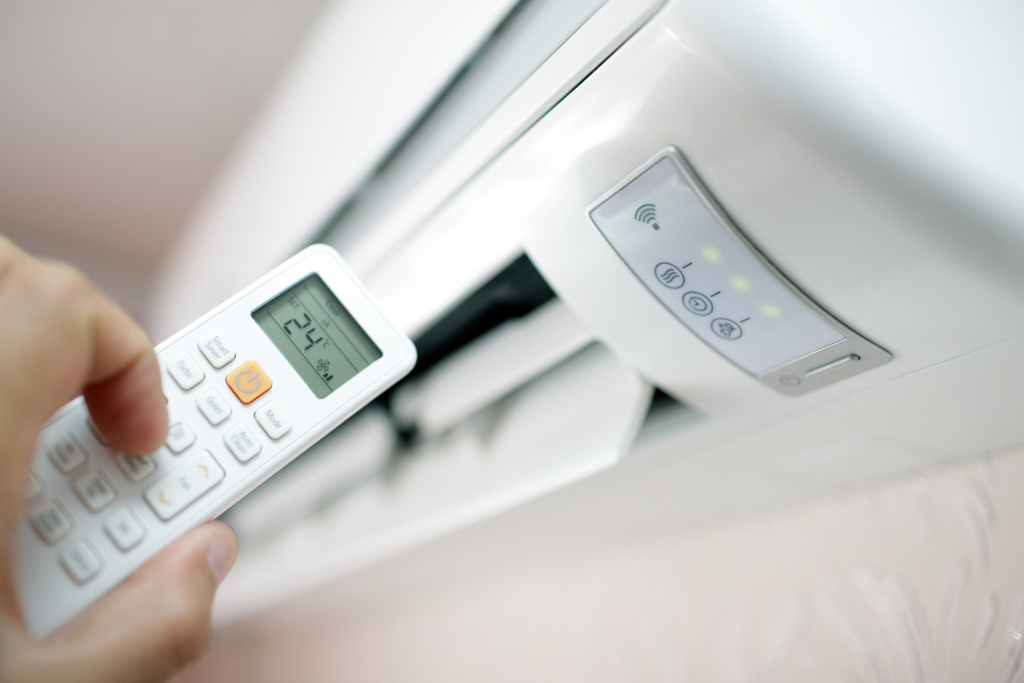
Not necessarily.
Turning off your AC during hot weather can lead to uncomfortable indoor temperatures and may create additional health concerns.
You can usually continue using your AC during wildfire smoke if your system can recirculate indoor air, you have a clean and appropriate filter, and your windows and doors remain closed.
You may need to adjust your approach if your HVAC system automatically brings in outdoor air, air quality levels are extremely unhealthy, or your system cannot use an effective filter.
How to Improve Your Home’s Protection Beyond Air Conditioning
Your AC system is only one part of a complete wildfire smoke protection plan.
Seal Your Home
Reduce smoke infiltration by adding weather stripping around doors and windows, using door sweeps, sealing visible cracks and gaps, and closing fireplace dampers.
Use a HEPA Air Purifier
A portable air purifier with a true HEPA filter can help remove fine particles from indoor air.
Consider placing one in bedrooms, main living areas, and rooms used most often.
Reduce Indoor Air Pollution
During wildfire smoke events, avoid activities that add particles indoors, including burning candles, smoking indoors, using fireplaces, and using strong aerosol sprays.
Monitor Air Quality
Check your local Air Quality Index (AQI) regularly during wildfire season. Indoor air quality can change quickly depending on outdoor conditions.
Frequently Asked Questions
Can I run my AC during wildfire smoke?
Yes. You can usually run your AC during wildfire smoke if your system recirculates indoor air, your filter is appropriate, and windows and doors remain closed.
Does AC filter wildfire smoke?
An air conditioner can reduce some particles when combined with an effective filter, but it is not designed to replace a HEPA air purifier.
Should I open windows when using AC during wildfire smoke?
No. Keep windows and doors closed when outdoor air quality is poor to reduce smoke entering your home.
Is a HEPA filter better for wildfire smoke?
Yes. HEPA filtration is highly effective at capturing very small particles, including many particles found in wildfire smoke.
What is the best HVAC filter for wildfire smoke?
A MERV 13 filter is often recommended when compatible with your HVAC system. Always check your system requirements before upgrading.
Related Articles
Learn more about protecting your home during wildfire season in our guide: Your Guide to Home Air Quality During Wildfires.
Final Thoughts: Be Prepared Before Smoke Arrives
Your air conditioner can be an important tool during wildfire smoke events, but it works best as part of a larger indoor air quality plan.
The most effective strategy is a layered approach: keep smoke outside by sealing your home, use proper HVAC filtration, run your AC correctly, add air purification when needed, and monitor outdoor air quality.
As wildfire seasons become longer and more intense, preparing before smoke arrives can make a significant difference. Checking your HVAC system, keeping replacement filters available, and having a plan in place can help protect your home and your family when wildfire smoke affects your community.