

4 min read
777 words
If you have walked through the beverage aisle lately, you have likely noticed a colorful explosion of “gut health” drinks. Marketed as the ultimate upgrade to your soda habit, probiotic soda promises the fizzy satisfaction of a classic soft drink with the added benefit of a healthy microbiome.
But with fancy branding and premium price tags, it is natural to wonder: Are probiotic sodas healthy, or is this just another wellness trend? Before you grab a cold can, let’s look at the reality behind these fermented beverages.
What Is Probiotic Soda?
Probiotic sodas are bubbly drinks with a healthy twist. They are infused with live bacteria, also called probiotics. Some also contain prebiotics, which is a type of fiber that feeds the good bacteria already in your gut. The goal is to give you a tasty, fizzy drink that is better for you than a regular soda. It is designed to support your digestive system while satisfying your craving for something bubbly.
The Potential Risks of Probiotic Soda
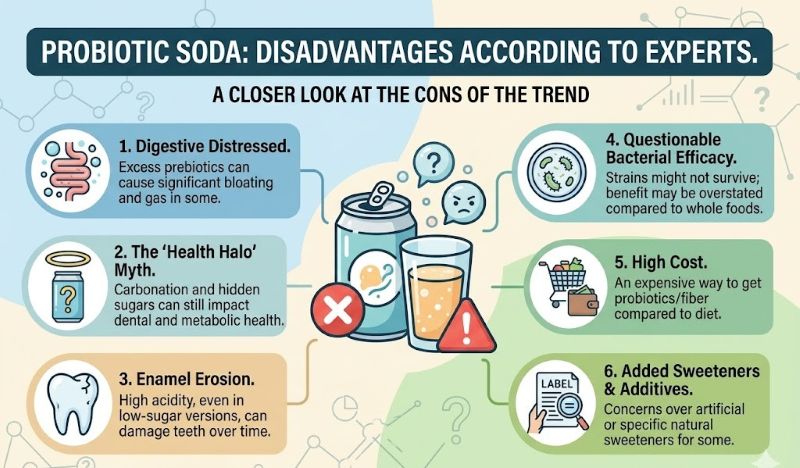
While these drinks are often marketed as a “health tonic,” there are several probiotic soda disadvantages you should keep in mind.
1. The “Live Culture” Problem
The most common issue with commercial probiotic sodas is the quality and quantity of the bacteria inside. For a probiotic to be effective, the bacteria must be “live and active” when you drink them. Because processing, shipping, and shelf time can kill these delicate organisms, some sodas may not contain enough live cultures to provide any meaningful gut benefits at all.
2. Digestive Side Effects
If you are new to fermented beverages, you might experience probiotic soda side effects like bloating, gas, or diarrhea. This happens because your digestive system is adjusting to the change in your gut flora or the specific types of prebiotic fiber added to the drink.
3. Not Suitable for Everyone
If you struggle with conditions like Irritable Bowel Syndrome (IBS) or Small Intestinal Bacterial Overgrowth (SIBO), these drinks can actually make your symptoms worse. The high concentration of specific fibers or sugar alcohols can trigger discomfort, pain, and digestive distress in sensitive individuals.
4. Hidden Sugars and Cravings
While they often have less sugar than a standard soda, many brands still rely on added sugars or natural sweeteners like stevia or monk fruit. Even low-calorie sweeteners can sometimes keep your sugar cravings alive, making it harder to break your dependence on sweet drinks.
5. Potential for Tooth Enamel Damage
We often focus on sugar when talking about dental health, but acidity is just as dangerous. Because probiotic sodas are fermented, they are naturally acidic. Frequent consumption can erode your tooth enamel over time, regardless of whether the drink is sugar-free or not.
Are They Worth the Cost?
Let’s be honest: these drinks are expensive. When you consider that many of the health claims on the labels are not FDA-approved, you have to ask yourself if the price justifies the benefit. In many cases, you are paying for premium branding rather than a scientifically proven health supplement.
Better Ways to Support Your Gut Health
If your goal is to improve your digestion, you don’t necessarily need to rely on expensive, store-bought soda. Scientific research consistently shows that whole foods are the best source of gut-friendly nutrients.
Consider swapping your daily probiotic soda for these proven, budget-friendly alternatives:
- Kefir: A fermented dairy drink that is packed with a wide variety of live, active probiotic strains.
- Yogurt: Look for plain, unsweetened varieties with “live and active cultures” on the label.
- Kimchi and Sauerkraut: These fermented vegetables are excellent sources of natural probiotics.
- Whole Food Prebiotics: Instead of synthetic fiber added to a soda, get your prebiotics from garlic, onions, bananas, oats, and asparagus.
The Bottom Line
Are probiotic sodas good for you? In moderation, they are definitely a better option compared to regular sodas that are packed with sugar. Still, it’s important to think of them as a special treat rather than something to consume every day for health benefits.
If you like the flavour and they don’t bother your stomach, go ahead and have them every now and then. Just make sure to look at the ingredient list for any hidden sugars and pay attention to how your body reacts after you drink them. For maintaining gut health in the long run, focus on eating whole, fermented foods, as your stomach and your wallet will appreciate it.
Disclaimer: This content is for informational purposes only and does not constitute medical advice. Always consult with a healthcare professional or a registered dietitian before making significant changes to your diet, especially if you have existing health conditions like IBS or SIBO.
 Kim Monroe
  Lynn Leblanc
  Lisa
Lisa