
7 min read
1292 words
For decades, we lived by a flawed rule: calories in, calories out. We logged every morsel and felt like failures when the scale wouldn’t budge. In 2026, that era of restriction is over. We’ve entered the age of Metabolic Eating, shifting the focus from what we subtract to what we add, specifically, fiber. Welcome to the year of Fiber-maxxing. This guide explores why the old-school calorie count has been retired and how fiber acts as a natural “GLP-1 accelerator” to optimize your metabolism without the misery of deprivation.
I. The Great Shift: Why Simple Restriction Fails
If you’ve ever lost ten pounds only to gain fifteen back, you aren’t alone—you’re part of the 95%. Standard calorie-restricted diets fail the vast majority of people long-term because they ignore the body’s biological safeguards. When you simply eat less, your body doesn’t think, “Great, time to get lean!” It thinks, “We are starving,” and responds by slowing your metabolism and surging hunger hormones.
The “New Science” of 2026 tells a different story. Weight management isn’t a math problem; it’s a hormonal one. While the pharmaceutical world has seen a massive surge in the use of Oral Semaglutide 25mg and other GLP-1 receptor agonists to manage hunger, researchers have discovered a “natural” way to trigger these same satiety signals.
By focusing on “Fiber-maxxing”—the intentional, high-volume intake of diverse plant fibers—we can communicate directly with our gut-brain axis to turn off hunger at the source.
II. Why Fiber is the New GLP-1 Accelerator

You’ve likely heard of Wegovy or Ozempic. These drugs work by mimicking GLP-1 (glucagon-like peptide-1), a hormone naturally produced in your gut that tells your brain you’re full and slows down gastric emptying.
But here is the breakthrough: Fiber is the primary fuel that triggers your body to produce its own GLP-1.
The Satiety Cascade
When you consume functional fibers, they undergo a process in the digestive tract often referred to as the “Satiety Cascade.” Soluble fiber absorbs water and forms a thick, nutrient-dense gel. This gel slows the passage of food through the small intestine, leading to a steady, prolonged release of glucose into the bloodstream. This prevents the “sugar crashes” that lead to late-afternoon cravings.
Gut Health and the Metabolic Link
Fiber-maxxing isn’t just about feeling full; it’s about feeding your “metabolic engine”—your microbiome. A diverse microbiome, fueled by a variety of plant fibers, produces short-chain fatty acids (SCFAs) like butyrate. These SCFAs have been shown to improve insulin sensitivity and increase the rate at which your body burns fat.
The Landmark 2026 UCLA Study
The conversation around metabolic eating reached a fever pitch following the landmark 2026 UCLA study. The research compared two groups: one on a maintenance dose of a GLP-1 medication and another following a strict “Fiber-maxxing” protocol (40g+ of diverse fibers daily).
The results were staggering. The fiber-focused group showed nearly identical levels of weight maintenance and metabolic stability as the medication group, but with significantly higher markers of gut microbial diversity and lower reports of gastrointestinal side effects. The study proved that while Oral Semaglutide 25mg is a powerful tool for clinical intervention, fiber is the sustainable foundation for long-term metabolic health.
III. What Does “Fiber-Maxxing” Actually Look Like?
Forget the dusty jars of orange powder in your grandmother’s cabinet. Modern fiber-maxxing is about “Food as Medicine” and vibrant, plant-forward plates.
The Target: 35–40g+ Per Day
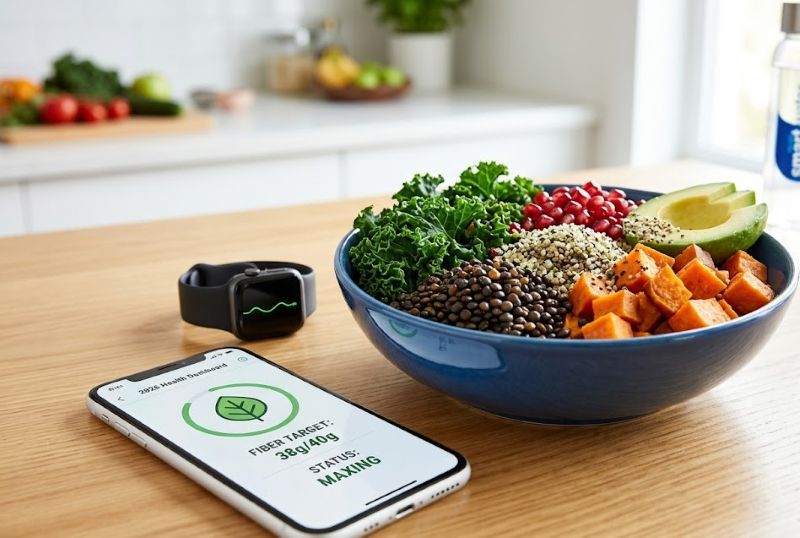
The current RDA for fiber (about 25g) is now considered the “bare minimum” to avoid disease. For true metabolic optimization, 2026 health standards recommend aiming for 35 to 40 grams or more per day. This requires a conscious effort to include fiber in every single meal and snack.
The Fiber-Maxxing Pantry
To hit these targets, you need to diversify your intake between the two main types of fiber:
- Soluble Fiber: (The “Brake”) Found in oats, apples, beans, and citrus. This controls blood sugar and manages cholesterol.
- Insoluble Fiber: (The “Sweeper”) Found in whole grains, nuts, and leafy greens. This provides the “bulk” that keeps things moving and provides physical satiety.
While whole foods are the priority, the 2026 market has also introduced protein-fortified snacks that include chicory root or lupin flour. These are excellent for hitting your macros on the go without sacrificing the “fiber-first” philosophy.
IV. A Day in the Life of a Fiber-Maxxer (Sample Menu)
Transitioning to a 40g-per-day lifestyle is easier than it sounds when you prioritize density. Here is what a typical day of metabolic eating looks like:
- Breakfast (14g Fiber): Two over-easy eggs served on a thick slice of high-fiber seed bread (toasted), topped with half an avocado and a generous side of fresh raspberries.
- Lunch (12g Fiber): The “Metabolic Bowl.” A base of black lentils and quinoa, topped with roasted sweet potatoes, raw massaged kale, pumpkin seeds, and a creamy hemp-seed dressing.
- Dinner (10g Fiber): Chickpea-based pasta tossed in a robust tomato and mushroom ragu, served with a side of lemon-roasted Brussels sprouts.
- Snack (4g Fiber): A handful of dry-roasted pistachios or a crisp pear (eaten with the skin on).
Daily Total: 40g Fiber. You’ll notice this doesn’t look like a “diet”—it looks like a feast.
V. Overcoming the “Adjustment Period”
If you go from 10g of fiber to 40g overnight, your gut might stage a protest. “Fiber-maxxing” is a marathon, not a sprint.
The 10-Day Ramp-Up
To avoid the common pitfalls of gas and bloating, introduce an additional 5g of fiber every two to three days. This gives your microbiome time to “recruit” the specific bacteria needed to break down these tougher plant fibers.
The Water Connection
Fiber is like a sponge; it needs water to work. Without proper hydration, high fiber intake can actually lead to constipation rather than relief.
The big trend in 2026 is the rise of Smart Water Bottles. These devices sync with your meal-tracking apps to calculate your specific hydration needs based on your fiber intake for the day. If you’ve just eaten a high-fiber lentil salad, your bottle will glow or send a haptic pulse to remind you to drink an extra 8 ounces of water to keep that fiber moving through your system.
VI. Conclusion: Your Personalized Path to Metabolic Health
The shift toward Fiber-maxxing represents more than just a new food trend; it represents a reconciliation with our biology. We are moving away from the “starvation mindset” of the early 2000s and into an era where we empower our bodies to regulate themselves.
Whether you are using modern medical advancements like Oral Semaglutide 25mg to jumpstart your journey or you are looking to optimize your health entirely through whole foods, fiber is the non-negotiable variable.
By prioritizing 35–40g of diverse plant fibers and supplementing with protein-fortified snacks when necessary, you aren’t just “going on a diet.” You are committing to a functioning, thriving metabolism.
Stop counting the calories that make you miserable. Start counting the fiber that makes you feel alive. Welcome to the future of eating.
Health Disclaimer
Important: This article is for informational and educational purposes only and does not constitute medical advice, diagnosis, or treatment.
The concepts of “Metabolic Eating” and “Fiber-maxxing” involve significant changes to dietary intake that may affect individuals differently based on their unique health profiles. Always seek the advice of your physician or another qualified health provider with any questions you may have regarding a medical condition or before:
Starting a new diet or nutrition program.
Increasing fiber intake significantly (especially if you have underlying digestive issues like IBD or IBS).
Adjusting any medications, including GLP-1 agonists or insulin.
Never disregard professional medical advice or delay in seeking it because of something you have read in this article. If you think you may have a medical emergency, call your doctor or emergency services immediately.
 Lynn Leblanc
  Carly
Carly  Mahi Patel