Does Business Insurance Cover Vandalism? What to Know
6 min read
1109 words
Running a business involves passion, hard work, and no shortage of challenges. From managing day-to-day operations to planning for future growth, business owners invest significant time, money, and effort into building something valuable. Protecting that investment with the right insurance coverage is essential. Many business owners assume that once they purchase a policy, every type of damage is automatically covered. Unfortunately, business insurance is not a one-size-fits-all solution. Coverage varies based on the policy, provider, and endorsements you choose. One of the most common questions business owners ask is: Does business insurance cover vandalism? In many cases, the answer is yes, but there are important details you should understand before relying on your policy.
Coverage Summary
| Coverage Type | What It Covers |
|---|---|
| Commercial Property Insurance | Building, equipment, inventory, vandalism, and theft |
| General Liability Insurance | Injury or property damage claims made by others |
| Business Interruption Insurance | Lost income during a covered business closure |
What Does Business Insurance Typically Include?
Before looking specifically at vandalism coverage, it helps to understand the primary components of a standard business insurance policy.
Commercial Property Insurance
Commercial property insurance protects the physical assets your business relies on, including:
- Buildings and structures
- Equipment and machinery
- Furniture and fixtures
- Inventory and stock
- Computers and electronics
Most commercial property policies cover damage caused by events such as fire, storms, theft, and vandalism.
General Liability Insurance
General liability insurance protects your business against claims involving:
- Bodily injury
- Property damage
- Legal expenses
- Settlements and judgments
For example, if a customer slips and falls inside your store, general liability coverage may help pay medical and legal costs.
Business Interruption Insurance
If your business is forced to close temporarily because of a covered loss, business interruption insurance can help cover:
- Lost revenue
- Employee wages
- Rent or mortgage payments
- Utility expenses
- Temporary relocation costs
This coverage can be critical when unexpected events disrupt normal operations.
Theft Coverage
Many commercial property policies also include theft protection for stolen inventory, equipment, tools, and other business assets.
Although theft and vandalism often occur together, they are treated as separate risks under most insurance policies.
Does Business Insurance Cover Vandalism?
In most cases, yes.
Vandalism is typically covered under a commercial property insurance policy. If someone intentionally damages your business property, your insurance may help pay for repairs or replacement costs.
Vandalism Coverage May Include:
- Broken windows and doors
- Graffiti removal
- Damaged signage
- Destroyed equipment
- Interior property damage
- Exterior building damage
- Repair or replacement costs
The purpose of vandalism coverage is to restore your property to its condition before the damage occurred.
Review Your Policy Carefully
Coverage varies between insurers and policy types. Some policies automatically include vandalism protection, while others may require endorsements or additional coverage.
Always review your policy documents or speak with your insurance provider to confirm exactly what is covered.
When Vandalism May Not Be Covered
Negligence or Inadequate Security
Insurance companies expect business owners to take reasonable precautions to protect their property.
A claim may be denied if you failed to secure the premises, such as:
- Leaving doors unlocked
- Ignoring broken locks
- Disabling security systems
- Failing to repair known vulnerabilities
Vacant Property Exclusions
Many policies limit or exclude vandalism coverage when a building has been vacant for an extended period.
Depending on the policy, coverage may be reduced or suspended after:
- 30 days
- 60 days
- 90 days of vacancy
If your property will be vacant for any length of time, notify your insurance provider.
Policy Exclusions
Some policies exclude damage caused by:
- Riots
- Civil unrest
- War
- Terrorism
Coverage for these events may require additional endorsements.
Lack of Documentation
Insurance companies need evidence to support a claim. Without proper documentation, your claim may be delayed or denied.
Examples of Vandalism Claims

Storefront Windows Smashed
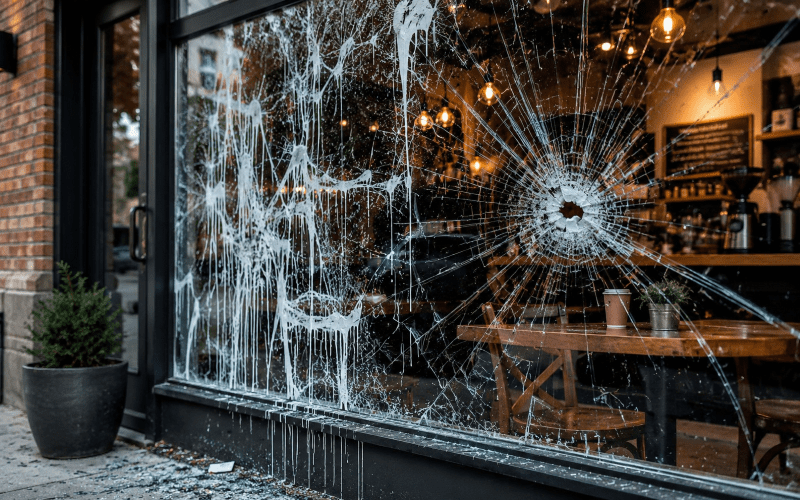
A retail store arrives in the morning to find its front display windows shattered. Commercial property insurance would typically cover replacement costs and related repairs.
Graffiti on Exterior Walls
A restaurant discovers extensive graffiti covering its building. Most policies that include vandalism coverage will pay for professional cleaning or repainting.
Damaged Business Signage
A vandal destroys an illuminated business sign. Insurance may cover repair or replacement expenses.
Property Destruction During a Break-In
Even if nothing is stolen, intentional damage to inventory, shelving, computers, or equipment is generally considered vandalism and may be covered.
How to Strengthen Your Vandalism Coverage
Upgrade Your Property Insurance
Comprehensive commercial property policies often provide broader protection than basic named-peril policies.
Add Endorsements
Additional endorsements can provide extra protection against:
- Vandalism
- Malicious damage
- Civil disturbances
- Outdoor property damage
Install Security Systems
Security measures can help deter criminals and support your claim.
- Surveillance cameras
- Alarm systems
- Motion lighting
- Access control systems
Improve Physical Security
- Strong locks
- Security gates
- Fencing
- Reinforced windows
- Well-lit parking areas
Maintain Asset Records
Keep an updated inventory of business assets, including photos, serial numbers, purchase receipts, and replacement values.
How to File a Vandalism Insurance Claim
- Ensure Safety – Make sure employees and customers are safe.
- Document Everything – Take photographs and videos before cleanup.
- File a Police Report – Obtain a copy for your records.
- Contact Your Insurance Company – Start the claims process immediately.
- Submit Documentation – Provide photos, receipts, reports, and inventory records.
- Prevent Further Damage – Secure the property and save receipts for emergency repairs.
Frequently Asked Questions
Is vandalism covered under business insurance?
In many cases, yes. Vandalism is commonly covered under commercial property insurance, although coverage varies by policy.
What type of insurance covers vandalism?
Commercial property insurance is the primary coverage that protects businesses against vandalism-related damage.
What is considered vandalism?
Vandalism refers to intentional damage to property, including broken windows, graffiti, damaged signs, and destruction of equipment or inventory.
Can a vandalism claim be denied?
Yes. Claims may be denied due to policy exclusions, inadequate security, vacant property clauses, or insufficient documentation.
Does business insurance cover graffiti removal?
In most cases, yes. Graffiti removal is typically covered when vandalism protection is included in the policy.
Do small businesses need vandalism coverage?
Absolutely. Unexpected repair costs can significantly impact cash flow and operations, making vandalism coverage valuable for businesses of all sizes.
Conclusion
Vandalism can be costly, disruptive, and frustrating for any business owner. Fortunately, commercial property insurance often provides protection against many forms of vandalism, including broken windows, graffiti, damaged signs, and destruction of business property.
However, coverage is never guaranteed. Policy limits, exclusions, vacancy clauses, and security requirements can all affect whether a claim is approved.
The best way to protect your business is to regularly review your insurance policy, strengthen your security measures, and ensure you have adequate coverage for the risks your business faces.
A few minutes spent reviewing your policy today could save thousands of dollars in repair costs tomorrow.