
5 min read
815 words
The modern truck is a marvel of engineering—towing more, hauling harder, and moving faster than ever before. Yet, as we hit the road in 2026, fuel costs remain a primary headache for road trippers and daily commuters alike. We recently talked about the slow road trip philosophy—the idea that the journey is just as important as the destination. If you’re looking to increase truck mpg, this mindset is your greatest asset. The goal isn’t just about saving a few pennies at the pump; it’s about extending your range. It’s about spending less time at the fuel station and more time conquering the map. Here is how to stretch every drop of fuel and maximize your distance per tank.
1. Master the “Momentum” Mindset
Your truck is essentially a massive object in motion. Keeping it that way is the secret to efficiency. Every time you hit the brakes, you are literally throwing away the kinetic energy it took to get that heavy chassis up to speed.
Coasting to Victory: Adopt “predictive driving.” Look three or four cars ahead. If you see brake lights or a red traffic signal, take your foot off the accelerator early rather than waiting to slam the brakes later.
The Speed Sweet Spot: Most trucks hit a “drag penalty” wall once they cross the 105 km/h threshold. Aerodynamics dictate that wind resistance increases exponentially with speed. Slowing down just slightly is one of the easiest ways to increase truck mpg on the highway.
2. Fight the Wind: Aerodynamic Realities
Trucks are built for utility, not wind-tunnel records. However, you can manage how your truck cuts through the air.
The Tailgate Myth: Many drivers swear by driving with the tailgate down to “let air through.” In reality, this ruins the aerodynamic “air bubble” that forms in your truck bed. Keep the tailgate up to maintain a smooth flow of air over your cab and off your tailgate.
The Bed Cover Debate: Adding a high-quality tonneau cover can reduce turbulence in the bed. Depending on your truck’s specific body shape, this can offer a modest but measurable boost in efficiency.
Clean the Underbody: If you’ve recently done some off-roading, take a moment to wash the undercarriage. Mud, caked-on clay, and debris disrupt the smooth airflow underneath your truck, creating “hidden” drag.
From My Experience: I’ve spent a lot of time behind the wheel of a 2020 F-150 with the 3.5L EcoBoost, and I’ve learned that these engines are incredibly sensitive to “boost.” If you can keep the turbos from spooling up unnecessarily by using a light foot on inclines, you’ll see your MPG climb instantly. Even small aerodynamic adjustments have made a noticeable difference during my long-haul stretches.
3. The Efficiency Comparison Table
Small adjustments, when combined, lead to significant gains. Here is what you can expect when you optimize your ride.
| Modification | Estimated MPG Gain | Difficulty |
|---|---|---|
| Proper Tire Pressure | 1–3% | Very Easy |
| Removing 100lbs of Gear | 1% | Easy |
| Reducing Speed by 10km/h | 7–12% | Hard (Self-Control!) |
4. Eliminate the “Hidden” Range Killers
If your truck feels sluggish, it might be working against its own configuration. Conduct a “bed audit” and shed the unnecessary payload. Also, check your tire pressure monthly; under-inflated tires are a common reason people struggle to increase truck mpg.
5. Leverage Onboard Tech
Modern trucks are smarter than ever. Learn to work with the onboard computer, not against it.
Eco-Modes and Cruise Control: Most trucks have an “Eco-Mode” that adjusts throttle mapping. Use it on the highway.
Monitor Instant MPG: Use your digital dashboard to view your “Instant MPG.” It’s an eye-opening diagnostic tool that helps you realize exactly how much fuel you waste by accelerating aggressively at a green light.
6. Route Planning: The “Slow Road” Advantage
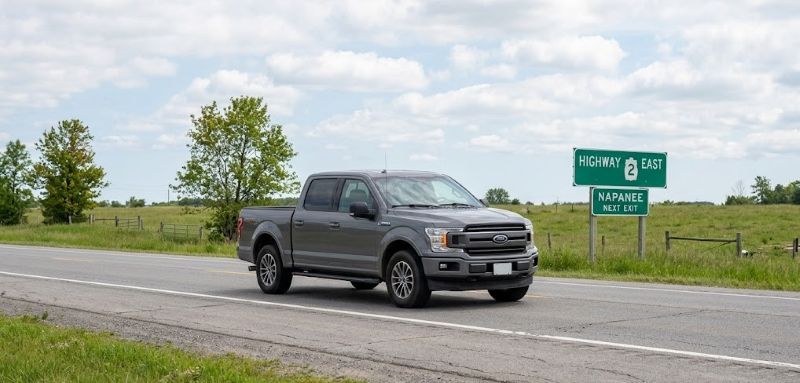
Sometimes, where you drive matters just as much as how you drive.
From My Experience: I often have to choose between pushing 120 km/h on the high-speed 400-series highways or taking the secondary “Blue Highways.” While the major expressways get you there faster, the wind resistance at those speeds absolutely eats through my range. By sticking to flatter, provincially maintained secondary routes, I’ve found that a steady cruise is not only more fuel-efficient but a far more relaxing way to see the country.
Fueling Hacks: Fuel is denser when cold; fueling up during the cooler morning hours is a science-backed tip to ensure you get the most energy per liter.
7. The Big Picture: Small Gains, Big Distance
Increasing your truck’s efficiency isn’t just about hitting a target number on a screen; it’s about the freedom of the road. A 10% improvement in fuel efficiency can easily equate to an extra 80–100km (50–60 miles) per tank.
By auditing your gear, keeping your tires at the right pressure, and practicing smooth, predictive driving, you’ll find that the best way to get further isn’t a bigger tank—it’s driving smarter.
 Leo Allen
  Lynn Leblanc