

6 min read
1131 words
The glow of a new monitor, the hum of a powerful fan, the anticipation of hitting “play”—few decisions are as exciting (and daunting) as choosing your next gaming setup. But for modern gamers, there’s one major fork in the road: do you invest in a towering desktop beast or a sleek, portable gaming laptop?
It’s a debate that has raged in forums and Discord servers for years. The truth is, there is no single “correct” answer. The right choice depends entirely on your lifestyle, budget, and gaming priorities.
In this guide, we’ll break down the key differences between gaming laptops and desktop PCs to help you decide which platform deserves a spot in your setup.
1. Performance: Raw Power vs. Optimized Efficiency
When it comes to pure performance, desktop PCs have historically held the crown. However, the gap has narrowed significantly in recent years.
Desktop PCs Desktops are the undisputed kings of raw power. Because of their larger chassis, they can accommodate full-size components with superior cooling solutions. This means a desktop GPU (graphics processing unit) can run at higher clock speeds for longer periods without thermal throttling. If you want to push 4K resolution at ultra-high frame rates or stream your gameplay without a stutter, a desktop offers the most headroom.
Gaming Laptops Modern gaming laptops are engineering marvels. A laptop GPU labeled “RTX 4070” is not the exact same chip as its desktop counterpart; it’s a mobile version optimized for power efficiency. While they may run slightly slower than their desktop siblings to manage heat in a confined space, high-end gaming laptops can still handle AAA titles at high settings with impressive frame rates.
The Verdict: If you demand the absolute highest frame rates and resolution possible, a desktop wins. However, for 1080p and 1440p gaming, modern high-end laptops are more than capable.
2. Portability: The Defining Factor
This is the category where the competition becomes lopsided.
Gaming Laptops Portability is the laptop’s superpower. Whether you’re commuting to work, visiting a friend’s house, or simply moving from your desk to the couch, a gaming laptop goes where you go. For gamers who travel frequently or have limited living space, the ability to pack a powerful machine into a backpack is invaluable.
Desktop PCs Desktops are stationary. Once you set up your tower, monitor, and peripherals, they generally stay put. While Small Form Factor (SFO) builds exist, they still require a dedicated monitor and power outlet, making them far less portable than a laptop.
The Verdict: If you game on the go or need a single device for work and play, the laptop is the only logical choice.
3. Price and Value for Money
Budget is often the deciding factor. Generally speaking, you get more performance per dollar with a desktop.
Desktop PCs Because components are standardized and mass-produced, desktop parts are often cheaper to replace and upgrade. You can build a custom PC that fits your exact budget, allocating more funds to the GPU and less to the CPU if needed. There are no “premiums” for miniaturization.
Gaming Laptops You pay a premium for portability. Packing high-end components into a small, heat-managed chassis costs more. A laptop with the same specs as a desktop will almost always be more expensive. Furthermore, laptop components (like the GPU and CPU) are often soldered to the motherboard, meaning you cannot upgrade them later—you’re buying a closed system.
The Verdict: Desktops offer better long-term value and more bang for your buck upfront. Laptops are an investment in convenience.
4. Upgradability and Longevity

Technology evolves fast. The ability to upgrade your machine can extend its lifespan by years.
Desktop PCs This is where desktops shine. Want better graphics in two years? Swap the GPU. Need more storage? Add another SSD. Need more RAM? Pop in new sticks. Desktops are modular, allowing you to upgrade individual parts as your budget allows and as technology advances.
Gaming Laptops Upgradability is limited. Most laptops allow you to upgrade the RAM and storage (SSD/HDD), but the CPU and GPU are permanently attached to the motherboard. While a high-end laptop will remain relevant for several years, it cannot evolve with your needs quite like a desktop can.
The Verdict: For future-proofing and customization, desktops are the superior choice.
5. The Gaming Experience: Screen, Sound, and Peripherals
The hardware is only half the equation; the experience matters.
Desktop PCs A desktop setup is customizable. You can choose a monitor that perfectly matches your GPU’s capabilities—whether that’s a high-refresh-rate 1080p panel or a 4K OLED. You can pair it with a mechanical keyboard and a high-DPI mouse that fit your hand perfectly. The audio can be routed through speakers or high-end headphones.
Gaming Laptops Laptops offer an all-in-one solution. While modern laptop displays are excellent (often featuring high refresh rates and G-Sync/FreeSync), you are limited to the screen size attached to the device (typically 15 to 17 inches). While you can connect external monitors and peripherals, doing so negates the portability advantage.
The Verdict: Desktops provide a more immersive, ergonomic, and customizable sensory experience.
6. Practicality and Daily Use
Consider how you will use the machine 80% of the time when you aren’t gaming.
- Work and Productivity: Laptops double as mobile workstations. You can take your gaming machine to a coffee shop or a meeting. Desktops require you to be at your desk.
- Space: A laptop takes up minimal desk space. A desktop requires room for the tower, monitor, and cables.
- Noise and Heat: Desktops generally have better airflow and quieter fans. Gaming laptops can get quite hot and loud under load, especially if the cooling system is strained.
The Final Verdict: Which Should You Choose?
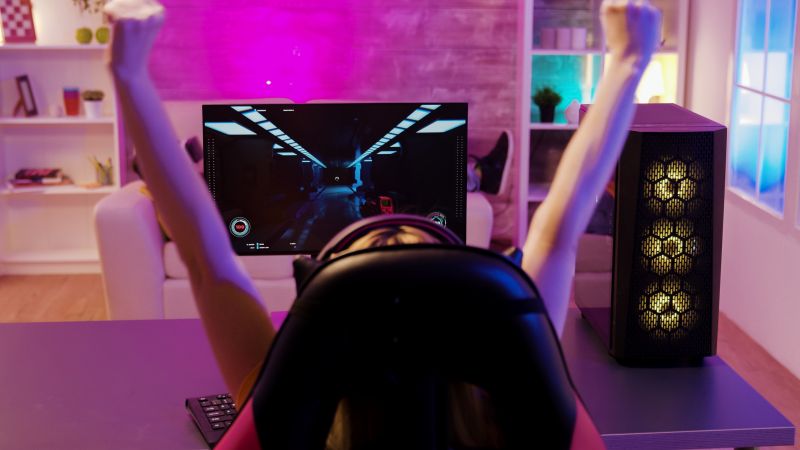
To make your decision easier, ask yourself these three questions:
- Do I need to game in different locations? If yes, choose a Gaming Laptop.
- Is maximum performance per dollar my top priority? If yes, choose a Desktop PC.
- Do I want to upgrade my components over time? If yes, choose a Desktop PC.
Choose a Gaming Laptop if: You are a digital nomad, a student in a dorm, or someone with limited space who values versatility. You want a single device that handles work, travel, and gaming.
Choose a Desktop PC if: You have a dedicated gaming space, you want the highest possible frame rates, you enjoy tinkering with hardware, and you want the best long-term value.
Conclusion
The gap between gaming laptops and desktops is smaller than ever. Today, you don’t have to sacrifice a great gaming experience for portability. However, the desktop PC remains the king of performance and upgradability, while the gaming laptop reigns supreme in flexibility and space-saving design.
Whichever you choose, the most important thing is that you’re ready to play. Happy gaming!
 Valerie Cox