
5 min read
824 words
Have you ever watched a child turn a cardboard box into a spaceship? Creativity does not need fancy tools. It needs space and permission. In recent years, families have spent more time at home than ever before. Remote work, hybrid school schedules, and rising childcare costs have reshaped daily life. Parents now look for ways to keep children engaged without constant screens. A creative corner offers structure without pressure. It gives kids ownership over their ideas. In this blog, we will share how to design a kid-friendly creative corner that supports imagination, focus, and joyful learning at home.
Start With the Right Space
If someone unfamiliar with this idea asked where to begin, the answer would be simple. Pick a small, defined area. It does not need its own room. A corner of the living room works. A spot near a window works even better.
Children thrive when boundaries feel clear. A rug can mark the creative zone. A small table signals purpose. Shelves within reach encourage independence.
Think of it like setting up a tiny studio. Everything has a place. Everything feels accessible. This setup reduces clutter across the house.
Families today juggle work calls and homework at the same table. Creating a separate creative area protects both focus and sanity. When kids know where art happens, they respect other shared spaces more easily.
Stock It With Simple, Inspiring Supplies
Supplies should feel exciting but not overwhelming. Start with basics like paper, crayons, glue, and safe scissors. Add variety slowly. Rotate materials to maintain interest.
Consider tools that offer bold color and versatility. Many families enjoy using POSCA markers at Ranger Ink because they work on paper, wood – and even rocks. This flexibility encourages experimentation. For example, kids can decorate a cardboard sign one day – and they can personalize a wooden box the next.
Keep materials organized in clear bins. Label containers with words or pictures. This helps younger children find what they need and also builds responsibility. Explain tools in simple terms. Markers draw. Glue sticks attach. Tape fixes mistakes. When instructions are clear, confidence grows.
The goal is not perfection. The goal is exploration.
Design for Safety and Independence
Safety builds freedom. Choose furniture with rounded edges. Use washable surfaces. Keep small items out of reach for toddlers.
Lighting matters more than most people realize. Natural light boosts mood and focus. A small desk lamp works if windows are limited.
Place trash bins nearby. Add paper towels for quick cleanup. These small details encourage self management. Children feel proud when they tidy their own space.
Parents often worry about mess. That concern is understandable. Yet research shows creative play supports emotional development. Mess can be managed. Imagination deserves room.
Create Visual Inspiration
Children respond to what they see daily. Hang a corkboard or magnetic board. Display their artwork proudly. Rotate pieces regularly. This display sends a clear message. Their ideas matter. Their effort matters. That recognition builds self esteem.
Consider adding posters of animals, maps or favorite characters. Remember that inspiration sparks questions. And questions – in turn – spark learning.
In a time when digital content dominates attention, physical visuals offer grounding. Tangible creativity balances screen time.
Connect Creativity to Everyday Life
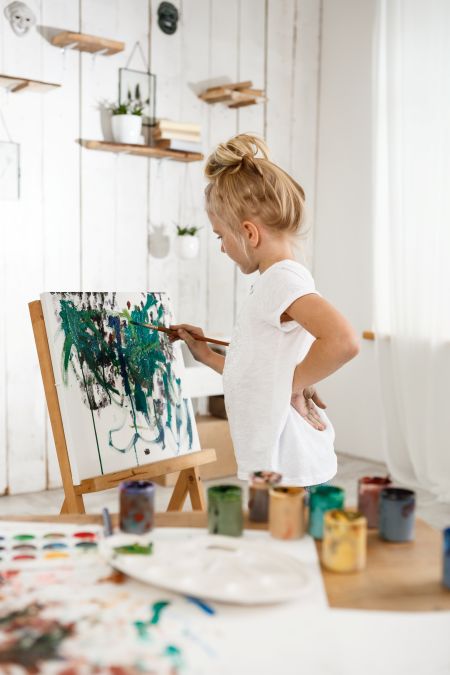
Art does not exist in isolation. It connects to real experiences. Encourage children to design birthday cards. Let them decorate storage bins. Invite them to create signs for family events.
These activities show practical value. Creativity becomes useful, not just decorative. Families trying to go about their busy schedules often seek meaningful connection. Sitting together while a child explains their drawing builds conversation. That time matters.
Balance Order With Freedom
Too much structure can stifle imagination, while too little can create chaos – so the goal is to find a healthy balance between freedom and order.
Store materials neatly. Allow projects to remain unfinished. Both approaches serve purpose.
Teach children to respect supplies and replace broken tools thoughtfully. Responsibility grows gradually. Parents often underestimate how much independence children can handle. With guidance, they surprise everyone.
Celebrate Effort Over Perfection
Children notice reactions. Praise effort rather than outcome. Say things like, that took patience. Or, those colors work beautifully together.
Avoid comparing siblings. Avoid correcting minor mistakes. The creative corner should feel safe. Current conversations about mental health emphasize resilience. Creative spaces contribute to that resilience. They allow trial and error without judgment.
Let the Space Reflect Family Values
The bottom line? Involve children in design decisions. Ask what colors they prefer. Ask what themes inspire them. And what does this collaboration do? It strengthens ownership as well as relationships. A kid-friendly creative corner does not require expensive renovations. It requires intention and consistency.
So consider this question. What small corner of your home could transform into a space for imagination? Start with a table. Add a few supplies. Watch what unfolds.
Creative spaces nurture confidence, curiosity, and connection. In a world that moves quickly, that quiet corner becomes a powerful anchor.
 Miss P
  Rose DesRochers
  Megan
Megan