
8 min read
1467 words
You’ve spent years mastering the art and science of SEO. You know your keywords inside and out, you’ve meticulously built your backlink profile, and you track your Google rankings with the precision of a hawk. You’ve played the game and played it well. But a new force has entered the arena, and it’s fundamentally changing the rules of the game: AI search.
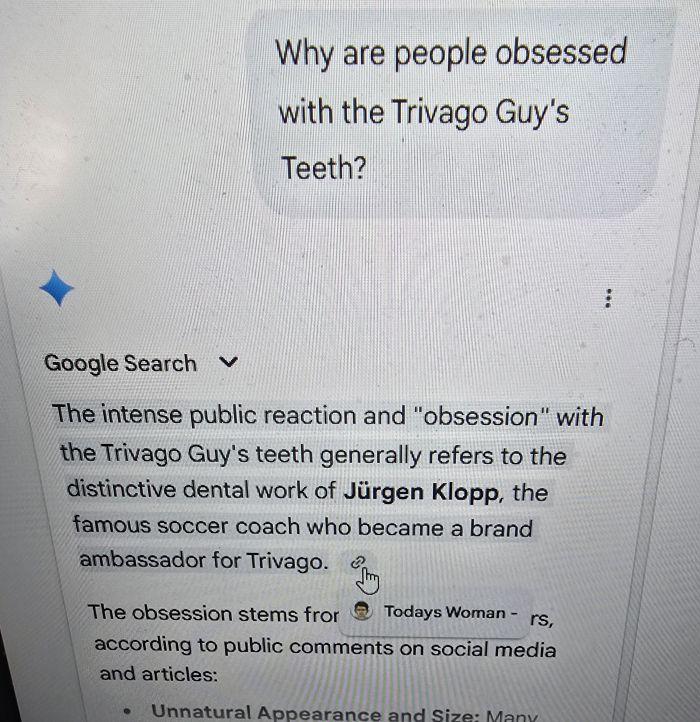
Millions of users are now turning to platforms like ChatGPT, Perplexity, and Google’s Gemini to get direct answers, completely bypassing the traditional list of blue links. They ask, “What are the best marketing tools for a small business?” or “Why are people obsessed with the Trivago guy’s teeth?,” and in seconds, they receive a conversational, comprehensive response.
This shift brings a critical question for every business owner, marketer, and SEO professional: When a potential customer asks about your industry, your services, or even your brand, is your website part of that conversation? Or has a new kind of invisibility cloak been thrown over your digital presence?
If your content is never cited as a source, your business is facing a new and insidious discoverability crisis. Your AI Search Health is poor, and it’s time to diagnose the problem before you get left behind.
What is AI Search and Why It’s a Game-Changer
Before we dive into the “how-to,” let’s clarify the shift that’s happening.
Traditional Search (e.g., Google) is like a librarian handing you a catalog of books. You type in a query, and it returns a list of relevant documents (websites, pages, articles). The work of clicking, reading, comparing, and synthesizing the information is left to you. The goal is to get you to the best resource.
AI Search (e.g., Perplexity, ChatGPT) is like asking the librarian to read the relevant books for you and give you a summary of the answer. It crawls the web, digests information from multiple sources, and constructs a direct, coherent answer. Instead of just a list of links, you get a conclusion. Crucially, good AI search engines cite their sources, linking back to the websites they used to formulate the response.
Why does this matter? Because being the source is the new “ranking #1.” If your competitors are consistently cited in AI-generated answers and you are not, you are effectively losing:
- Traffic: The citation link is the new top-of-funnel entry point.
- Authority: AI models are signaling to users that your competitor is the definitive source of information.
- Customers: Users asking buying-intent questions will be directed to the sites that the AI trusts most.
Ignoring your presence in these models is like ignoring Google ten years ago. It’s a new change in how people find information online.
The Litmus Test: Check Your AI Search Health in 60 Seconds
You don’t need complex software to get a baseline reading on your AI Search Health. All you need is a curious mind and access to a few AI tools.
Here’s a simple test you can run right now:
- Open an AI Search Tool: For this test, Perplexity.ai is an excellent starting point because it is designed as a search engine and is very transparent with its citations. Also, open ChatGPT (using GPT-4) and Google Gemini.
- Run Three Types of Queries:
- Brand Query: Ask about your own company.
- “What is [Your Company Name] and what services does it offer?”
- “Summarize the key features of [Your Product Name].”
- “Who are the main competitors of [Your Company Name]?”
- Problem/Solution Query: Ask questions your ideal customers would ask.
- “What is the best way to [solve a problem your business solves]?”
- “How do I choose a [your product category] for my business?”
- “Compare [your product type] vs. [a different product type].”
- Informational Query: Ask about a core concept in your industry.
- “Explain the importance of [a key industry concept].”
- “What are the latest trends in [your industry]?”
- Brand Query: Ask about your own company.
- Analyze the Results:
- Excellent Health: Your website is frequently cited with a numbered link directly in the answer. The AI uses your content to explain concepts and positions you as an authority.
- Average Health: You are mentioned occasionally, perhaps in a list alongside competitors, but you are not the primary source for detailed explanations.
- Poor Health: Your website is completely absent. Even worse, your direct competitors are being cited as the authority for answers related to your core business.
If you’re seeing poor results, don’t panic. The first step is understanding why you’re being ignored.
Why Is Your Site Being Ignored? The Common Culprits
If your AI Search Health check was alarming, it’s likely due to one or more of the following four reasons.
1. You’ve Blocked AI Crawlers in Your robots.txt File
This is the most common and easily fixable culprit. When AI models first emerged, many website administrators, fearing content scraping, rushed to update their robots.txt file to block AI crawlers. This file gives instructions to web robots, and a “Disallow” command is a digital “Keep Out” sign.
Common AI user-agents that might be blocked include:
GPTBot(OpenAI’s crawler for ChatGPT)Google-Extended(Google’s crawler for Gemini and other Vertex AI models)CCBot(Common Crawl’s bot, used by many models)anthropic-ai(Anthropic’s crawler for Claude)
Blocking these crawlers makes your content completely invisible and unusable for training or generating answers.
2. Your Content Lacks Clarity and Authority
AI models are not just looking for keywords; they are looking for clear, structured, and factual answers to questions. They thrive on content that is:
- Well-organized: Using clear headings (H1, H2, H3) and logical flow.
- Factual and direct: Answering questions concisely without excessive marketing fluff.
- Comprehensive: Covering a topic in-depth rather than just scratching the surface.
If your site is filled with vague marketing copy, thin blog posts, or poorly structured information, AI crawlers will struggle to parse it and will favor more authoritative sources.
3. Your Content is Outdated
Freshness is a significant signal of relevance. If your most important articles and service pages haven’t been updated in years, AI models may deem them less reliable than more recent content from your competitors. An AI wants to provide the most current information, and an article from 2017 about “2018 marketing trends” won’t make the cut.
4. Your Foundational Technical SEO is Weak
The fundamentals still matter. AI crawlers are, at their core, web crawlers. If your site suffers from poor technical SEO, it’s a barrier for them just as it is for Googlebot. This includes issues like:
- Slow page load speed
- Poor mobile experience
- A confusing site structure and no sitemap
- Improper use of schema markup to provide context
A 4-Step Plan to Boost Your AI Search Health
Ready to get your site back in the game? Here is a straightforward plan to improve your visibility in AI search.
Step 1: Audit and Fix Your robots.txt File Go to yourdomain.com/robots.txt and look for lines that disallow the crawlers mentioned above. For example, if you see this:
User-agent: GPTBot
Disallow: /
You are telling OpenAI to ignore your entire site. Remove these blocking rules to allow the crawlers to access and learn from your content.
Step 2: Create “AI-Friendly” Content Start thinking of your content as a knowledge base for an AI.
- Adopt an FAQ-first mindset: Structure articles around questions and provide direct, clear answers.
- Use structured data (Schema Markup): Implement schema for articles, FAQs, products, and services. This gives crawlers explicit context about your content.
- Prioritize definitions and explanations: Create content that clearly defines key industry terms and explains complex concepts. Think of it as building your own Wikipedia for your niche.
Step 3: Establish and Signal Topical Authority Don’t just write one-off blog posts. Build content clusters—a main “pillar” page covering a broad topic, linked to several “cluster” pages that dive into specific sub-topics. This internal linking structure signals to all search engines (human and AI) that you have comprehensive expertise in a particular area.
Step 4: Double Down on Foundational SEO What’s good for Google is generally great for AI search. Continue to focus on:
- Improving site speed and core web vitals.
- Ensuring your site is mobile-friendly.
- Building high-quality backlinks to signal your authority to the web at large.
The Future is Conversational—Get in the Conversation
AI search isn’t a fad; it’s an evolution. It represents a fundamental shift from searching for documents to searching for answers. Being invisible in this new paradigm is not an option for any business that relies on digital discovery.
Take 60 seconds today to perform your AI Search Health check. Search for your brand, your products, and your expertise. If you find yourself on the outside looking in, follow the steps to fix it. The time to act is now, before your absence becomes a permanent competitive disadvantage. Don’t just be on the web—be the source of its answers.
 Victoria Jain