
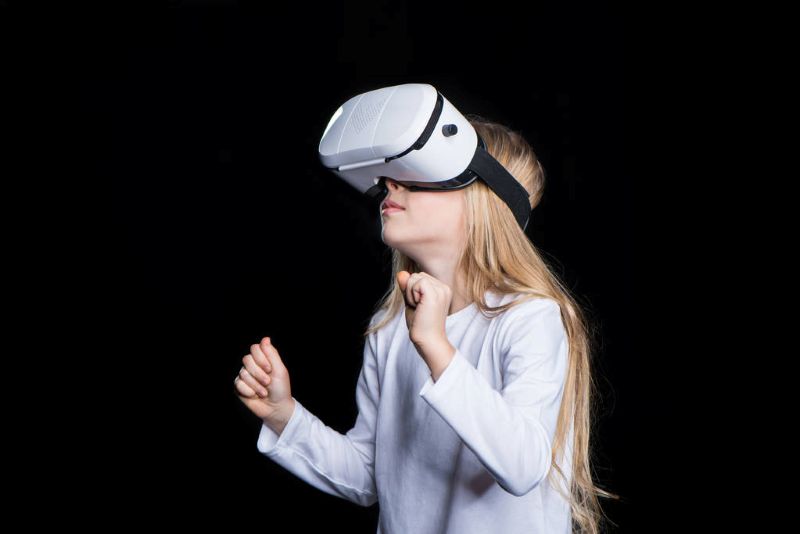
Meta’s Quest 3 VR Headset – risks for kids and teens
6 min read
1189 words
Virtual reality (VR) has quickly moved from being a futuristic idea to a technology that many families are now exploring at home. With immersive games, social experiences, educational programs, and virtual worlds, VR offers exciting new ways for people of all ages to learn, play, and connect.
Meta’s Quest line of VR headsets, including the Meta Quest 3, has helped make virtual reality more accessible and popular. While VR was originally marketed mostly toward adults and older teens, the technology is increasingly attracting younger users. Meta has introduced child accounts and expanded parental controls in an effort to make the experience safer for families, including children ages 10 to 12.
However, as more children enter virtual spaces, concerns about online safety, privacy, and exposure to inappropriate content continue to grow. Reports from child safety organizations and researchers suggest that current protections may not fully address the risks children can encounter in virtual reality.
Increased Parental Controls, but Are They Enough?
Meta has introduced supervised accounts and parental controls designed to give parents more control over their children’s VR experiences. These tools allow parents to manage settings, approve certain apps, and monitor aspects of their child’s activity.
While these features are a step forward, child safety advocates argue that they may not completely prevent children from encountering harmful content.
One major concern is that many VR experiences are not controlled entirely by the platform. Many popular VR apps are large social environments where users create their own content, communicate with strangers, and interact in real time. This makes moderation much more challenging than traditional video games or apps.
Researchers have raised concerns that even with parental controls enabled, children may still encounter violent, disturbing, or sexually inappropriate material.
Lowering the Recommended Age for VR Use
Meta’s decision to make its VR headsets available to younger users has created debate among parents, lawmakers, and child health experts.
In 2023, Meta announced changes that lowered the recommended age for Quest headsets from 13 to 10 years old. The company also lowered the minimum age for Horizon Worlds, its social virtual reality platform, from 18 to 13.
Meta has stated that these changes were made to allow more families to enjoy VR experiences while introducing additional protections for younger users. However, critics argue that expanding access to younger children should happen only after stronger safety systems are in place.
The concern is not simply about whether children can use VR, but whether the virtual environments they enter are designed with children’s safety and development in mind.
Easy Access to Disturbing Content
One of the biggest concerns raised by researchers is how quickly children can encounter inappropriate experiences inside some VR platforms.
Unlike traditional games with clearly defined content, many virtual reality social apps allow users to create their own worlds, games, and interactions. This user-generated content can sometimes include material that is not suitable for younger audiences.
Researchers from the Trouble in Toyland report tested popular VR experiences and found examples of children potentially being exposed to disturbing scenarios.
For example, the report examined Rec Room, a popular VR social app rated “E for Everyone 10+.” Researchers reported that users could quickly encounter user-created games involving violent themes, including a virtual Russian Roulette-style experience.
These findings highlight the difficulty of keeping children safe in open online environments where new content is constantly being created.
Popular VR Apps and Explicit Content Concerns
Some of the most popular VR social platforms allow users to communicate and interact with strangers from around the world. While this creates exciting opportunities for connection and creativity, it also introduces risks.
VRChat, one of the most well-known virtual social platforms, has faced criticism over moderation challenges. Investigations have raised concerns about users accessing sexually explicit environments despite age restrictions.
Because VR feels much more immersive than traditional online platforms, inappropriate interactions can have a stronger emotional impact on children. A child wearing a headset is not simply watching content on a screen; they are placed inside a three-dimensional environment where they may feel like they are physically present.
Why Multiplayer Virtual Worlds Are Difficult to Moderate
Apps such as Rec Room, VRChat, and Horizon Worlds are examples of large multiplayer virtual environments. These platforms allow users to create experiences, meet others, and participate in activities together.
However, this freedom creates challenges.
Unlike a traditional video game with a fixed storyline and controlled content, social VR platforms constantly change. New rooms, games, conversations, and interactions appear every day.
Some of the challenges include:
• Anonymous users interacting with children
• User-created content that may not be reviewed before appearing
• Difficulty monitoring millions of conversations and activities
• The possibility of bullying, harassment, or inappropriate behaviour
Keeping children safe in these environments requires strong moderation systems, effective reporting tools, and active parental involvement.
What Parents Should Consider Before Allowing VR Use
For families considering a VR headset, it is important to understand both the benefits and risks.
Virtual reality can offer positive experiences, including:
• Educational programs and virtual learning
• Creative building and design activities
• Exercise and movement-based games
• Problem-solving and teamwork experiences
However, parents should also take steps to create safer VR habits.
Helpful tips include:
Set Up Parental Controls
Take time to explore the headset settings, review available apps, and understand what controls are available.
Choose Age-Appropriate Apps
Not every VR experience is suitable for every child. Research apps before allowing children to use them.
Encourage Open Conversations
Talk with children about online safety, strangers, privacy, and what to do if they encounter something uncomfortable.
Limit Screen Time
VR can be physically and mentally intense. Regular breaks are important, especially for younger users.
Use VR in Shared Spaces
Keeping VR use in a common area of the home can make it easier for parents to stay involved.
The Future of Child Safety in Virtual Reality
Virtual reality technology is continuing to evolve, and it has the potential to transform entertainment, education, and communication. However, as younger children begin entering virtual worlds, safety must remain a priority.
Companies developing VR platforms face the challenge of balancing innovation with responsibility. Stronger age verification, improved moderation, better reporting systems, and more effective parental controls will likely be necessary as VR becomes more common.
The goal should not be to prevent children from experiencing new technology, but to make sure those experiences are safe, positive, and appropriate for their age.
Final Thoughts
The Meta Quest 3 and other VR headsets offer exciting opportunities for creativity, learning, and entertainment. However, parents should be aware that virtual worlds come with their own set of challenges.
While parental controls are improving, they are not a complete replacement for supervision and guidance. Understanding the technology, discussing online safety, and choosing appropriate content can help children enjoy the benefits of VR while reducing potential risks.
As virtual reality continues to become part of everyday life, protecting young users will remain one of the most important conversations surrounding the future of technology.
https://pirg.org/edfund/resources/vr-risks-for-kids/
https://fairplayforkids.org/wp-content/uploads/2023/04/HorizonLetter.pdf
https://www.cnn.com/2023/06/16/tech/meta-quest-headsets-lowering-minimum-age/index.html
https://www.bbc.com/news/technology-60415317
https://counterhate.com/wp-content/uploads/2023/03/Horizon-Worlds-Exposed_CCDH_0323.pdf







Virtual reality headsets, including the Pico 4 Ultra, are typically not recommended for children under 13 years old.