
7 min read
1245 words
Bringing the outdoors in with a thriving collection of indoor plants is one of life’s simple joys. But for many of us, providing the light our green friends need to flourish can be a major challenge, especially during darker months or in homes without sun-drenched windows. Enter LED grow lights—a game-changer for the modern indoor gardener. These energy-efficient, long-lasting lights can turn any corner of your home into a productive oasis. But with a dizzying array of options on the market, how do you choose the right one?
This guide will demystify the technical specs and break down exactly what you need to look for, ensuring you invest in the perfect light to help your plants thrive.
What to Look for When Buying LED Grow Lights
Choosing an LED grow light goes beyond just picking the brightest or biggest one. To make an informed decision, you need to understand the key metrics that determine a light’s effectiveness.
- Light Spectrum (PAR): Plants don’t use all visible light equally. They primarily use a specific range of light wavelengths for photosynthesis, known as Photosynthetically Active Radiation (PAR). A quality grow light is designed to maximize its output within this PAR range (400-700nm). Forget lumens, which measure brightness as perceived by the human eye; for plants, it’s all about the PAR. Look for lights that advertise themselves as “full-spectrum” to ensure your plants get the varied wavelengths they need for all growth stages.
- Light Intensity (PPFD): This is perhaps the most important metric. Photosynthetic Photon Flux Density (PPFD) measures the amount of usable light (PAR) that actually reaches your plant’s canopy. It’s measured in micromoles per square meter per second (μmol/m²/s). Different plants have different needs:
- Seedlings & Leafy Greens: Require lower intensity (200-400 PPFD).
- Vegetative Growth (Most Houseplants): Thrive in medium intensity (400-600 PPFD).
- Flowering & Fruiting Plants (e.g., tomatoes, peppers): Need high intensity (600-900+ PPFD). Reputable manufacturers provide PPFD charts showing the light’s intensity at various heights and distances from the center. Use these charts to match a light to your plant’s needs and your grow space dimensions.
- Wattage and Efficacy: Don’t be fooled by the “wattage myth.” A higher wattage doesn’t automatically mean a better light. What truly matters is efficacy, which measures how efficiently the light converts electricity into usable PAR. This is measured in μmol/J. A light with high efficacy (e.g., 2.5 μmol/J or higher) will produce more grow power with less electricity and heat than a less efficient model with the same or even higher wattage. Always check the light’s actual power draw, not the “equivalent” wattage often used in marketing.
- Coverage Area: The light you buy must be able to cast an even footprint over your entire plant canopy. Manufacturers will typically specify two coverage areas: one for vegetative growth and a smaller one for flowering, as flowering plants require higher light intensity. Ensure the recommended coverage area matches the size of your grow tent, shelf, or plant stand to avoid dim edges where plants will struggle.
What Color Grow Light is Best for Indoor Plants?
When we talk about the “color” of a grow light, we are really talking about its light spectrum. Plants use different colors for different functions, making a balanced spectrum crucial for overall health.
- Blue Light (400-500 nm): This is the engine for vegetative growth. Blue light promotes the development of strong stems and lush, healthy leaves. It’s especially critical for seedlings and young plants, helping them establish a robust structure without becoming tall and “leggy.”
- Red Light (600-700 nm): This is the trigger for flowering and fruiting. Red light, particularly in the deep-red range, signals to the plant that it’s time to produce buds, flowers, and eventually, fruit. It is essential for any plant you hope to get a harvest from.
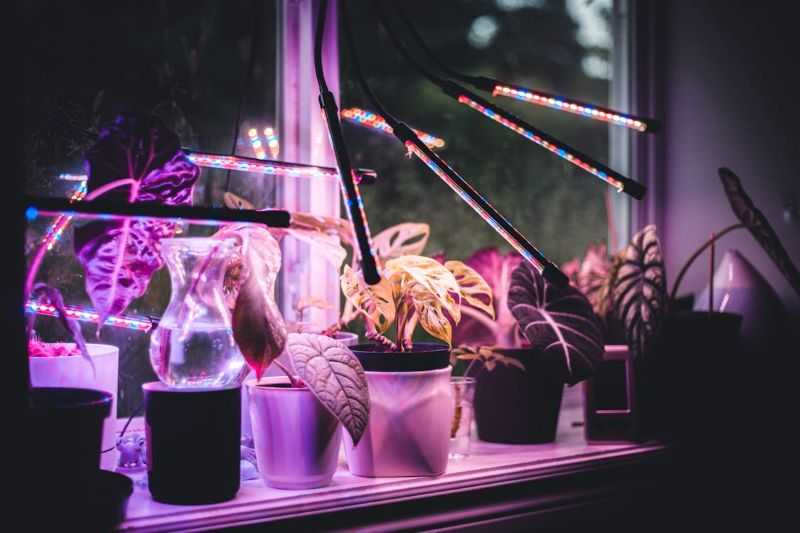
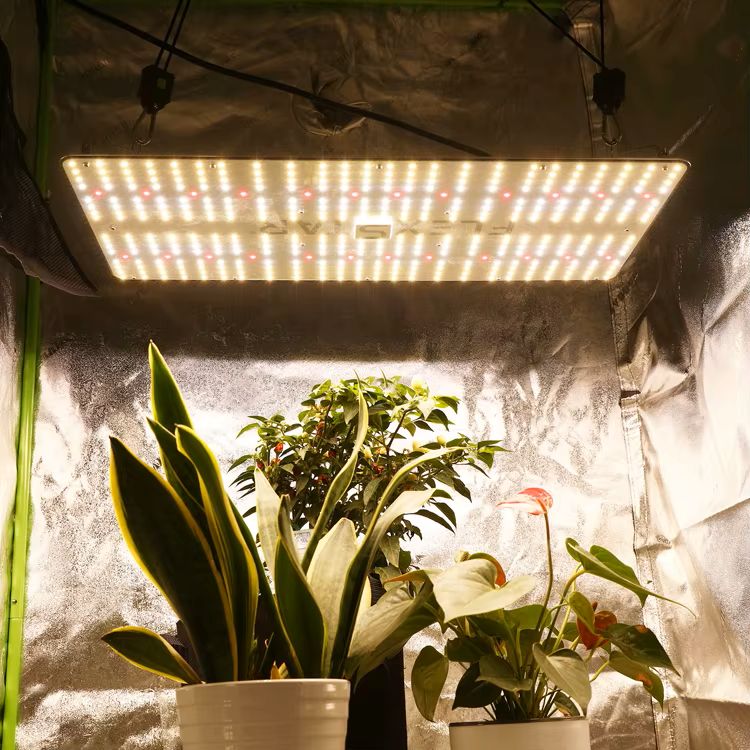
- Full-Spectrum Light: For the vast majority of indoor gardeners, a full-spectrum LED is the best and most versatile choice. These lights are designed to mimic natural sunlight, providing a balanced blend of red, blue, and other colors like green and yellow. While early LED models were known for their harsh pinkish-purple (“blurple”) glow from combining only red and blue diodes, modern full-spectrum lights produce a natural, white light that is far more pleasant to live with and makes it easier to monitor your plant’s health.
Types of Grow Lights for Indoor Plants
While LEDs are the leading technology, it’s helpful to understand how they compare to older types of grow lights.
| Type of Light | Pros | Cons | Best For |
|---|---|---|---|
| LED (Light Emitting Diode) | Highly energy-efficient, long lifespan (50,000+ hours), low heat output, full-spectrum and customizable options. | Higher initial investment cost. | Virtually all indoor growing, from beginners with a single houseplant to advanced hydroponic setups. |
| Fluorescent (CFL & T5) | Low upfront cost, low heat, good for close-proximity lighting. | Lower light intensity, shorter lifespan than LEDs, contains mercury, less efficient. | Seed starting, cloning, and growing low-light plants like herbs and lettuce. |
| HID (MH & HPS) | Extremely high light intensity, proven technology for large yields. | High energy consumption, produces significant heat (requiring ventilation), short bulb life. | Commercial operations or large-scale hobbyists growing very high-light plants. |
For home use, LEDs offer an unbeatable combination of efficiency, longevity, and performance, making the higher upfront cost a worthwhile long-term investment.
Answering Your Top Grow Light Questions
Let’s tackle a few more common questions to round out your knowledge.
What wattage grow light do I need for indoor plants?
As we’ve learned, focusing on PPFD is better than wattage alone. However, a general rule of thumb based on a light’s actual power draw can be a good starting point:
- Low-Light Plants & Seedlings: Aim for about 20-30 watts per square foot.
- Flowering & Fruiting Plants: Aim for about 30-50 watts per square foot. Always use this as a rough estimate and prioritize the manufacturer’s PPFD chart for the most accurate information.
How to choose a grow light for seedlings?
Seedlings need gentle but direct light to grow strong. They are prone to stretching and becoming “leggy” if the light is too weak or too far away. The best choice is a full-spectrum LED bar or a small panel that can be hung just a few inches above the seedlings. A dimmable feature is a huge plus, as it allows you to start at a lower intensity and gradually increase it as the plants mature. Low-cost T5 fluorescent tubes are also an excellent, time-tested option for starting seeds.
Do grow lights work in daylight?
Absolutely. The purpose of a grow light is to either supplement natural light or replace it entirely. A plant sitting in a north-facing window might receive ambient daylight, but it’s not getting the direct, intense light it needs for robust photosynthesis. A grow light fills that gap. Using your grow light during the day, especially on cloudy days or in winter, ensures your plants receive a consistent and sufficient amount of light. The key is to use a timer to maintain a regular “day/night” cycle (typically 12-16 hours on) for optimal health.
The Final Word
Choosing the right LED grow light is the single most impactful decision you can make for your indoor garden. By moving past simple wattage and focusing on the crucial metrics of PAR, PPFD, and efficacy, you can confidently select a light that meets your plants’ specific needs. With the perfect light in place, you’ll unlock the potential for a vibrant, thriving indoor jungle, no matter the season.
 Victoria Jain
  Rose DesRochers