
4 min read
642 words
“Nowadays, it’s possible to make home life vastly more convenient, secure, and fulfilling, with the help of just a few simple devices. Ideally, you’ll design your home in such a way that these devices easily integrate with one another. But exactly what goes into a great smart home? Here, we’ll consider a few of the more important ingredients.”
Below is an expanded, step‑by‑step exploration of that thought. By the end you should have a clear picture of the building blocks, design philosophies, and practical considerations that transform an ordinary dwelling into a harmonious, intelligent living space.
Embracing the Matter standard for seamless interoperability
Have you heard of the ‘Matter’ standard? Put simply, it’s a common language spoken by a variety of devices. It’s there to ensure that your devices are compatible with one another, and that you don’t end up having to ‘buy in’ to a certain manufacturer. It’s maintained by an organization known as the Connectivity Standards Alliance, which includes more than five hundred companies, including big names like Alphabet and Amazon.
It’s also worth considering Thread, which is a low-level networking protocol that allows Matter messages (but not just Matter messages) to be passed from device to device. The combination of these two technologies has made smart devices much less of a headache than they once were.
Smarter routines via natural-language automation
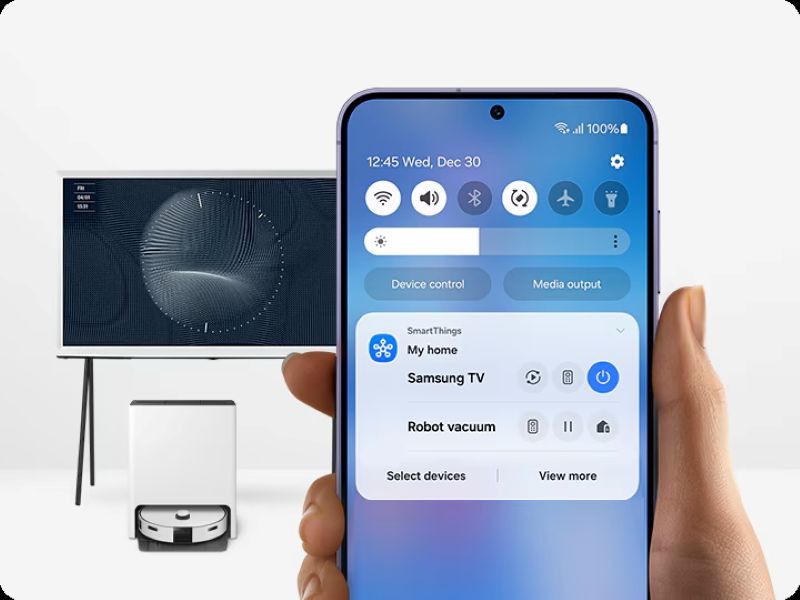
A number of manufacturers have their own clever ways of unlocking new functionality from smart devices. For example, the Routine Creation Assistant, which is part of the SmartThings home assistant platform from Samsung, allows users to set up new automations using natural language. This means that if you want to issue an instruction, you don’t need to delve through menus or learn to code: you just need to write “dim the lights at bedtime.”
This is not only much more approachable: it’s also much faster, even if you’re a coding genius.
Design with data: enhancing intelligence and redundancy
Increasingly, modern appliances are being designed and refined with the help of artificial intelligence. You might think of AI-driven voice assistants, the aforementioned rise of natural language processing, and predictive schedules, all of which were prominent at CES 2025.
Many of these devices rely on secure, high-quality cloud storage to keep track of usage patterns and other data. In cases where high-resolution video is being stored and processed, the storage needs might be considerable.
Building inclusive and assistive smart environments
Smart homes do more than simplify daily tasks. They often give people real power back in their lives. Take voice-activated fixtures, for instance. Lights turn on with a simple spoken word. Doors unlock without a key. Curtains open at your command. These setups help those with limited mobility. For older adults or people with disabilities, such tools bring back lost independence. They ease struggles with basic routines. This shift boosts personal freedom. It also lifts overall well-being. Studies show that adaptive tech cuts isolation by up to 40 percent for seniors living alone.
Think about a wheelchair user in a standard home. Reaching high shelves or flipping switches feels out of reach. But in a smart setup, sensors detect movement and adjust on their own. Beds rise or lower with voice cues. Even thermostats respond to spoken needs. These changes restore control. They turn homes into safe havens. Experts like those from the World Health Organization note that such aids reduce injury risks by half in adaptive spaces.
As tech grows stronger, these tools will spread wide. They move from special designs to everyday use. Soon, any home can adapt to a resident’s body needs. A parent with arthritis might voice-control the stove. A child with vision loss could guide robots to fetch items. This trend makes inclusion the norm. It ensures everyone lives with dignity and ease.
 Leo Allen
  Carly
Carly