

12 min read
2240 words
Waking up with a throbbing, stiff, or aching shoulder after a strenuous workout, an intense day of manual labor, or even an unexpected gardening spree is a common frustration. Shoulder pain from muscle exertion can significantly impact your daily life, limiting your range of motion, disrupting your sleep, and making simple tasks feel like monumental efforts. While rest, ice, and over-the-counter pain relievers are often the first line of defense, the quality of your sleep plays a far more critical role in muscle recovery and pain management than many realize. Enter the humble yet powerful wedge pillow. More than just a triangular cushion, a well-chosen wedge pillow can revolutionize your sleep posture, alleviate pressure on overworked shoulder muscles, and significantly contribute to your healing process. If you’ve been battling persistent shoulder discomfort after pushing your limits, it’s time to explore how this ergonomic sleep aid can help you achieve more restful nights and faster recovery.
This comprehensive guide will delve into the causes of shoulder pain from muscle exertion, highlight the crucial link between sleep and recovery, and reveal how a wedge pillow can become an indispensable tool in your journey back to pain-free movement.
Understanding Shoulder Pain from Muscle Exertion: What’s Happening in There?
Our shoulders are marvels of anatomical engineering – incredibly mobile joints designed for a vast range of movements. However, this very mobility makes them susceptible to injury, particularly from overuse or sudden exertion. When you engage in activities that challenge your shoulder muscles beyond their current capacity, you can experience various forms of muscle pain.
Common Causes of Shoulder Pain from Muscle Exertion:
- Overuse and Repetitive Strain: Activities involving repeated shoulder movements, such as throwing a ball, lifting weights, painting a ceiling, or even extended computer use with poor ergonomics, can lead to micro-tears in muscle fibers and inflammation.
- Sudden Increase in Activity: Jumping into a new workout routine or significantly increasing the intensity or duration of an existing one without proper acclimatization can shock the muscles, leading to delayed onset muscle soreness (DOMS) or more acute strains.
- Improper Form: Lifting heavy objects with incorrect technique, performing exercises with poor posture, or using unsuitable equipment can place undue stress on specific shoulder muscles and tendons.
- Lack of Warm-up or Cool-down: Skipping these vital steps can leave muscles unprepared for exertion or hinder the removal of metabolic waste products, contributing to soreness and stiffness.
- Direct Trauma (Minor): While not a severe injury, a minor bump or awkward movement during exertion can irritate already fatigued muscles.
Typical Symptoms You Might Experience:
- Dull ache or throbbing pain in the shoulder, often intensifying with movement.
- Stiffness and reduced range of motion, making it hard to lift your arm, reach behind your back, or even sleep comfortably.
- Tenderness to the touch on specific muscles around the shoulder joint.
- Weakness when attempting to move the arm against resistance.
- Muscle spasms or tightness.
While most muscle-related shoulder pain from exertion resolves with rest and conservative care, it’s crucial to distinguish it from more serious injuries. If your pain is severe, accompanied by swelling, bruising, deformity, or persistent weakness, or if it doesn’t improve after a few days of rest, seek professional medical advice.
The Critical Role of Rest and Sleep in Muscle Recovery

When you’re dealing with shoulder pain, rest isn’t just about lying on the couch; it’s about giving your body the optimal conditions to heal. And the cornerstone of effective rest is quality sleep. During sleep, your body shifts into repair mode, a sophisticated biological process essential for muscle recovery and pain reduction.
How Sleep Aids Muscle Repair:
- Growth Hormone Release: The pituitary gland releases human growth hormone (HGH) primarily during deep sleep. HGH is vital for tissue repair, muscle growth, and bone regeneration.
- Protein Synthesis: Sleep facilitates protein synthesis, the process by which your body creates new proteins, which are the building blocks of muscle tissue. This repairs micro-tears and strengthens muscles.
- Reduced Inflammation: Adequate sleep helps regulate inflammatory responses in the body. Chronic sleep deprivation, conversely, can increase systemic inflammation, exacerbating pain.
- Energy Restoration: Muscles need energy (ATP) to function and repair. Sleep allows your body to replenish energy stores, preparing muscles for future activity.
- Pain Modulation: Sleep profoundly affects our perception of pain. A good night’s rest can lower your pain threshold and improve your ability to cope with discomfort, whereas sleep deprivation can heighten pain sensitivity.
The Vicious Cycle: Shoulder Pain and Poor Sleep
Unfortunately, shoulder pain often creates a vicious cycle. The discomfort makes it difficult to find a comfortable sleeping position, leading to fragmented or insufficient sleep. Poor sleep, in turn, hampers recovery, potentially prolonging the pain and making you more irritable and less able to cope. This is where strategic sleep aids, like a wedge pillow, can break the cycle.
Introducing the Wedge Pillow: Your Ally Against Shoulder Pain
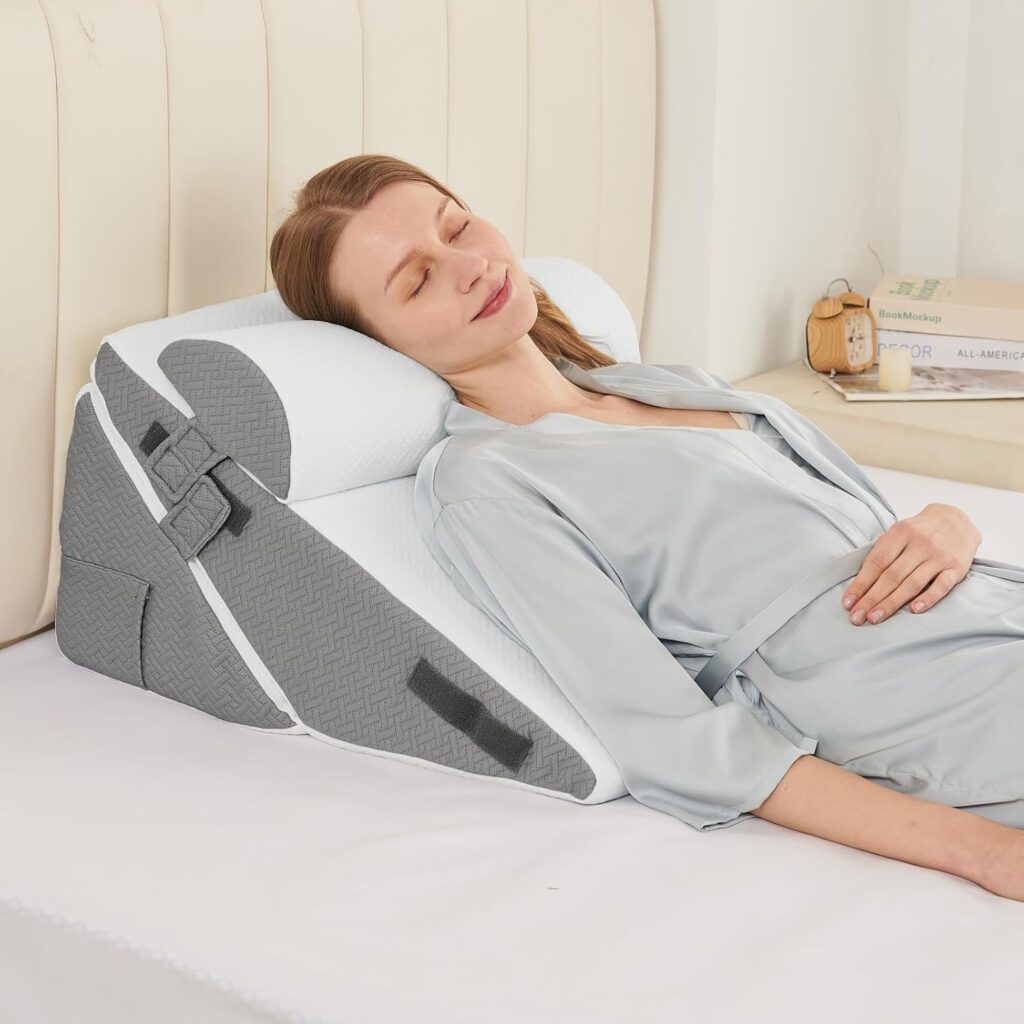
You’ve likely seen wedge pillows – those triangular-shaped cushions designed to elevate certain parts of your body. But what makes them so effective, especially for shoulder pain stemming from muscle exertion?
A wedge pillow is more than just a prop; it’s an ergonomic sleep system designed to support your body’s natural alignment. Typically made from high-density foam (often memory foam for added comfort and pressure relief), these pillows come in various angles and sizes. Their primary function is to create an inclined sleeping surface, gently elevating your head, neck, and upper torso.
How a Wedge Pillow Works Generally:
- Elevated Position: By raising your upper body, a wedge pillow utilizes gravity to your advantage, reducing pressure on certain joints and improving circulation.
- Spinal Alignment: It helps maintain a more neutral spinal alignment, from your lower back right up to your neck, preventing awkward angles that can exacerbate pain.
- Reduced Tossing and Turning: The supportive, inclined surface can help you stay in a more stable, comfortable position throughout the night, minimizing disruptive movements.
How a Wedge Pillow Specifically Targets Shoulder Pain from Muscle Exertion
While general benefits are great, let’s zero in on how a wedge pillow can be a game-changer for your aching shoulders.
- Pressure Relief and Distribution:
- Side Sleepers: For many side sleepers, resting directly on an injured or sore shoulder can be excruciating. A wedge pillow, when used under your head and shoulders, allows your upper body to be slightly elevated and angled. This can reduce the direct pressure on the rotator cuff and deltoid muscles, distributing weight more evenly across your back and torso rather than pinpointing it on the injured shoulder. Some even place a smaller wedge or traditional pillow under the injured arm to further lift and support it, preventing it from drooping and stretching already tender muscles.
- Back Sleepers: If you typically sleep on your back, an overly flat pillow can cause your shoulders to round forward, putting strain on the chest and shoulder muscles. A wedge pillow elevates your upper back and shoulders, allowing them to relax backward into a more natural, open position. This helps decompress the shoulder joints and relax strained muscle groups.
- Optimal Spinal Alignment for Shoulder Health: The shoulder girdle is intimately connected to the cervical (neck) and thoracic (upper back) spine. When your spine is misaligned, it can pull on shoulder muscles, nerves, and ligaments, increasing tension and pain. A wedge pillow helps:
- Maintain a neutral neck position, preventing forward head posture that can strain trapezius and levator scapulae muscles, which are often involved in shoulder pain.
- Support the natural curve of your upper back, preventing slump-like posture that can roll the shoulders forward and pinch nerves or muscle tissues. This holistic alignment is crucial for allowing the shoulder muscles to fully relax and heal.
- Reduces Tossing and Turning: When you’re in pain, every movement can be a reminder of your discomfort. A wedge pillow provides a stable, cushioned surface that encourages you to stay in one beneficial position. By minimizing restless movements, you reduce the chances of inadvertently re-aggravating your shoulder or adopting poor postures during sleep, allowing for uninterrupted healing.
- Improved Circulation: Elevation, even slight, can aid in circulation by reducing gravitational pooling in certain areas. Better blood flow means more oxygen and nutrients delivered to injured tissues and more efficient removal of waste products, accelerating the healing process.
- Reduced Inflammation (Indirect Benefit): While the pillow itself doesn’t directly reduce inflammation, the improved sleep quality, better circulation, and reduced pressure it provides contribute to an environment conducive to the body’s natural anti-inflammatory processes, potentially lessening swelling and discomfort around the shoulder.
Beyond Shoulder Relief: Additional Benefits of a Wedge Pillow
While directly addressing shoulder pain, a wedge pillow offers several other advantages that contribute to overall well-being, indirectly supporting your recovery:
- Acid Reflux (GERD) Relief: The elevated position helps gravity keep stomach acid down, preventing heartburn and improving sleep quality for those who suffer from reflux.
- Snoring and Breathing Improvement: By keeping airways more open, a wedge pillow can reduce snoring and alleviate symptoms of mild sleep apnea, leading to better oxygen intake and more restorative sleep.
- Post-Surgery Recovery: Often recommended by doctors for elevation after various surgeries, including some shoulder procedures, to reduce swelling and facilitate recovery.
- Comfort for Pregnancy: Can provide comfortable support for expectant mothers, especially in later trimesters.
- Reading and Lounging: Offers excellent support for sitting up comfortably in bed to read, watch TV, or work on a laptop.
Choosing the Perfect Wedge Pillow for Your Needs
Selecting the right wedge pillow is key to maximizing its benefits. Consider the following factors:
- Angle/Incline: Wedge pillows typically range from 7 to 12 inches in height.
- Lower Angles (7-10 inches): Good for general comfort, mild acid reflux, and often suitable for back sleepers with shoulder pain seeking gentle elevation.
- Higher Angles (10-12+ inches): More aggressive elevation, beneficial for severe acid reflux, respiratory issues, or if you need significant upper body lift for side sleeping support. For shoulder pain, you might start with a moderate angle and adjust.
- Material:
- Memory Foam: Conforms to your body, offering excellent pressure relief and support. Ideal for contouring around your shoulder and neck. Can sometimes retain heat, so look for gel-infused or open-cell memory foam.
- Polyfoam: More responsive and less contouring than memory foam, often more affordable.
- Hybrid: Some wedges combine layers of different foams for a balance of support and comfort.
- Size:
- Small (Head & Shoulder): Supports just your head and upper back.
- Large (Full Torso): Extends further down your back, offering more comprehensive support for your entire upper body. For shoulder pain, a larger wedge that supports your entire upper back and allows your shoulders to rest fully on the incline is often more beneficial.
- Firmness: This is subjective. A pillow that’s too soft won’t provide adequate support, while one that’s too firm might create new pressure points. Medium-firm is often a good starting point, offering a balance of cushion and support.
- Cover Material: Look for breathable, washable covers (e.g., cotton, bamboo) for hygiene and temperature regulation.
Tip for Side Sleepers: If you primarily sleep on your side, you might use a wedge pillow under your head and upper back, and then place a smaller, softer pillow or medical wedge between your arm and torso or under your arm to elevate the affected shoulder slightly and prevent it from collapsing onto the mattress. This creates a “hovering” effect, taking pressure off the joint.
Optimizing Your Recovery: Integrating Your Wedge Pillow with Other Strategies

A wedge pillow is a powerful tool, but it’s most effective when part of a holistic recovery plan.
- Listen to Your Body and Rest: This is paramount. Avoid activities that worsen your shoulder pain. Give your muscles time to heal.
- Ice and Heat Therapy:
- Ice: Apply ice packs for 15-20 minutes several times a day in the acute phase (first 24-48 hours) to reduce inflammation and numb pain.
- Heat: After the acute phase, moist heat can help relax tight muscles and improve blood flow.
- Gentle Stretching and Movement: Once initial pain subsides, very gentle range-of-motion exercises (like pendulum swings or arm circles without resistance) can prevent stiffness and promote flexibility. Consult a physical therapist for appropriate exercises.
- Over-the-Counter Pain Relief: NSAIDs like ibuprofen or naproxen can help manage pain and inflammation.
- Maintain Good Posture Throughout the Day: Be mindful of your posture at your desk, while lifting, and during daily activities. Poor daytime ergonomics can undo your nighttime efforts.
- Hydration and Nutrition: Support muscle repair by staying well-hydrated and consuming a balanced diet rich in protein, vitamins, and minerals.
- Consult a Professional: If your pain doesn’t improve, worsens, or significantly limits your function, seek advice from a doctor, physical therapist, or chiropractor. They can diagnose underlying issues and provide tailored treatment plans.
Embrace Restful Recovery
Shoulder pain from muscle exertion is a common, often frustrating experience. It serves as a clear signal from your body that it needs recovery and support. While the path to healing involves various strategies, the quality of your sleep stands out as a critical, often overlooked component.
By investing in a quality wedge pillow and integrating it into a comprehensive recovery plan, you can transform your nights from restless struggles into periods of deep, restorative healing. You’ll not only alleviate direct pressure on your aching shoulder but also promote better spinal alignment, reduce inflammation, and enhance your body’s natural ability to repair itself. Don’t let shoulder pain dictate your nights and limit your days. Explore the benefits of a wedge pillow and reclaim the comfortable, pain-free sleep your body deserves for optimal recovery and renewed strength.
 Carly
Carly  Lynn Leblanc