

7 min read
1262 words
If you work a desk job, you spend a significant portion of your life in one specific piece of furniture: your office chair. We often think of it as a simple necessity, a place to sit while we work. But this seemingly benign object has a profound impact on our physical well-being. A great office chair can support your body, boost your focus, and prevent chronic pain. A bad one, however, can be a silent saboteur, slowly contributing to a cascade of health issues.
Many of us tolerate discomfort, assuming that aches and pains are just a normal part of the workday. We might blame our posture or a long week, but often, the root cause is the very thing designed to support us. Your body is constantly sending you signals. The key is learning to listen. This guide will help you decode those messages and identify the critical warning signs that your office chair is doing more harm than good.
The Obvious Alarms: Chronic Pain and Discomfort
The most direct way your body communicates a problem is through pain. If you consistently end your workday feeling worse than when you started, your chair is a prime suspect. These physical symptoms are not just minor annoyances; they are indicators of underlying stress on your musculoskeletal system.
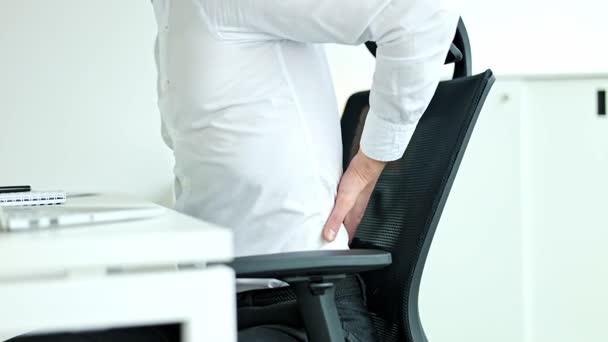
- Persistent Lower Back Pain: This is the hallmark sign of an inadequate office chair. A healthy spine has a natural “S” curve. When you sit in a chair without proper lumbar support, your lower back (the lumbar region) flattens, and your pelvis tilts backward. This forces your spine into an unnatural “C” shape, placing immense strain on the spinal ligaments, discs, and surrounding muscles. If you find yourself stuffing a pillow behind your back or experiencing a dull, persistent ache in your lower back, your chair is failing its most fundamental job.
- Neck and Shoulder Strain: Do you frequently find yourself rolling your shoulders or rubbing a stiff neck? Your chair is likely a contributor. This type of pain often stems from improper armrest height. If the armrests are too high, they force your shoulders to shrug upwards, creating tension. If they’re too low, you may lean to one side or slouch forward to rest your arms, straining your neck and upper back. Similarly, if your chair height isn’t adjusted correctly relative to your desk and monitor, you’ll crane your neck up or down, leading to guaranteed stiffness and pain.
- Numbness or Pain in Hips and Legs: That “pins and needles” feeling in your thighs or pain in your glutes isn’t just a sign you’ve sat for too long—it’s a sign of poor circulation and nerve compression. This is often caused by a seat pan that is either too long or too hard. If the edge of the seat presses into the back of your knees, it can restrict blood flow and irritate the sciatic nerve. A seat cushion that has lost its padding (“bottomed out”) provides no support, putting direct pressure on your sit bones and tailbone, leading to discomfort and hip pain.
The Subtle Saboteurs of Posture and Productivity
Not all signs are as overt as sharp pain. Sometimes, a bad chair’s negative influence is more subtle, chipping away at your posture and your ability to concentrate. These behavioral cues are your body’s unconscious attempts to compensate for a lack of support.
- You’re Constantly Readjusting: Do you find yourself shifting your weight, crossing and uncrossing your legs, or wriggling in your seat every few minutes? This restlessness isn’t a lack of focus—it’s your body’s inability to find a stable, comfortable, and supported position. A well-designed ergonomic chair should hold you comfortably for extended periods. Constant fidgeting is a clear sign that your chair is forcing your muscles to do the work that its structure should be doing.
- Slouching Becomes Your Default Position: Good posture shouldn’t feel like a constant battle. A quality ergonomic chair is designed to encourage proper spinal alignment. It provides cues and support that make sitting upright feel natural. If you start your day sitting tall but inevitably find yourself slumped forward with a rounded back within an hour, your chair is not providing the necessary thoracic or lumbar support to maintain that posture. It’s allowing gravity to win, forcing your body into a fatiguing and damaging slouch.
- Your Focus and Energy Plummet: Physical discomfort is a major cognitive distraction. When your body is sending low-level pain signals to your brain, or when you’re subconsciously using energy to hold an uncomfortable position, there is less mental bandwidth available for complex tasks. If you feel unusually drained, distracted, or unproductive by mid-afternoon, consider your physical environment. It’s difficult to maintain peak mental performance when your body is fighting a losing battle against your furniture.
The Chair’s Own Red Flags: Design Flaws and Deterioration
Sometimes, you don’t need to listen to your body; you just need to look at the chair itself. A chair’s physical condition and its range of features (or lack thereof) can tell you everything you need to know about its ability to support you.
- A Glaring Lack of Adjustability: The word “ergonomic” is defined by adjustability. Humans come in all shapes and sizes, and a “one-size-fits-all” approach simply doesn’t work for a tool you use eight hours a day. If your chair is missing any of these key adjustable features, it is fundamentally not a good chair for your health:
- Seat Height: Your feet should rest flat on the floor with your knees at a 90-degree angle.
- Lumbar Support: The backrest should have a curve that can be adjusted in height and depth to fit the small of your back perfectly.
- Armrest Height & Width: Your shoulders should be relaxed, and your forearms parallel to the floor.
- Seat Pan Depth: You should have 2-3 inches of space between the edge of the seat and the back of your knees.
- Tilt/Recline Function: The ability to recline slightly helps shift your body weight and relieve pressure on your spinal discs.
- Visible Wear and Tear: A chair is a piece of mechanical equipment that wears out over time. A seat cushion that is visibly compressed or flattened no longer distributes your weight effectively. A gas cylinder that slowly sinks throughout the day puts you in a poor position relative to your desk. Wobbly armrests, a creaking base, or wheels that stick are all signs that the chair has reached the end of its functional life and is no longer providing stable support.
The Path to Better Health: Taking Action
Recognizing that your chair is a problem is the first step. Tolerating it is a choice you don’t have to make. Your long-term health is an investment, and your office chair is one of the most important tools for protecting it.
Start by conducting an audit of your current chair. Go through the checklist of adjustable features. Assess its physical condition. Most importantly, pay close attention to how your body feels at the end of the day. If you identify several of these red flags, it’s time for a change. Look for a truly ergonomic chair that allows you to customize it to your body. If you’re in a corporate office, document your issues and speak with your manager or HR department about ergonomic solutions.
Your office chair shouldn’t be a source of pain. It should be a foundation for comfort, focus, and good health. Don’t wait for a minor ache to become a chronic condition—listen to the signs and give your body the support it deserves.
 Kim Monroe
  Hailey Reynolds