
7 min read
1389 words
The twinkling glow of holiday lights is undeniably one of the most joyous and defining features of the Christmas season. As the days grow shorter and the air turns crisp, there’s a natural urge to transform our homes into festive beacons. But before you embark on your annual decorating spree, it’s wise to pause and consider: Are Outdoor Christmas Lights Bad for Your Home?
While the magic of illuminated greenery and rooflines is undeniable, a little preparation and knowledge can prevent potential hazards, protect your property, and ensure your holiday display shines bright without any unwelcome, costly consequences. This guide will walk you through the essential considerations, from safety precautions to damage prevention.
Navigating the Illumination: Safety First, Sparkle Second
The allure of dazzling outdoor displays can sometimes overshadow the practicalities of electrical safety. It’s crucial to remember that you’re essentially introducing electricity to the exterior of your home, often in challenging weather conditions.
Should outdoor Christmas lights be left on all night? This is a question that often sparks debate. While the temptation to enjoy the festive ambiance around the clock is strong, leaving lights on all night can pose several risks. Firstly, it’s a significant drain on your electricity bill. More importantly, though, it increases the duration of potential electrical faults. Overheating, faulty wiring, or short circuits are less likely to be noticed and addressed when no one is around to see them. For safety and energy efficiency, it’s best to use a timer to automatically turn your lights on and off. This allows you to enjoy them during peak evening hours and provides a crucial safety net by reducing the time they are powered.
Can you leave outdoor Christmas lights on in the rain? This is a resounding “no” without proper precautions. While many modern outdoor lights are designed to be weather-resistant, this doesn’t mean they are entirely impervious to water. The primary concern is the ingress of moisture into electrical connections. Water is a conductor of electricity, and when it comes into contact with live wires or faulty connections, it can lead to short circuits, blown fuses, or even electrocution. Always ensure that any outdoor lights you purchase are specifically rated for outdoor use and that all connections are completely dry and secure before powering them on, especially if rain is in the forecast. Investing in outdoor-rated extension cords and ensuring they are in good condition is equally vital.
Should you wrap Christmas lights with electrical tape? This is a practice that should be approached with caution and is generally not recommended as a primary solution for securing light strands. While electrical tape is designed for insulating electrical wires, it’s not a permanent or robust solution for outdoor holiday lighting. Over time, temperature fluctuations, UV exposure, and moisture can degrade the adhesive and the tape itself, rendering it ineffective and potentially creating a fire hazard or leaving exposed wires. Instead of relying on electrical tape, focus on using lights specifically designed for outdoor use, ensuring they are in good condition, and employing appropriate mounting hardware. If you discover a frayed wire or a damaged section on a light strand, it’s far safer to discard that section or the entire string and replace it with a new, undamaged one.
Should you cover outdoor Christmas light connections? Absolutely, yes! This is one of the most critical steps in ensuring the safety of your outdoor holiday display. Outdoor-rated light connections are designed to withstand some exposure, but they are not designed to be submerged or constantly battered by the elements. Using specialized outdoor-rated connection covers, also known as “light clips” or “weatherproof covers,” provides an essential layer of protection against rain, snow, and moisture. These covers seal the connection points, preventing water from entering and causing shorts or electrical hazards. Always ensure the covers fit snugly and are designed for the type of connections you are using.
Protecting Your Property: Hanging Lights Without a Hitch
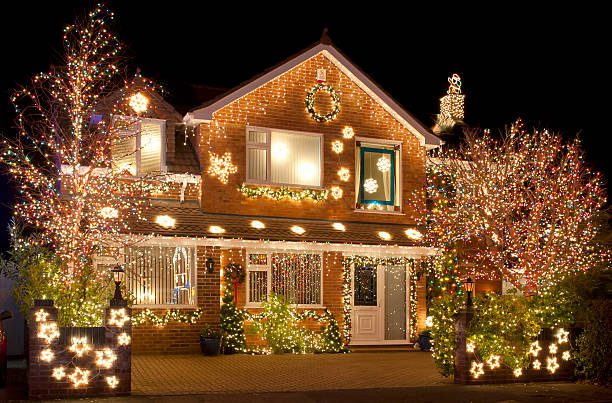
Beyond electrical safety, the physical act of hanging lights can also pose a risk to your home’s exterior. From chipped paint to damaged gutters, improper installation can lead to costly repairs. Fortunately, with a little care and the right tools, you can achieve a stunning display without harming your property.
How to hang Christmas lights without damaging your house? This is where thoughtful planning and the right supplies come into play.
- Choose the Right Fasteners: Avoid using nails or staples directly into your siding or window frames. These can create permanent holes that allow moisture to penetrate and can be difficult to repair. Instead, opt for specialized light clips designed for various surfaces. There are clips for shingles, gutters, vinyl siding, and even brick. These clips are designed to grip securely without causing damage and are easily removed after the season. For delicate surfaces, consider using adhesive clips that are specifically formulated to be removed cleanly without leaving residue.
- Respect Your Gutters: Gutters are a common place to hang lights, but they can be fragile. Use gutter clips that are designed to hook over the edge without putting excessive stress on the gutter system. Avoid overloading your gutters with heavy light strands, as this can bend or detach them. Ensure the clips are evenly spaced to distribute the weight.
- Safeguard Your Roof: If you plan to drape lights along your roofline, be extremely cautious. Avoid walking on your roof if at all possible, especially if it’s wet or icy. Use a sturdy ladder that is correctly positioned and secured. Consider using extension poles with clips to reach areas without having to step onto the roof. For shingles, look for clips that slide underneath the shingles without causing damage.
- Protect Your Paint and Siding: When securing lights to walls or siding, use adhesive clips or hooks that are designed for outdoor use and won’t damage the paint finish or the material itself. Test a small, inconspicuous area first to ensure the adhesive removes cleanly.
- Consider the Weight: Be mindful of the total weight of your light strands. Heavier lights or densely packed displays can put a strain on the surfaces they are attached to. Opt for lighter LED lights, which are also more energy-efficient.
- Plan Your Power Source: Identify where your power outlets are located and plan your extension cord routing carefully. Avoid running cords across high-traffic areas where they could be tripped over. Ensure extension cords are in good condition and rated for outdoor use. Secure them with clips or ties to prevent them from dangling precariously.
How do I stop my outdoor Christmas lights from tripping the breaker? Tripped breakers are a common and frustrating problem with holiday lights. This usually indicates an overload on the circuit or a short circuit.
- Understand Circuit Capacity: Electrical circuits have a maximum wattage they can safely handle. Check the wattage of your light strands and the capacity of the circuit you are using. Avoid plugging too many high-wattage items into a single circuit.
- Use LED Lights: LED Christmas lights consume significantly less energy than traditional incandescent bulbs, making them a much safer and more energy-efficient choice that is less likely to trip a breaker.
- Inspect for Damage: Damaged or frayed wires are a prime cause of short circuits. Before plugging in your lights, thoroughly inspect every strand. If you find any damage, do not use that strand.
- Avoid Overlapping Circuits: Don’t run multiple extension cords from different circuits to the same general area if it’s already heavily loaded.
- Check for Water Damage: As mentioned earlier, water and electricity are a dangerous combination. Ensure all connections are dry and properly covered. Moisture ingress can cause shorts.
- Use Multiple Circuits: Distribute your lights across different circuits in your home rather than plugging them all into one. This helps to prevent overloading any single circuit.
- Test Your GFCI Outlets: Ground Fault Circuit Interrupter (GFCI) outlets are designed to shut off power quickly if they detect an imbalance in the electrical current, which can happen due to a fault. Ensure any outdoor outlets you use are GFCI protected and test them regularly.
By taking these proactive steps, you can ensure your home is illuminated with the dazzling spirit of the holidays without compromising its safety or integrity. So, gather your supplies, plan your design, and get ready to make your home the star of the neighborhood – safely and beautifully!
 Mahi Patel
  Kayla Baptiste
  Lynn Leblanc