Flexible Workspace Solutions: Designing for Changing Needs
8 min read
1576 words
The way we work is changing. With the rise of remote work, hybrid teams, and increasingly flexible work arrangements, businesses are rethinking how their offices are designed and used. Rather than maintaining a traditional office where every employee has a permanently assigned desk, many businesses are looking for flexible workspace solutions that can adapt as their teams, technology, and day-to-day needs change.
Flexible workspace solutions are designed to give businesses more freedom in how they use their available space. Instead of creating an office that serves only one purpose, a flexible workplace can include areas for focused work, meetings, collaboration, informal conversations, and individual tasks. Furniture, partitions, technology, and other design elements can also be rearranged as the needs of the business evolve.
For businesses planning a new office or updating an existing one, working with an experienced office fitout provider can make the process easier. Fitouts Melbourne can help businesses design and implement flexible workspace solutions tailored to their workplace, team, and operational requirements. Ongoing support can also help ensure that the office continues to work effectively as the business grows and changes.
Benefits of Flexible Workspace Solutions
Improved Employee Satisfaction
A flexible workplace gives employees more choice in how and where they work. Not every task requires the same environment. An employee may need a quiet area when concentrating on an important project, while another task may be better suited to a collaborative space where colleagues can exchange ideas.
Providing a variety of work areas can make employees feel more comfortable and supported throughout the day. When people can choose an environment that suits the task they are completing, they may also find it easier to concentrate, collaborate, and manage different types of work.
Better Use of Office Space
Traditional offices can contain large areas that are not used consistently. For example, a meeting room may remain empty for much of the day, while individual desks may sit unused when employees are working remotely.
Flexible design can help businesses make better use of the space they already have. Areas can be designed to serve multiple purposes, while movable furniture and partitions make it possible to change the layout when necessary.
This can be particularly useful for businesses with hybrid teams, where employees may not all be in the office at the same time.
Reduced Long-Term Costs
Flexible workspace solutions can help businesses manage their office costs more effectively. Instead of committing to a large amount of permanent space for every employee, businesses can design an environment that reflects how their teams actually work.
Modular furniture and adaptable design elements can also be reused when the office layout changes. Rather than replacing an entire workspace whenever the business grows or reorganizes, existing components may be moved or reconfigured to accommodate new requirements.
Increased Agility and Adaptability
Businesses rarely stay exactly the same. Teams grow, departments change, new technology is introduced, and working arrangements evolve. An office designed around a fixed structure can become difficult to adapt when these changes occur.
A flexible workspace makes it easier to respond. Work areas can be rearranged, meeting spaces can be repurposed, and furniture can be moved to accommodate changing team sizes or work requirements.
This adaptability can be especially valuable for growing businesses that do not yet know exactly what their workspace requirements will look like several years from now.
Support for Different Working Styles
Employees have different responsibilities and working preferences. Some may spend much of their day in meetings, while others require extended periods of uninterrupted concentration. Some tasks require teamwork, while others are best completed independently.
A flexible workplace can accommodate these differences by providing a mixture of environments rather than expecting everyone to work effectively in the same type of space.
How to Design a Flexible Workspace
Start by Understanding Your Needs
The first step is to understand how your business and employees currently use the workplace. Consider the size of your team, the types of work employees perform, how frequently they work remotely, and which areas of the existing office are used most often.
It can also be helpful to identify common problems with the current layout. Perhaps employees struggle to find quiet areas for focused work, meeting rooms are difficult to book, or the existing furniture makes it difficult to rearrange the space.
Understanding these challenges provides a useful starting point for creating a more effective design.
Consider Future Growth
A flexible workspace should not only meet today’s requirements. It should also allow room for change.
Consider whether your business expects to add employees, introduce new departments, change working arrangements, or expand its use of technology. Designing with future needs in mind can reduce the need for major renovations every time the business changes.
A workspace that can be modified without completely starting over can provide greater value over time.
Use Modular Furniture and Design Elements
Modular furniture is one of the simplest ways to introduce flexibility into an office. Desks, tables, seating, storage, and partitions can be selected with rearrangement in mind.
Movable walls or partitions can also allow larger areas to be divided into smaller spaces when privacy or focused work is required. When the space is needed for a larger meeting or collaborative activity, those areas can potentially be opened up again.
The goal is to create an office that can change without requiring extensive construction every time the business has a new requirement.
Create a Variety of Work Areas
A flexible office should offer employees different environments for different activities.
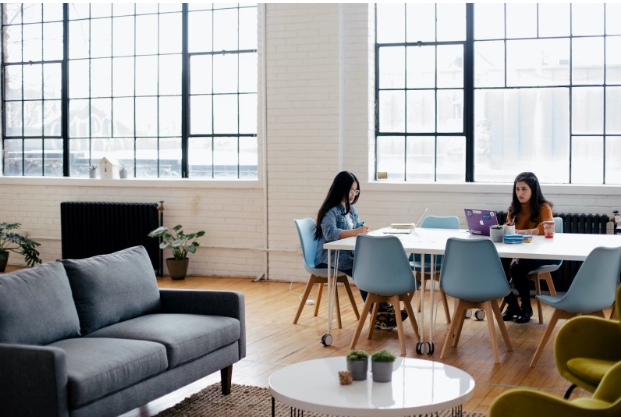
A workspace might include traditional workstations for everyday tasks, private areas for focused work, meeting rooms for formal discussions, open spaces for collaboration, and comfortable informal areas for short conversations or breaks.
The right combination will depend on the business. There is no single flexible office design that works for every company.
Make Collaboration Easier
Hybrid and flexible working arrangements can make communication more complicated when employees are not always in the same location. Office design can help address this by providing comfortable and functional collaboration areas.
Open meeting areas, small discussion rooms, shared tables, and technology-enabled meeting spaces can give employees options for working together without requiring every conversation to take place in a traditional boardroom.
Use Technology Effectively
Technology is an important part of the modern flexible workplace. Video conferencing equipment, wireless connectivity, shared displays, charging stations, and other workplace technology can help employees work effectively whether their colleagues are in the same office or joining remotely.
Technology should be considered alongside the physical design rather than treated as an afterthought. Equipment needs to be accessible, easy to use, and positioned in a way that supports the activities taking place in each space.
Examples of Flexible Workspace Solutions

Hot Desking
Hot desking is a workspace arrangement where employees do not have permanently assigned desks. Instead, they use available workstations when they are in the office.
This can be useful for businesses with hybrid employees who may only work from the office on certain days. It can also allow a business to make better use of its available workspace.
However, hot desking works best when employees have appropriate storage, access to technology, and clear processes for using shared workstations.
Activity-Based Workspaces
Activity-based workspaces provide different areas designed around specific types of work.
For example, an office could have quiet areas for concentration, collaborative areas for teamwork, private rooms for meetings, and informal spaces for conversations or breaks.
This approach recognizes that employees may need different environments throughout the day rather than one permanent workstation for every task.
Co-Working Spaces
Co-working spaces provide shared work environments used by multiple businesses, freelancers, and professionals. They can provide an alternative to leasing and furnishing a traditional private office.
For smaller businesses, start-ups, or companies with changing space requirements, co-working can provide access to professional workspace without the same long-term commitment associated with a conventional office.
Multipurpose Meeting Areas
Meeting spaces do not always have to be dedicated rooms that serve one purpose. Flexible furniture and movable partitions can allow an area to be used for meetings, training sessions, presentations, collaborative projects, or other activities.
This can help businesses get more value from limited office space.
Creating a Workplace That Can Grow With Your Business
A flexible workspace is ultimately about creating an office that can adapt rather than remain fixed. Businesses should consider not only where employees sit, but how they move through the workplace, collaborate with colleagues, meet with clients, concentrate on individual tasks, and use technology.
The most effective flexible workspace does not necessarily require the latest furniture or the largest office. It requires thoughtful planning based on how the business actually operates.
As working arrangements continue to evolve, flexibility can become an important part of office design. By incorporating adaptable furniture, multipurpose areas, appropriate technology, and a variety of work environments, businesses can create workplaces that support employees today while remaining prepared for future changes.
Conclusion
Flexible workspace solutions can give businesses greater freedom to adapt their offices as their teams and working practices change. They can support employee choice, make better use of available space, encourage collaboration, and reduce the disruption associated with future changes to the workplace.
Whether a business is creating a new office or updating an existing one, the key is to design with both current and future needs in mind. A well-planned flexible workspace can provide an environment that works for different employees, different tasks, and different stages of business growth.