

11 min read
2138 words
From the moment a child reaches for a colorful toy, curious about its texture and sound, or splashes with glee in a puddle, observing ripples and reflections, they are inherently engaging in a profound form of scientific exploration. They’re experimenting, observing, forming hypotheses, and drawing conclusions about the fascinating world around them. This innate curiosity is a powerful driver for learning, and nurturing this natural scientific spirit through early science education is far more than just teaching facts; it’s about fostering critical thinking, igniting problem-solving skills, and instilling a lifelong love of discovery.
In an increasingly complex and technologically advanced world, equipping children with the fundamental tools for inquiry and understanding is paramount. Early exposure to scientific concepts doesn’t just prepare them for future academic success in STEM fields; it lays a robust foundation for holistic development, empowering them to navigate challenges and embrace opportunities across all areas of life. This comprehensive guide explores the profound importance of early science education, detailing its myriad benefits and offering practical, accessible ways for parents and educators to integrate scientific thinking into a child’s everyday experiences.
Why Early Science Matters: More Than Just Labs and Textbooks
Often, when we think of “science,” images of complex equations, white lab coats, and sterile environments come to mind. However, for young children, science isn’t confined to elaborate experiments or specialized textbooks. Instead, it’s a fundamental way of thinking – a precise method of inquiry that empowers them to understand, interpret, and constructively interact with their immediate environment. Introducing science early in a child’s developmental journey provides a crucial foundation for grasping more complex concepts later in life. More profoundly, it equips them with an invaluable set of transferable skills that are applicable to every facet of existence.
Consider the simple act of a child dropping a toy repeatedly. They are, in essence, conducting an experiment on gravity. When they try to fit different shapes into a sorter, they are engaging in classification and spatial reasoning. Early childhood science education recognizes and builds upon these spontaneous activities, transforming them into structured (though often playful) learning opportunities. It’s about building a robust framework for understanding cause and effect, encouraging systematic observation, and fostering a sense of wonder about how things work.
By providing children with early scientific experiences, we are not merely teaching them about animals or planets; we are cultivating their capacity for logical reasoning and encouraging them to question, investigate, and seek answers. This early developmental push supports cognitive growth, language acquisition, and social-emotional learning, making science a truly interdisciplinary endeavor crucial for comprehensive child development.
Benefits Beyond the Classroom: Cultivating Essential Life Skills
The impact of early science education extends far beyond the confines of a traditional classroom, deeply influencing a child’s overall development. It cultivates a robust range of essential skills that serve as cornerstones for success in school and throughout life.
1. Fostering Critical Thinking
At its core, science is about asking “why” and “how.” Early science experiences naturally encourage children to develop their critical thinking skills by prompting them to analyze information, make connections, and form their own conclusions based on evidence. When a child observes a seed sprout, they don’t just see a plant; they might wonder, “Why does it need water?” or “How does it grow taller?” This process encourages them to move beyond surface-level observations, challenging assumptions and developing a more profound understanding of phenomena. They learn to evaluate what they see, hear, and experience, a skill invaluable in navigating information in the digital age.
2. Enhancing Problem-Solving Abilities
Through hands-on experimentation and careful observation, children are naturally guided to identify problems, develop initial hypotheses, and test potential solutions. Whether it’s figuring out how to balance a tower of blocks, or discovering why certain objects float while others sink, early science activities are rich with opportunities for problem-solving skills development. They learn the iterative process of trial and error, resilience in the face of initial failure, and the satisfaction of finding a successful approach. This foundational understanding of the scientific method – observe, question, hypothesize, experiment, conclude – empowers them to tackle challenges effectively in all aspects of their lives.
3. Strengthening Communication Skills
Science is inherently a social activity. Discussing observations, sharing findings, and articulating ideas with others helps children develop their communication skills significantly. Describing what they see, explaining their reasoning, and listening to others’ perspectives builds vocabulary, strengthens descriptive language, and encourages active listening. Whether they are explaining why their baking soda volcano erupted faster with more vinegar or describing the different types of leaves they found on a nature walk, children learn to articulate their thoughts clearly and persuasively, fostering valuable collaborative skills.
4. Igniting Creativity and Innovation
Far from being a rigid subject, science actually encourages innovative thinking and the exploration of new possibilities. When children are given open-ended materials and encouraged to experiment without fear of “being wrong,” they unleash their imagination. Designing an apparatus to clean dirty water, creating new color mixtures, or imagining how an insect built its home all foster creativity and imagination. Science encourages children to think “outside the box,” to envision alternatives, and to design original solutions, laying the groundwork for future innovators.
5. Sharpening Observation Skills
Before a child can analyze or problem-solve, they must first learn to observe carefully. Early science education explicitly nurtures attentive observation skills. Children learn to pay close attention to details, notice patterns, and identify subtle changes in their environment. This might involve watching a caterpillar transform, noting the different sounds birds make, or observing how ice melts at varying rates. This heightened awareness of their surroundings enriches their understanding and appreciation of the natural world.
6. Building Patience and Perseverance
Scientific inquiry rarely yields immediate results. Experiments might fail, hypotheses might be wrong, and solutions might require multiple attempts. This process naturally cultivates patience and perseverance in children. They learn that discovery often takes time, effort, and repeated attempts. This resilience in the face of challenges is a crucial life skill that extends to academic tasks, personal goals, and social interactions.
7. Developing Fine and Gross Motor Skills
Many hands-on science activities inherently involve the development of both fine and gross motor skills. Pouring liquids, manipulating small objects with tweezers, building structures with blocks, stirring ingredients, or digging in a garden all contribute to physical dexterity. These actions enhance hand-eye coordination, strengthen muscle control, and prepare children for writing and other complex tasks.
Simple Ways to Incorporate Science at Home: Everyday Wonders
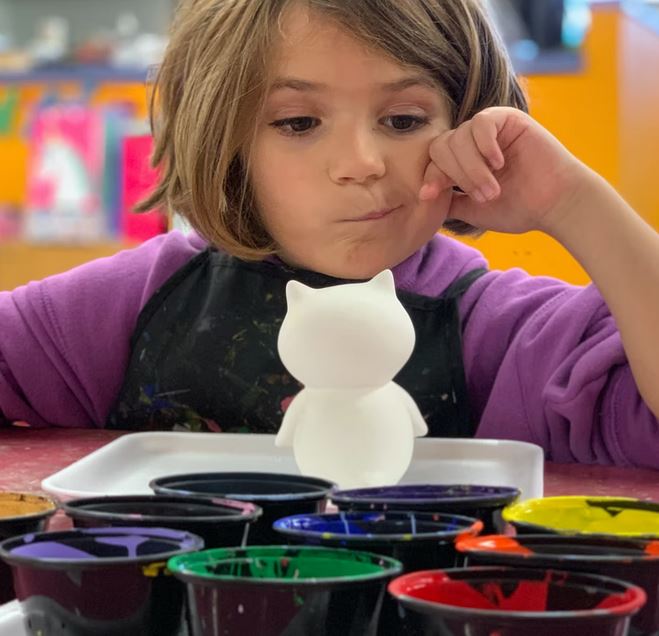
You absolutely don’t need fancy laboratory equipment or a science degree to introduce your child to the wonders of science. In fact, some of the most profound scientific lessons can be learned through simple, everyday activities that spark their curiosity and encourage exploration right in your own home and backyard.
1. Nature Walks and Outdoor Exploration
Turn a simple nature walk into a scientific expedition. Observe plants, insects, birds, and even changes in the weather. Ask open-ended questions like, “Why do you think the leaves are green?” “How do ants carry such heavy loads?” or “What happens to the puddle after the sun comes out?” Encourage them to collect leaves, rocks, or flowers (responsibly!) and then classify them by color, size, or texture at home. Use a magnifying glass to explore tiny details on a leaf or an insect. Discuss cloud formations or the phases of the moon.
2. Cooking Experiments in the Kitchen
The kitchen is a fantastic, accessible science lab. Baking a cake or making slime provides opportunities to explore chemical reactions, observe changes in matter (liquid to solid, raw to cooked), and understand measurements. Explain how yeast makes bread rise, what happens when vinegar and baking soda mix (a classic volcano!), or how different ingredients combine to form new substances. Discuss states of matter as ice melts or water boils. These activities teach basic chemistry, physics, and essential measurement skills.
3. Engaging Building Projects
Using everyday materials like blocks, cardboard boxes, LEGOs, or even pillows and blankets to construct structures encourages fundamental scientific principles. Children learn about balance, stability, gravity, geometry, and spatial reasoning. Challenge them to build the tallest tower that won’t fall, a ramp to roll cars down, or a bridge for their toys. Ask “What makes your tower strong?” or “How can we make this ramp steeper?”
4. Simple Household Experiments
Many scientific concepts can be explored with items already in your home:
- Sinking and Floating: Fill a basin with water and experiment with various objects (a leaf, a key, a toy boat). Ask, “Why do some things float and others sink?”
- Magnets: Explore the properties of magnets with different household items. Which materials are attracted to the magnet? Which are not?
- Light and Shadows: Use a flashlight to create shadows with different objects. How does the shadow change as you move the light source?
- Color Mixing: Use primary colored paints or food coloring in water to explore how new colors are created.
- Plant Growth: Plant a bean in a clear cup with wet cotton balls and observe its roots and shoots growing. Discuss what plants need to thrive.
- Density Layers: Carefully layer different liquids (honey, dish soap, water, oil) in a clear glass to observe how they settle based on density.
5. Gardening and Plant Care
Getting hands dirty in the garden offers incredible lessons in biology and ecology. Children can plant seeds, observe their growth, learn about the importance of sunlight and water, and discover the role of worms and insects in the soil. They can track the growth of a plant over time, measure its height, and understand life cycles firsthand.
6. Stargazing and Simple Astronomy
On a clear night, step outside and look at the sky. Point out the moon, talk about its phases, and try to spot a few bright stars or constellations. Discuss how tiny they look even though they are huge! This can spark early interest in astronomy and the vastness of space.
Debunking Myths: Science is for Everyone
Some common misconceptions might make parents or educators hesitant about introducing science early:
- “I’m not a scientist; how can I teach science?” Remember, you don’t need to be an expert. The goal is to foster curiosity and inquiry. Your enthusiasm and willingness to explore with your child are far more important than knowing all the answers. It’s okay to say, “I don’t know, let’s find out together!”
- “Science is too complicated for young children.” Early science isn’t about complex formulas. It’s about fundamental concepts like cause and effect, observation, classification, and prediction, all explored through tangible, relatable experiences.
- “It requires expensive materials and elaborate setups.” As the examples above show, the best early science activities often use materials you already have around the house or can find in nature. Resourcefulness is a key scientific trait!
The Essential Role of Parents and Educators
Parents and educators play a pivotal role in facilitating a child’s early scientific journey. Your guidance and encouragement can transform simple interactions into profound learning experiences.
- Be a Facilitator, Not Just a Director: Provide opportunities and materials, but let children lead the exploration. Ask open-ended questions that encourage them to think, rather than providing immediate answers.
- Create a Safe Space for Exploration: Encourage experimentation, even if it leads to “failure.” Emphasize that mistakes are valuable learning opportunities, fostering resilience and a growth mindset.
- Model Curiosity: Show your own interest in the world around you. Ask questions, read non-fiction books, and share your own discoveries. Your curiosity is contagious!
- Embrace the “Mess”: Many of the best hands-on science activities can be a bit messy. Embrace it as part of the learning process.
- Connect Science to Everyday Life: Point out scientific principles in daily routines, from cooking to gardening to understanding weather patterns.
Conclusion: Nurturing a Lifelong Love of Learning and Discovery
In conclusion, early science education is undeniably crucial in a child’s foundational development. It goes far beyond memorizing facts, serving as a powerful catalyst for nurturing an innate sense of wonder, developing essential problem-solving skills, and fostering robust critical thinking. By intentionally incorporating age-appropriate scientific concepts and principles into a child’s early education – whether through playful home activities or structured preschool programs – parents and educators provide them with the indispensable tools they need to succeed in an increasingly complex and dynamically evolving world.
The benefits ripple throughout a child’s life, shaping them into curious, adaptable, and resilient individuals prepared to face future challenges and seize opportunities. Investing in early science education is not merely preparing children for a career in STEM; it is empowering them to become informed citizens, innovative thinkers, and lifelong learners who understand and appreciate the intricate workings of their world. So, the next time you’re looking for ways to give your child a truly impactful head start, remember the transformative power of science in shaping their present curiosity and securing their brilliant future. Let’s ignite that spark of scientific discovery and watch them soar!
 Valerie Cox
  Sierra Powell
Really enjoyed reading this. I believe that there is even less ‘free’ time spent simply exploring and imagining, which helps develop curiosity, than ever before.