How to Spot Fake Bank Texts Before You Click
6 min read
1068 words
Your phone buzzes. Your account has been locked, the message says, and you have ten minutes to confirm your identity before the funds are frozen. That jolt is the product being sold because the sender needs you tapping before you start thinking, and a TransUnion report found that 44% of respondents reported being targeted by email, online, phone-call, or text-message fraud in the prior three months. Nearly anyone holding a smartphone in Canada will get one eventually, and the messages follow a script short enough to learn.
Why fake bank texts work so well
These messages are timed for the worst possible moment, which turns out to be most moments: the school pickup line, the grocery checkout, the ten minutes between meetings. They name something with a cost attached, like a locked debit card or a login from a city you’ve never visited. Then they attach a deadline. Money stress makes that deadline land harder. Statistics Canada reported that nearly 45% of Canadians said rising prices were significantly affecting their ability to cover day-to-day expenses, and someone who already checks their balance twice a week is easy to rush.
Text also carries a trust that email lost years ago. Your inbox trained you to expect junk; the messaging app is where the dentist confirms appointments and your kid says practice ran late. A fake fraud alert lands in that setting looking familiar and ordinary, borrowing credibility from everything else in the thread list.
You might expect a fake to look fake. It rarely does anymore. Fraudsters copy a bank’s alert formatting down to the line breaks, and they spoof the sender ID so the message drops into the same conversation as your genuine notifications. Generative AI has made the writing cleaner and the personal details sharper, so polish tells you nothing.
How to spot a fake bank text
Start with the sender, then keep going
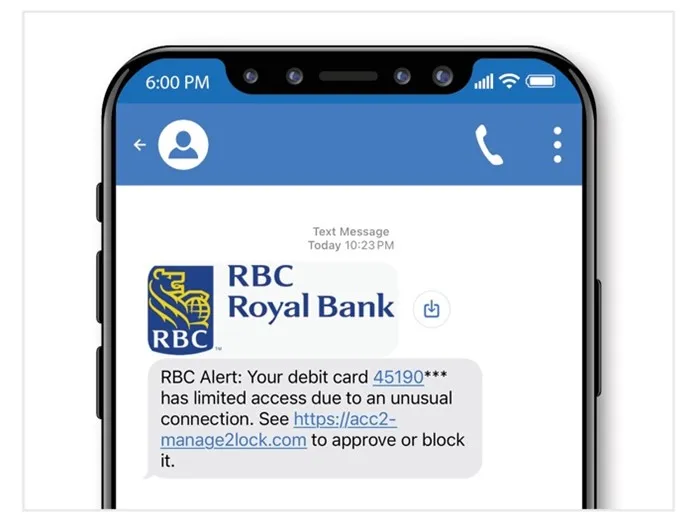
A familiar bank name on your screen proves nothing. Spoofing tools are cheap, and the fake will often sit directly above last month’s real balance alert. RBC warns that fraudulent text messages may impersonate the bank; treat unexpected messages and unsolicited links with caution. Half of these messages name a bank you’ve never used, which settles the question instantly.
Spoofing isn’t limited to the big banks, either. Fake approvals and payment reminders borrow the names of online lenders too, which matters if you’ve applied for credit somewhere recently and are half expecting to hear back. A short-term lender like GoDay Canada takes applications through its own website, so anything real about yours is still there when you type the address in yourself instead of following a link that arrived by text.
Urgent language and short deadlines
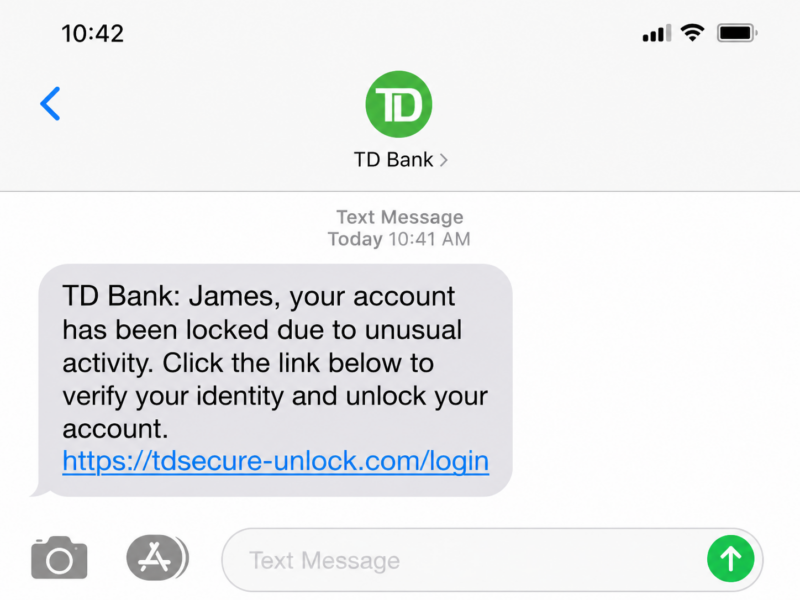
“Your account will be suspended.” “Verify now to avoid closure.” A real bank may well text you a fraud alert, but it won’t threaten you and then hand you a link as the only way out. A TD survey found 86% of Canadians are more worried about fraud than they used to be, and the pressure tactics keep working anyway. The refund version runs the same play in reverse: money is coming back to you if you’d just confirm one detail. e-Transfer notifications get faked constantly for the same reason: the money moves in minutes, and the wording sounds routine.
The link is the part you cannot inspect
On a phone, working out where a URL actually goes is awkward. Scam links live in that gap, using a misspelled domain, an extra word bolted onto a real bank’s name, or a shortener that hides the destination behind six characters. On most phones, you can press and hold a link to preview where it leads without opening it. Not tapping at all is safer.
A text can name your branch and still point at a server on the other side of the world.
Requests a real bank would never make by text
Scammers may pose as financial institutions in unsolicited text messages and ask for remote access to your computer. The Canadian Anti-Fraud Center (CAFC) has warned about fraudsters posing as bank investigators who demand precisely that. Real investigators don’t ask you to switch off your own protections.
Small tells in the writing
Plenty of smishing attempts still read badly. A missing word, or “Dear Customer” where your first name should be. The same tics turn up in email fraud, and if you want more practice, here’s how to spot a PayPal scam email. Grammar is your weakest signal, though. Weigh the whole message instead: where it came from and what it wants you to hand over.
What to do when one lands
The goal is to give the sender nothing: no tap, no reply, no confirmation that a real person owns this number. Follow the same short list every time.
- Don’t tap the link.
- Don’t reply, not even “stop.”
- Check the account the long way. Open your banking app, or type the web address into the browser by hand. A genuine problem will be waiting once you log in.
- Call the number on the back of your card. Not a number supplied inside the message, however official it looks.
- Report it to your bank, then file with the CAFC. Reports help flag new tactics before they spread.
- Delete it. Old messages can get tapped by accident days later.
If you already clicked
Change your banking password from a different device you trust, then call your bank using the number on the back of your card and ask them to freeze your cards and review recent transactions with you. Ask about a fraud alert on your credit file while you have someone on the line, and write down the name of whoever handled the call. Then expect a follow-up attempt, because recovery scams target people who have already lost money once, sometimes borrowing the CAFC’s name to sound official.
A small pause protects your money
Fake bank texts run on speed. So slow down. Twenty seconds is usually enough: close the message and check the balance yourself, in the app you already trust. No bank or lender worth dealing with will penalize you for logging in the long way.
Managing money on a phone should feel convenient, not like standing watch. Knowing how these messages are built is what gets you there, and it’s worth passing along to whoever in your life gets more texts than they can read.