
What to Do When a Company Won’t Honour Its Warranty
10 min read
1942 words
Few things feel as deeply disappointing as unboxing a newly purchased appliance, tool, or electronics item, watching it break shortly after, and then receiving a flat denial when submitting a warranty claim. A warranty is a written or implied promise from a manufacturer or seller concerning a product’s quality, performance, or repair coverage for a specified period. The exact protection depends on the warranty terms and applicable consumer protection laws.
Fortunately, an initial refusal does not mean a buyer must accept defeat. By remaining calm, documenting every step, and communicating clearly in writing, consumers can systematically work through the dispute process to seek a fair resolution.
1. Read the Warranty Carefully
The first practical step is finding the original warranty document, store receipt, or online coverage details. Consumers should carefully examine:
- What is covered: Parts, labour, full replacement, or partial refunds.
- Coverage duration: The exact start date and expiration timeframe.
- Exclusions: Specific items or circumstances not covered by the policy.
- Proof required: Requirements for original receipts or registration cards.
- Responsible party: Whether the manufacturer, distributor, or a third-party insurer handles claims.
It is equally vital to look for conditions that might restrict coverage, such as accidental drops, improper usage, environmental exposure, or unauthorized third-party repairs.
2. Gather Your Documentation
Before reaching out to a company, buyers benefit greatly from creating a comprehensive record of the transaction and issue. Having an organized file prevents delays and makes it much easier to explain the problem clearly.
| Document Type | What to Include | Purpose |
|---|---|---|
| Proof of Purchase | Original receipt, invoice, or order confirmation | Verifies when and where the product was purchased |
| Product Information | Serial number, model number, and original packaging | Identifies the exact product |
| Visual Evidence | Clear photographs or videos of the defect | Documents the problem |
| Communication History | Email threads, chat transcripts, and phone call notes | Creates a record of the dispute |
| Service Records | Repair estimates or diagnostic reports from technicians | Documents professional findings |
3. Ask the Company Why the Warranty Claim Was Denied
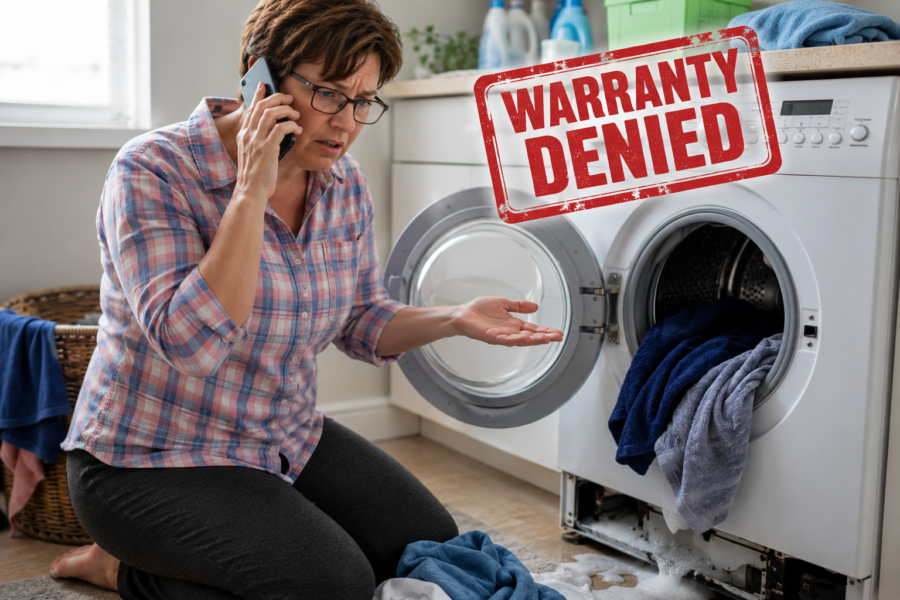
Consumers should never settle for a vague oral refusal such as, “Our policy simply doesn’t cover that.” Instead, buyers should ask the representative to identify the exact clause or provision within the warranty that justifies the denial.
Questions to Ask
- Why was my warranty claim denied?
- Which specific section of the warranty excludes this problem?
- Can you provide this explanation and decision in writing?
- Is there an official appeal or review process?
- Can my claim be reassessed by a supervisor or warranty specialist?
Getting the explanation in writing can make it easier to determine whether the company’s decision is consistent with its published warranty terms.
4. Escalate the Complaint
Front-line customer support agents often have limited decision-making authority. If a representative cannot resolve the issue, politely ask to speak with a supervisor, customer relations manager, or warranty specialist.
When escalating the complaint, remain professional and fact-focused. Clearly explain what happened, what documentation you have, and the resolution you are requesting.
5. Put Your Complaint in Writing
While phone calls are convenient, they do not always leave a reliable record. Written communication through email or letter creates a record of the timeline and the issues discussed.
A strong written complaint should include:
- Purchase date and location
- Product name and model number
- Serial number, when applicable
- A clear description of the problem
- The relevant warranty provision
- A summary of previous contact with the company
- The resolution being requested, such as a repair or replacement
- Copies of supporting documentation
If the company has not provided a response timeframe, requesting a reply within a reasonable period, such as 10 business days, can help keep the matter moving.
6. Know the Difference Between a Warranty and Consumer Rights
A manufacturer’s warranty is not necessarily the only source of protection available to a buyer. Depending on where you live, consumer protection laws may provide additional rights when a product is defective, unsafe, not fit for its intended purpose, or does not meet reasonable expectations.
These protections vary significantly across provinces, states, and countries. Before assuming that a denied warranty claim is the end of the matter, consumers should research the consumer protection rules that apply where they live and where the purchase was made.
7. Contact the Seller
Consumers often assume only the manufacturer handles defect claims, but the retailer may also be able to help resolve the problem.
Return to the store where the item was purchased with your receipt, warranty information, photographs, and other documentation. Depending on the circumstances and the retailer’s policies, the seller may be able to arrange an exchange, provide store credit, assist with a repair, or contact the manufacturer on your behalf.
8. Consider a Credit Card or Payment Dispute
Some credit cards offer purchase protection or extended warranty benefits that may provide additional coverage for eligible purchases. Separate payment dispute procedures may also apply in certain situations.
Check your credit card agreement carefully to determine what benefits are available and whether there are filing deadlines. A warranty denial does not automatically mean a chargeback or payment dispute will be approved. Any dispute should meet the card issuer’s specific rules and eligibility requirements.
9. File a Consumer Complaint
If direct negotiations fail, consumers may be able to contact a government consumer protection agency or an organization such as the Better Business Bureau.
These organizations have different roles and powers, and filing a complaint does not guarantee a refund, replacement, or repair. However, documenting a dispute through an appropriate consumer organization can sometimes encourage a company to review a contested decision.
Before filing, gather the relevant documentation, including the purchase receipt, warranty terms, denial notice, photographs, and copies of previous communications.
10. Consider Mediation or Other Dispute Resolution
When negotiations reach a deadlock, mediation or another form of alternative dispute resolution may provide another avenue for resolving the disagreement.
Some companies include dispute-resolution procedures in their warranty or purchase agreements. Check the terms carefully to see whether there is an internal review process, mediation requirement, arbitration provision, or other procedure that applies to the dispute.
11. When Small Claims Court May Be an Option
When the financial loss is substantial enough to justify further action, small claims court may be an option depending on the jurisdiction and circumstances.
Consumers should research:
- The monetary limit for small claims
- Filing fees
- Time limits for bringing a claim
- Required documentation
- Whether the company must be contacted before filing
Keep organized copies of the warranty, receipt, photographs, repair reports, denial letters, and communication history. Consumers should also understand the applicable legal requirements before deciding to proceed.
12. Be Careful With Social Media Complaints
A concise, polite public message on a company’s social media page can sometimes attract attention from a customer-service or corporate-response team.
However, consumers should stick to verifiable facts. Avoid personal insults, threats, exaggerated claims, or accusations that cannot be supported. Whenever possible, try private resolution channels first and avoid posting personal information publicly.
13. What Not to Do When Fighting a Warranty Denial
Navigating a denied claim requires patience and careful record-keeping. Certain actions can make a dispute more difficult.
| What to Do | What NOT to Do |
|---|---|
| Maintain a calm, courteous, and factual tone. | Lose your temper or insult support representatives. |
| Stick strictly to verifiable facts and actual events. | Exaggerate the problem or invent details. |
| Keep the product available for inspection. | Attempt unauthorized repairs or modify internal parts. |
| Retain original packaging and damaged components when practical. | Throw away the defective product prematurely. |
| Track all policy and filing deadlines. | Ignore dispute time limits set by companies or payment providers. |
14. How to Write an Effective Warranty Complaint

When drafting a written complaint, consumers can follow this structured layout:
Subject: Warranty Claim Assistance – [Product Name / Model Number]
Dear Customer Service Manager,
I am writing regarding my [Product Name/Model Number], purchased on [Date] at [Store Name/Online Store].
The product has developed the following fault: [Describe defect clearly].
According to Section [Number] of the warranty terms, this issue appears to fall under [Parts/Labour/Replacement] coverage. Despite following the manufacturer’s operating instructions, my initial claim was denied on [Date]. Previous attempts to resolve this issue on [Dates of past calls/chats] with [Names of representatives, if known] were unsuccessful.
To resolve this issue, I am requesting [State desired remedy: repair, replacement, or other available remedy].
Attached are copies of my receipt, photographs of the defect, and relevant warranty documentation. I would appreciate a written response within 10 business days.
Sincerely,
[Consumer Name]
[Contact Information]
15. What If the Company Says the Warranty Has Expired?
If a company claims coverage has expired, carefully check the warranty terms and confirm when coverage officially began and ended.
Consumers should also determine whether other consumer protection laws may apply independently of the manufacturer’s express warranty. In some jurisdictions, additional legal protections may apply when a product develops a serious problem unusually early in its expected useful life.
Because these rules differ by location, consumers should check the laws applicable to their purchase rather than assuming an expired manufacturer’s warranty automatically ends every possible remedy.
16. What If the Company Blames Misuse?
When a business attributes a product failure to consumer misuse or neglect, ask for the reason for that conclusion in writing.
Review the warranty’s exclusions and compare them with how the product was actually used. If the item is expensive, an independent assessment from a qualified repair professional may help determine whether the problem appears to be related to misuse, normal wear, or another cause.
Keep copies of any inspection reports, photographs, and repair estimates.
17. What If the Product Was Repaired but the Problem Returned?
Repeated failures require thorough documentation. Keep track of every repair attempt, the dates of service, the work performed, and any technician notes.
If the same problem continues after multiple repair attempts, contact the company again and explain that the defect has returned. Ask what additional remedy is available under the warranty and applicable consumer protection laws.
Some jurisdictions have specific protections for products or vehicles that repeatedly fail to meet applicable standards. The rules vary, so consumers should check the laws in their jurisdiction rather than assuming a particular remedy is guaranteed.
18. How to Protect Yourself With Future Purchases
Proactive habits can make future warranty claims much easier to handle:
- Save physical receipts in a designated folder and keep digital copies.
- Register expensive products when registration is recommended.
- Photograph high-value purchases and their serial numbers after purchase.
- Review warranty terms and exclusions before making major purchases.
- Keep manuals and warranty documents in an accessible location.
- Research a manufacturer’s customer-service and warranty reputation before buying.
How Long Should You Wait for a Warranty Response?
There is no universal response time for every warranty claim. The applicable time frame may depend on the company’s policies, the warranty terms, and consumer protection laws in your jurisdiction.
If the company has provided a specific time frame, keep track of it. If no time-frame has been given, asking for a written response within a reasonable period, such as 10 business days, can provide a clear point for following up.
If the company does not respond, send a polite follow-up referencing your original complaint and the date it was submitted.
Conclusion
A denied warranty claim is frustrating, but it does not necessarily mean a consumer is out of options. By carefully reviewing the warranty terms, compiling thorough documentation, requesting the reason for the denial in writing, and escalating the matter when appropriate, buyers can approach warranty disputes in an organized and professional way.
Understanding broader consumer protection rights can also help consumers determine whether options beyond the manufacturer’s warranty may be available. Most importantly, keeping good records and communicating clearly can make it much easier to seek a fair resolution when a company refuses to honour a warranty.