How to Ensure Your Female Owned Business is ADA Compliant
4 min read
777 words
Owning a business is a huge first step, but owning that business and opening up your first store or office is another matter entirely. While there are a lot of steps to consider, details to improve, and branding to think about, you cannot ignore your requirements as laid out by the ADA.
The good news is that making a few ADA improvements to your business from the start is a great way to attract clients from all walks of life, and can help your business appeal to top talent that cares more about how you treat them (and can demand better). It’s also a legal requirement, so making sure your female-owned business meets these ADA requirements can help set your company up for success, right from the start:
The MWBE Tax Advantage: To help offset the costs of these compliance structural updates, women-owned small businesses can utilize the federal Disabled Access Credit (Section 44 of the IRS Code). This provides an annual tax credit of up to $5,000 to cover 50% of eligible compliance expenditures. Be sure to check your state’s Minority and Women-Owned Business Enterprise (MWBE) portal for localized grants as well.
Know ADA Rights
The first step is to frequently update yourself and your team on the Americans with Disabilities Act. This way, you and your team can respect the rights of disabled Americans and protect your business from bad-faith actors, and you’ll know exactly what you’re expected to do as a small business (or larger).
Second-Floor Accessibility
One of the first things you should consider when choosing or upgrading your place of work is how easy it is to access the second floor. If you are renting a place, make sure that there is an ADA-compliant lift. If you are trying to convert your home into a business space and customers or employees need to access the second floor, consider a commercial wheelchair lift or elevator.
You may have found the perfect unique space for your business, but until everyone can access every level they need to, you won’t be compliant and could run into problems.
Ensure Corridors are Easy to Maneuver
Inside aisles and corridors must be kept clear of obstacles and be at least 36 inches wide. This way, those with mobility devices can easily fit in between the aisles or cubicles in your business. It’s also great if more than one person happens to be traveling through the same area, as it gives everyone enough space to be comfortable in your business.
Accessible Toilets
Your toilet should be accessible, which means that you need at least one stall or room that has a 60-inch turning space, a clear floor space surrounding the toilet measuring at least 60 inches wide by 56 inches deep for wall-hung toilets (or 59 inches deep for floor-mounted units), a toilet that is 17 to 19 inches from the floor, and side or rear grab bars at the right heights.
Parking and Entrance
Sometimes that “second” floor could be as small as the entrance from your business to the street. That’s why you need to check that:
- There are an adequate number of accessible parking spaces near the front of your business.
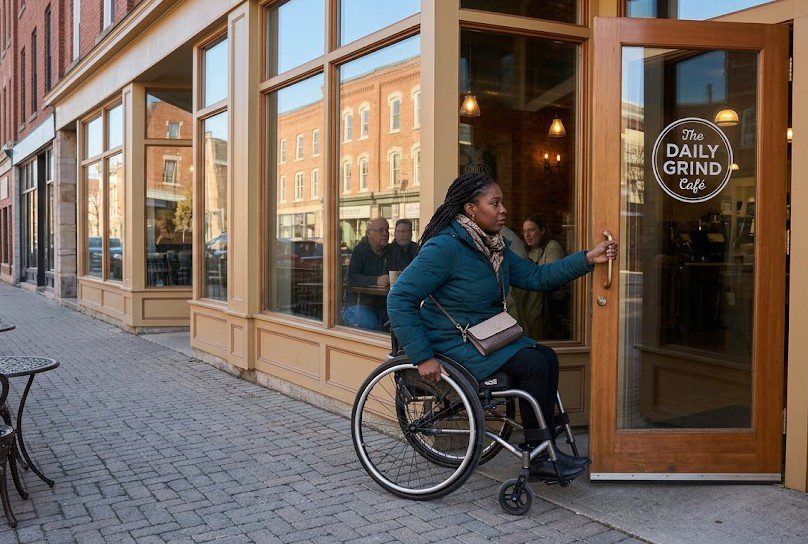
- Your business has at least one entrance that can be accessed while using a mobility device like a wheelchair. This means it needs to have a ramp and have an automatic door opener button.
- Ramps must have a maximum running slope of 1:12.
- Curbs must have curb cuts.
Digital Accessibility
On top of ensuring your office or store is compliant, you’ll also want to go through your website and socials and turn on all the accessibility features.
To do this, ensure that:
- Your site can be navigated with a keyboard
- Visual elements have alt text
- Videos include synchronized captions and transcripts.
- Your web content meets the Web Content Accessibility Guidelines (WCAG).
These features are wonderful for boosting the capabilities of your website for humans and algorithms, which in turn can boost online sales and bookings and improve your visibility online.
Building an Inclusive Foundation for Success
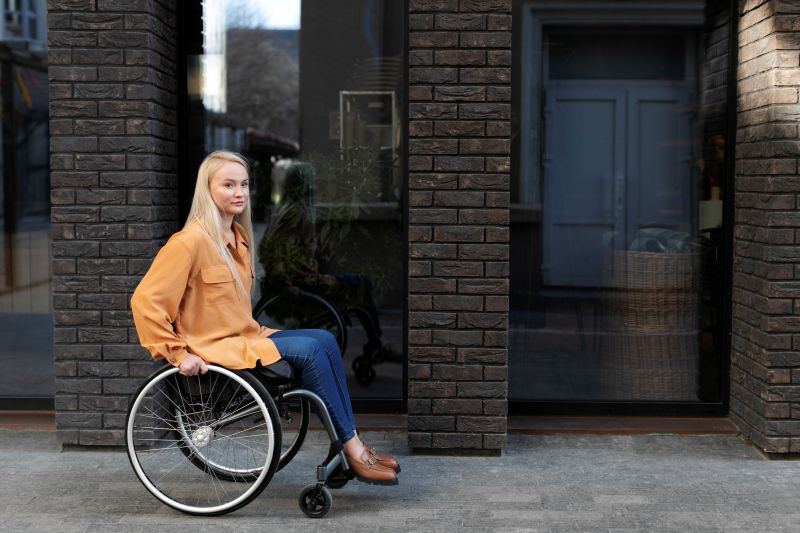
Opening a physical location or launching a digital storefront is a massive milestone for any entrepreneur. Prioritizing ADA compliance from day one is not just about avoiding legal penalties or checking off a bureaucratic box. It is about creating a welcoming, seamless experience for every customer and team member who interacts with your brand.
By integrating these accessibility standards into your physical design and digital strategy, you position your company as an inclusive leader in your marketplace. Take full advantage of available small business tax credits, keep this checklist close by as you grow, and build a business that truly welcomes everyone.