How to make the move towards more sustainable fashion
3 min read
555 words
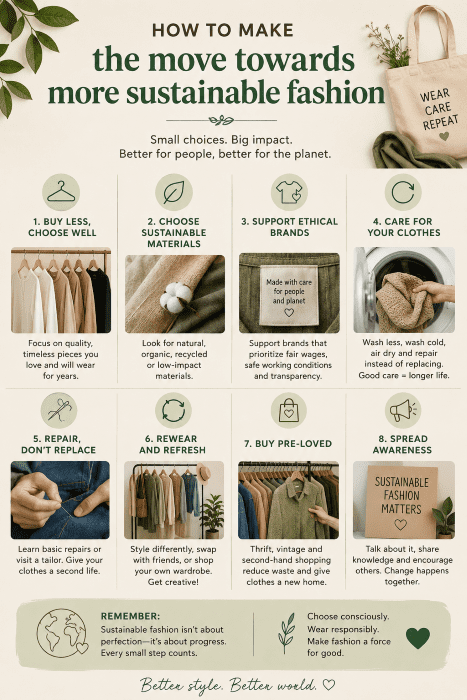
Sustainable fashion can feel like a lot of pressure. Between the terminology, the ethical considerations, and the sheer volume of advice out there, it is easy to feel that unless you overhaul your entire wardrobe immediately, you are not doing enough. The reality is more encouraging than that. Small, consistent changes add up, and making them does not have to mean sacrificing your personal style or spending more money.
Rethinking Your Wardrobe: Quality Over Quantity
One of the most impactful shifts you can make is simply buying less, but buying better. Fast fashion thrives on constant novelty, pieces designed to be worn a handful of times before falling apart or falling out of trend. Investing in well-made, versatile basics that suit your lifestyle breaks that cycle. Before buying something new, it is worth asking whether it works with at least three things you already own and whether you can imagine wearing it in two years’ time. If the answer to either question is no, it is probably worth leaving it behind.
The Art of Wardrobe Care and Repair
How you look after your clothes has a direct bearing on how long they last. Washing at lower temperatures, turning garments inside out to reduce pilling, storing knitwear folded instead of hung, and airing clothes rather than washing after every wear all extend the life of pieces considerably. Extending the active life of clothing by just nine months reduces its carbon, water, and waste footprint by 20 to 30%, which is a meaningful reduction that requires no new purchases at all. Basic mending skills, such as replacing a button, repairing a seam, or darning a small hole, are straightforward to learn and mean that minor damage no longer signals the end of a garment’s life.
Embracing Pre-Loved and Vintage Finds
Shopping second-hand is one of the most direct ways to reduce the demand for new production. Thrift stores, vintage fairs, and online platforms such as Vinted and Depop all offer good finds if you are willing to browse with patience. Accessories are a particularly rewarding area, and second-hand jewellery that carries its own history and character, available at a fraction of the cost of new pieces, can add something to an outfit that mass-produced alternatives simply cannot replicate. Each pre-loved purchase is also one fewer item destined for landfill.
Mindful Shopping and Building Better Habits
The most effective sustainable fashion habit is pausing before you buy. A simple cooling-off period, like leaving something in your online basket for 48 hours before purchasing, filters out a significant proportion of impulse buys. Building a wish list of things you genuinely need, rather than browsing open-endedly, also helps you shop with intention rather than habit. When you do buy new, supporting brands that are transparent about their supply chains and materials is a meaningful way to use your spending as a small vote for the kind of industry you would rather see.
Fashion That Feels Good
Sustainable fashion is an ongoing process of making slightly better choices over time. Nobody gets it perfectly right, and that is not the point. The aim is a wardrobe that reflects who you are, that lasts, and that you feel good about. Share what works with friends, celebrate the finds that surprised you, and treat the journey as something enjoyable and not obligatory. Every small step counts.