The Ultimate Guide to Rotating Car Seats: Car Seat Safety
7 min read
1211 words
Road trips with children can be exciting and memorable while also being quite exhausting. Whether you are planning a weekend getaway or a cross-country adventure, car seat safety should always come first. Choosing the right car seat can make travel safer and more comfortable for both parents and children. One of the biggest innovations parents are talking about right now is the rotating car seat. These swivel-style models promise easier loading, less back strain, and improved convenience during both daily travel and long drives. The popularity of rotating car seats continues to grow because they simplify everyday routines while helping parents keep children secure. This guide covers everything parents need to know about safe travel and whether rotating car seats are the right choice for your family.
Why Safety Matters on Long Drives
Extended time on the road increases the chance of accidents because fatigue and distracted driving are more common during long trips. Proper restraint systems dramatically reduce injury risk for young passengers. Many common road trip safety mistakes involve loose harness straps or bulky winter coats worn under harnesses. Some parents also struggle with incorrect recline angles or installing seats too loosely.
Understanding Canadian car seat laws is essential for every parent. These laws include rear-facing recommendations and specific height or weight requirements. Using rotating car seats can help parents follow these regulations more easily. You must also pay attention to expiry dates and manufacturer guidelines to ensure your child restraint system remains effective over time.
How These Seats Actually Work
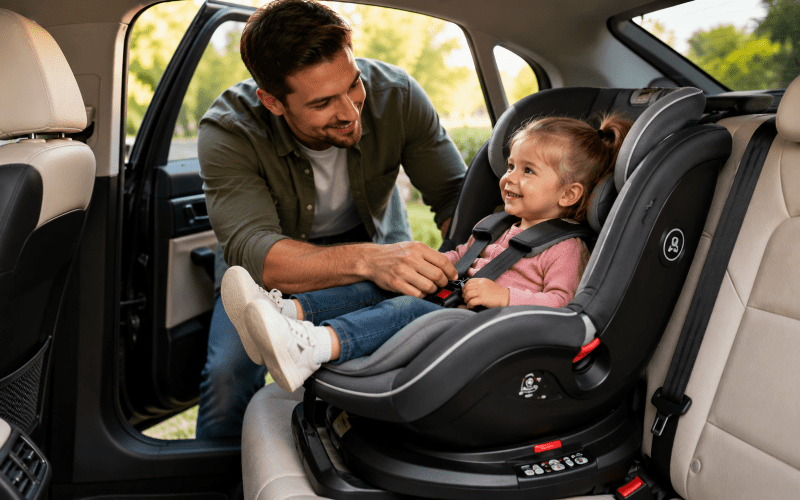
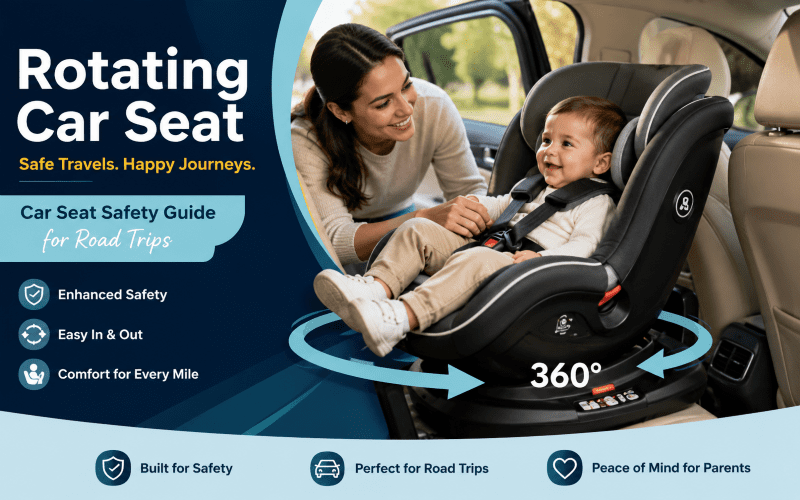
A swivel car seat functions by using a base that allows the seat to rotate toward the vehicle door. This mechanism makes loading and unloading a child much simpler for caregivers. Many rotating car seats can move between rear-facing and forward-facing positions without requiring a full reinstallation.
There are two main types, including 180-degree designs and full 360-degree versions. Parents often love features such as one-hand rotation and adjustable recline positions. High-quality rotating car seats also offer extended rear-facing support and easy harness adjustments.
Reasons Parents Love Rotating Car Seats
One major advantage of rotating car seats is easier loading during frequent stops. These seats are especially helpful during bathroom breaks and snack stops because faster buckle-ins reduce stress for everyone.
Using this type of child restraint also means less strain on parents. The swivel action reduces the need for bending and twisting, which is especially helpful after pregnancy or for parents with chronic back pain.
Children often experience better comfort due to improved positioning and easier adjustments during travel. Furthermore, rotating car seats are ideal for extended rear-facing travel. Since rear-facing is the safest way for young children to ride, the convenience of these seats encourages parents to keep children in that position longer.
Things to Consider Before Buying
Despite their benefits, rotating car seats often come with a higher price point compared to traditional options. They are also generally heavier and bulkier, which can make them difficult to move between different vehicles.
Some designs take up more backseat space, which might be an issue in smaller cars. Vehicle compatibility is another concern because not every car works well with every model. It is important to check the fit in your specific vehicle before buying.
There may also be a small learning curve for installation since the rotating mechanisms can feel complicated initially. However, most parents find that the long-term convenience outweighs these early challenges.
Features Worth Looking For in Rotating Car Seats
When shopping for rotating car seats, you should look for specific safety certifications like Transport Canada compliance. Side-impact protection is another vital feature to consider for your child.
Good models should also include easy-to-clean fabrics and convenient cup holders for snacks and drinks. A compact design is helpful if you have a smaller vehicle or if you need to fit multiple seats in the back row.
Ask yourself if the seat will fit behind the front seats comfortably and if it can grow with your child over several years. Practicality is key when choosing the best option for long-distance travel.
Installation and Everyday Use
To keep your child safe, you must install the seat correctly using either the LATCH system or a seat belt. Ensure there is less than one inch of movement at the belt path.
Keep the harness straps properly positioned with the chest clip at armpit level. The straps should remain snug without any slack.
Even with the best rotating car seats, you should schedule regular breaks every two hours to allow kids to stretch safely. Avoid using unsafe sleep accessories or aftermarket head supports unless the manufacturer has approved them.
Always pack a road trip safety kit with emergency supplies, snacks, water, and backup clothing for added peace of mind during travel.
Is the Extra Cost of Rotating Car Seats Worth It?
Families who take frequent road trips may benefit most from investing in rotating car seats. Caregivers with mobility or back concerns will also find these seats make daily life much easier.
However, a traditional option might be better for those on a tight budget or families who engage in frequent air travel. Smaller vehicles might not accommodate the larger footprint of some designs.
The final verdict often comes down to balancing convenience and cost. Rotating car seats offer significant advantages when used correctly because they help ensure a proper fit every single time the child is buckled in.
Smart Habits for Safer Travel
A safe road trip starts with the right equipment, including a properly maintained child restraint system. You should never leave children alone in the car, even for a short moment.
Secure all loose items in the vehicle so they do not become projectiles during a sudden stop. Keep entertainment items soft and safe to prevent injuries.
Planning your rest stops ahead of time helps improve comfort during breaks. The most important factor is not just whether a seat rotates, but whether it fits your child correctly and stays secure during every trip.
Rotating car seats are a fantastic tool for modern parenting, but they still require careful use and proper installation.
Frequently Asked Questions
Are rotating car seats safe for daily use?
Yes. These seats meet the same rigorous safety standards as traditional models and often provide a better harness fit because they are easier to use correctly.
Can these seats be used in the rear-facing position?
Most models are specifically designed to support rear-facing travel, which is the safest way for infants and toddlers to ride.
Do rotating car seats fit in small cars?
Some models are more compact than others, so you should measure your interior space before making a purchase.
Are rotating car seats worth the extra cost?
Many parents find the reduction in back pain and the ease of loading make them a worthwhile investment.
How long should a child stay rear-facing?
It is best to keep children rear-facing until they reach the maximum height or weight limit allowed by the manufacturer.
What is the safest position for a child seat in a vehicle?
The back seat is the safest place for any child, and the middle position is often preferred if the seat can be installed there securely.
Selecting high-quality rotating car seats can truly transform your family travel experience.