Why Boneless Couches Are Taking Over Minimalist Homes
6 min read
1010 words
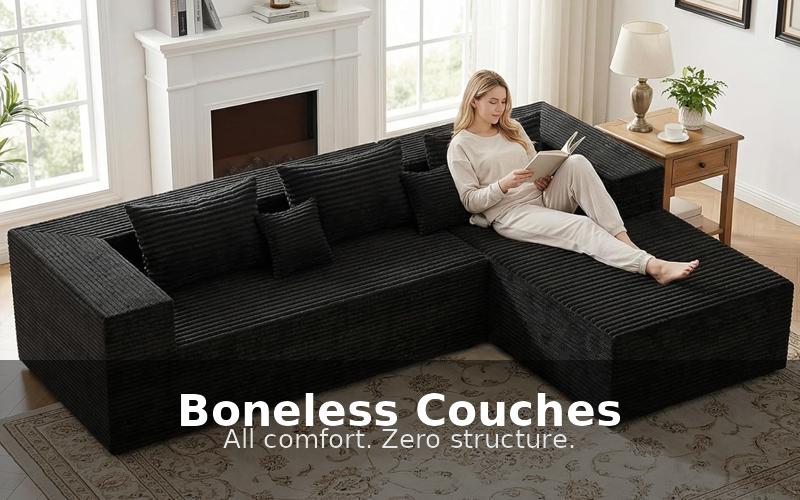
The “less is more” style is changing how we choose furniture. A big trend right now is the “boneless” couch. These are frame-free seating options. They once belonged in fancy, modern lofts, but now they are the stars of minimalist homes everywhere.
But what exactly is a boneless couch? Unlike a standard sofa, these pieces have no hard wooden or metal skeleton. They are made of high-density foam or soft, shapable materials. They look soft, feel comfortable, and move easily to fit your space.
Are they right for your lifestyle? Let’s dive into why these couches are the current champions of modern living.
What is a Boneless Couch?
At its core, a boneless couch is a piece of upholstered furniture designed without a rigid internal frame. Traditional sofas rely on “bones”—usually made of wood, metal, or plastic—to provide structure. In contrast, a boneless couch uses layers of high-density foam, poly-beans, or specialized structural fibers to maintain its shape.
Think of it as the sophisticated, grown-up evolution of the bean bag. Iconic designs like the Togo sofa popularized this look, proving that you don’t need a wooden skeleton to create a supportive, stylish, and durable place to sit.
Boneless Couch vs. Traditional Sofa: The Key Differences
When choosing between a boneless couch and a traditional sofa, the decision usually comes down to your aesthetic and lifestyle priorities.
- Weight: Traditional sofas are heavy and cumbersome. Boneless couches are incredibly lightweight, making them easy to rearrange or move to a new apartment.
- Durability: While traditional sofas can suffer from snapped frames or creaky springs, boneless couches are virtually “unbreakable” in the structural sense.
- Safety: With no hard corners or wooden legs, boneless sofas are a dream for parents with toddlers or people who are prone to stubbing their toes.
- The “Vibe”: Traditional sofas offer a formal, upright sit. Boneless couches invite a “sink-in” relaxation that encourages lounging and conversation.
The Benefits of a Boneless Couch
1. Perfect for Small Spaces
Because they lack bulky frames and protruding legs, boneless couches often have a smaller footprint. Many are modular, meaning you can buy individual sections to fit a specific corner or awkward alcove, making a boneless couch for small spaces a top-tier design hack.
2. Eco-Friendly Options
Many modern manufacturers are leaning into sustainability. You can now find eco-friendly boneless couches made from recycled foam, organic latex, and covers woven from recycled plastic bottles or natural linen. Because they can often be compressed for shipping, they also have a lower carbon footprint during transport.
3. Unmatched Comfort
Without a hard rail pressing against the back of your knees or a spring poking through the cushion, the comfort level is consistent across the entire surface of the furniture.
Is a Boneless Couch Worth It? (Answering Your FAQs)
If you’re considering making the switch, you likely have a few practical questions. Let’s address the most common concerns.
Is a boneless couch worth it?
Yes, especially if you value comfort and a modern, relaxed aesthetic. While high-end foam models can be an investment, the lack of mechanical parts means there is less to “break” over time.
How long do those boneless couches last?
Quality matters here. A cheap, low-density foam couch may lose its shape in 2–3 years. However, a high-quality boneless couch made with high-resilience (HR) foam can easily last 7 to 10 years or more with proper care.
What are the disadvantages of boneless sofas?
The biggest disadvantage is the low seat height. Most boneless couches sit much lower to the ground than traditional sofas. This can make them difficult for people with limited mobility or knee issues to get in and out of. Additionally, they lack the formal “structured” look that some traditional home offices or formal living rooms require.
How do boneless couches stay in place?
You might worry that a couch with no legs will slide all over your hardwood floors. Most boneless designs feature a non-slip, rubberized base or a heavy-density bottom layer that provides enough friction to keep the piece stationary even when you sit down.
Can I sit on my boneless couch right away?
Many boneless couches are shipped “bed-in-a-box” style (vacuum-sealed). While it’s tempting to dive on it immediately, most manufacturers recommend waiting 24 to 48 hours for the foam to fully expand and regain its intended density and shape.
Do boneless couches flatten over time?
All foam eventually compresses. However, high-quality “multi-density” foam is designed to bounce back. To prevent premature flattening, it is recommended to “fluff” your modular pieces occasionally and rotate where you sit most often.
Best Materials for Boneless Couches
To ensure your couch looks as good as it feels, material choice is key.
- Performance Velvet: Durable, easy to clean, and adds a touch of luxury to the soft shape.
- Corduroy: A trending choice that adds texture and a “vintage minimalist” feel.
- Linen Blends: Perfect for an airy, coastal minimalist look, though they require more maintenance to stay wrinkle-free.
How to Style a Boneless Couch
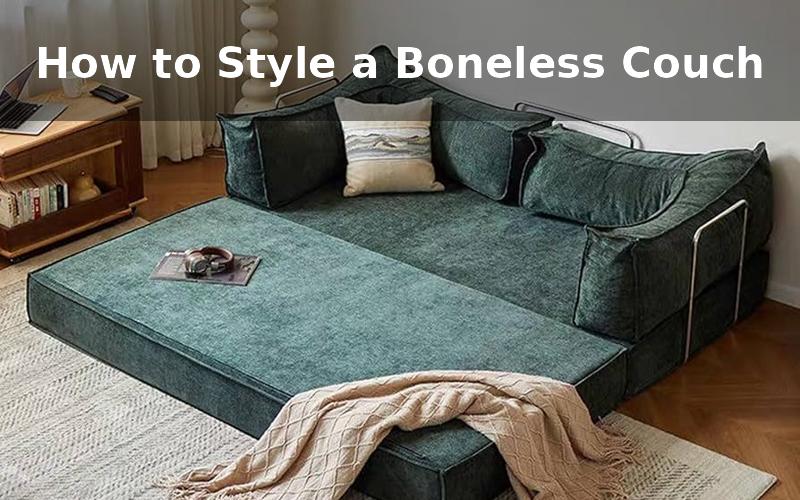
Styling a frame-free sofa is an art. Because these pieces are so low and soft, you need to be intentional so they don’t look like a “dorm room.” With the right touches, they become a high-end, sophisticated centerpiece for your living space.
- Layer Textures: Pair a smooth foam sofa with a chunky knit throw or a high-pile rug.
- Use Low-Profile Side Tables: Since the couch sits low, avoid tall end tables. Opt for “stump” tables or low stone plinths.
- Define the Space: Place the couch on a large area rug to “anchor” it in the room, preventing it from looking like it’s floating aimlessly.
Final Thoughts
The boneless couch is more than just a trend; it’s a reflection of how we live today—valuing comfort, flexibility, and simplicity over rigid formality. Whether you’re furnishing a tiny studio or a sprawling minimalist living room, these “skeleton-free” wonders offer a unique blend of style and soul.
Ready to sink in? Look for high-density foam options and eco-friendly fabrics to ensure your new favorite seat lasts for years to come.