Dos and Don’ts for Hanging Outdoor Christmas Lights
5 min read
904 words
The holiday season is here, and with it comes the magical tradition of transforming our homes into winter wonderlands. The twinkling glow of outdoor Christmas lights is the hallmark of festive cheer, but hanging them can feel like a daunting task. We’ve all seen that one house on the block—the one with a perfectly symmetrical, breathtaking display. We’ve also seen the one with a few… creative choices. The difference between a dazzling success and a decorating dilemma often comes down to a little planning and a lot of safety. Whether you’re a seasoned decorator or a first-timer, this guide will walk you through the essential dos and don’ts of hanging outdoor Christmas lights. Let’s make sure your home shines bright for all the right reasons!
The DOs: Your Checklist for a Flawless Display
Follow these tips to ensure your outdoor Christmas light installation is safe, efficient, and stunning.
DO: Plan Your Design First
Before you untangle a single string of lights, have a plan. Walk around your property and decide where you want to hang your lights. Will you outline the roofline, wrap the porch railings, or highlight your favorite trees and shrubs?
- Measure Everything: Use a measuring tape to determine how many feet of lights you’ll need for each area. This prevents last-minute trips to the store.
- Sketch it Out: A simple drawing can help you visualize the final look and map out where your extension cords will run.
DO: Inspect All Your Gear
Take your lights and extension cords out of storage and give them a thorough inspection in a well-lit area. Look for:
- Frayed or cracked wires
- Broken or loose bulbs
- Damaged plugs
If you find any damage, it’s time to replace the strand. It’s not worth the fire or electrical risk to use faulty equipment.
DO: Use ONLY Outdoor-Rated Lights and Cords
This is non-negotiable. Indoor lights are not built to withstand moisture, snow, and fluctuating temperatures. Using them outside is a serious fire and electrical hazard. Check the packaging or tag on the cord for a “UL” (Underwriter Laboratories) rating that specifies it’s safe for outdoor use.
DO: Use Plastic Light Clips, Not Nails or Staples
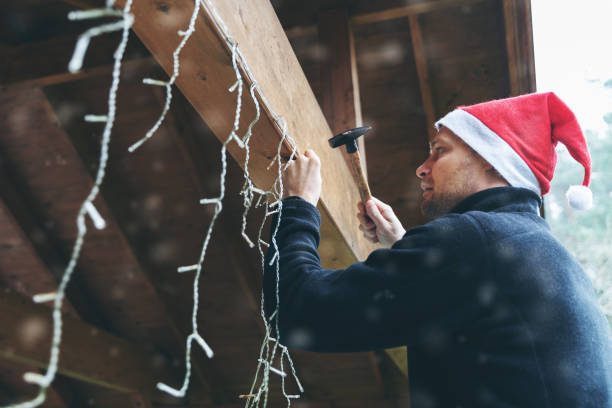
Resist the urge to grab a hammer or staple gun. Puncturing the wire’s insulation with metal is a major fire hazard. Instead, invest in plastic light clips designed for the job. There are different types for every surface:
- Gutter Clips: Easily attach to your home’s gutters.
- Shingle Clips: Slide securely under roof shingles without causing damage.
- All-Purpose Clips: Versatile clips that work on railings, fences, and more.
DO: Test Each Strand Before You Hang It
There is nothing more frustrating than hanging a full string of lights only to discover it doesn’t work. Plug in each strand and check for dead bulbs before you climb the ladder. This simple step will save you a world of holiday-related headaches.
DO: Work with a Buddy and Use a Sturdy Ladder
Safety first, always. Hanging lights often involves heights, so never do it alone. A buddy can hold the ladder steady, hand you supplies, and call for help if needed. Ensure your ladder is on solid, level ground and never overreach—it’s always better to climb down and move the ladder.
The DON’Ts: Common Mistakes to Avoid
Steer clear of these common pitfalls to keep your home and family safe this holiday season.
DON’T: Overload Your Outlets or Circuits
Plugging too many light strands into a single outlet can overload the circuit, creating a fire hazard. As a general rule, never connect more than three standard incandescent light strands end-to-end. LED lights use significantly less energy, allowing you to connect more, but you should always check the manufacturer’s recommendation on the box.
DON’T: Run Extension Cords Through Doors or Windows
Running a cord through a doorway or window, even for a short time, can pinch and damage the wire’s insulation. This exposes the electrical wiring and creates a serious risk of fire or shock. Use outdoor outlets whenever possible.
DON’T: Leave Your Lights On 24/7
Keeping your lights on all day and night is not only a drain on your electricity bill but also a potential fire risk, especially with older incandescent bulbs that get hot. Use an outdoor-rated automatic timer to turn your lights on at dusk and off at bedtime or in the early morning.
DON’T: Hang Lights in Bad Weather
Never attempt to hang lights during rain, snow, or high winds. Your ladder can become slippery, and the combination of water and electricity is a recipe for disaster. Wait for a clear, calm day to tackle your decorating project.
DON’T: Take Lights Down by Pulling on the Cord
When the season is over, be just as careful taking your lights down as you were putting them up. Yanking on the cords can damage the bulbs, sockets, and wiring—not to mention your gutters or shingles. Remove each clip individually and store your lights neatly to ensure they’re ready for next year.
Light Up the Season the Right Way
Decorating your home with outdoor Christmas lights is a joyful way to celebrate the season. By following these simple dos and don’ts, you can create a beautiful, festive display that is both safe and spectacular. So grab a helper, put on some holiday music, and get ready to make your home the star of the neighborhood!
Happy decorating!