
3 min read
517 words
If you’re raising a child with autism, then you might always be aware of, or coming to terms with, the fact that social situations may not work the same for them as they do with other children. However, this doesn’t mean that socializing is impossible for them, by any stretch. Sometimes, they might just need a little help to find the dynamic that works best for them
Finding The Right Structured Peer Interactions
One of the most common problems for autistic children in making new friends is that they can become overwhelmed due to the unpredictability involved. Many children with autism thrive under routine and controllable settings. For instance, introducing them to small, supervised playgroups and modeling good social behavior by starting every session with greetings and invitations to play with or beside one another can potentially help. Many parents use cue cards and social stories to help children understand conversational rules and expected behaviors, as well.
Encourage Play-Based Learning
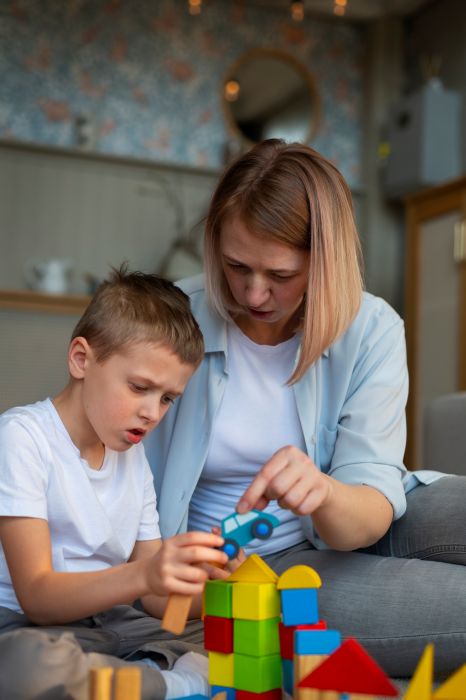
Play is not just a way for children to have fun and to socialize, but it also helps them develop communication and relationship skills, as well. Setting up cooperative or role-playing games with children can help them explore scenarios like taking turns, speaking up about their emotions, and sharing space and toys. You can gently expand those boundaries and teach those lessons by narrating actions when playing with them, such as highlighting when it’s your turn, or when you want to build something together. Children with autism can often be more intensely interested in activities that align with their interests, rather than switching tracks to other types of play, so using their preferred types of play can make them more motivated to share it with others, too.
Consider Autism-Friendly Daycare Environments
The right environment plays a huge role in ensuring the comfort level of your child. With the help of specialized daycare for autistic children, you can make sure that social interactions are guided and your child is given a more structured environment than the typical daycare. In reality, many daycare workers may not be fully equipped to understand the needs of children with autism, so finding those trained in autism awareness and the importance of clear routines, visual schedules, and sensory-sensitive spaces can be hugely helpful.
Supporting Smooth Transfer To School Environments
One of the reasons socializing children is important is to help them adjust to life in education, and to prevent them from struggling at school as much as possible. Gradual acclimation can be very helpful for children with autism, such as visiting the classroom and meeting teachers in advance. Teaching them about school routines with visual schedules and practicing actions like lining up and raising hands can help children feel much more prepared for the behavior expected of them at school.
Of course, as with all aspects of life for children with autism spectrum disorder, the right approach can vary from child to child. Test the boundaries slowly and with the help of their doctor to ensure that you’re encouraging a more fulfilling social life as best fits their needs.
 Kayla Baptiste