
5 min read
853 words
A counterfeit Rolex can still carry a real serial number. Fake watches often reuse serials taken from genuine pieces—pulled from online listings, auction photos, or even stolen watches. That’s why a matching serial number alone never proves authenticity.
For anyone trying to sell their Rolex watch to Diamond Banc, keep in mind that serial numbers are only one data point. Proper authentication requires a complete physical inspection and a generational analysis of the watch—not just the numbers stamped on it.
Why Serial Numbers Are No Longer a Reliable Standalone Check
Contemporary counterfeiters recognize that serial numbers are typically the initial aspect buyers examine. To evade swift inspections, they laser-engrave authentic serials onto counterfeit cases or rehauts. Frequently, the same serial is found on several watches, which immediately undermines verification based solely on serial numbers.
Moreover, certain serials originate from stolen Rolexes, posing possible legal and financial complications for purchasers who fail to conduct thorough due diligence.
Common Ways Counterfeiters Use Real Serial Numbers
1. Serial Duplication
Serials are copied from public listings, forums, or service photos and engraved onto replica cases. When the same number shows up across multiple watches, it’s a clear red flag, but only if someone is actually checking beyond the number itself.
2. Serial–Reference Mismatch
Each Rolex serial should align with a specific reference and configuration. A Submariner serial paired with a Datejust reference, or a mismatch between serial era and case design, often points to a parts build or counterfeit.
3. Generational Inconsistencies
High-grade fakes often mix older serials with newer features such as ceramic bezels, modern lume, or updated movements. If the serial doesn’t align with the watch’s bracelet code, rehaut engraving, lume type, or movement generation, something is off.
4. Stolen Serial Usage
Some counterfeit watches use serials from stolen Rolexes, giving the appearance of legitimacy while exposing buyers to serious risk. This is why provenance and professional verification matter.
How to Evaluate Serial Engravings Properly
Serial engravings on genuine Rolex watches show precision, depth, and consistency. Under magnification, they should appear clean and sharply defined.
Key inspection points include:
- Depth and finish: Authentic engravings have uniform depth with crisp edges. Fakes often appear shallow, fuzzy, or uneven.
- Font and spacing: Rolex uses proprietary typefaces. Uneven kerning, misaligned numerals, or inconsistent spacing are warning signs.
- Placement: Pre-2008 models feature serials between the lugs. Rolex began adding rehaut engravings around 2005, and by 2008, this became the standard placement. Off-axis placement or overlap with rehaut text is suspicious.
- Era accuracy: Pre-2005 serials were mechanically stamped, not laser-etched; later rehaut engravings use fine laser etching. Mixing styles across generations is a common counterfeit mistake.
Comparing engravings to high-quality macro images from trusted sources is one of the most effective ways to spot inconsistencies.
Why Online Marketplaces Increase the Risk
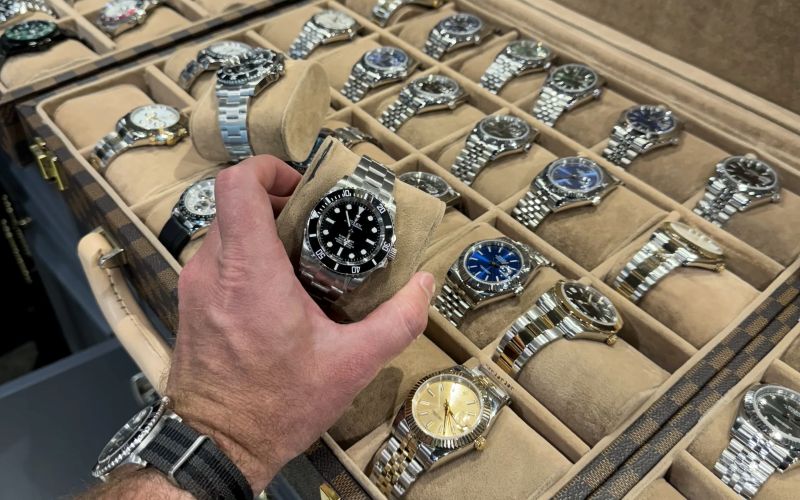
Online sales platforms and social media have made serial misuse easier than ever. Sellers may blur or crop serial photos, reuse the same number across listings, or avoid showing the movement altogether.
When buying remotely, request:
- Macro photos of the serial, rehaut, and reference
- Clear images of the dial, clasp, and bracelet end links
- Movement photos with the case opened
- Live videos showing the watch in operation
A seller unwilling to provide these details is a risk signal.
The Impact on Resale Value
Convincing serial numbers can inflate asking prices and create a false sense of traceable history. But once the watch is examined by a professional, any inconsistency can destroy resale value instantly.
Collectors and buyers should understand that resale markets demand:
- Matching serials and references
- Correct generational components
- Verified movements
- Clean documentation (when available)
Without full verification, a watch that looks “right” online may fail professional inspection.
The Rise of High-End Counterfeits
Today’s “super clones” use CNC machining, fiber lasers, and advanced finishing to replicate cases, dials, and even movements with alarming accuracy. Some visual checks that once worked are no longer sufficient.
Common warning signs still include:
- Overly uniform rehaut text
- Incorrect lume color for the era
- Subtle bracelet tolerance issues
- Rotor finishing that doesn’t match the caliber
- Serial numbers tied to public listings
- Paperwork with slight font or layout inconsistencies
As counterfeits evolve, authentication increasingly relies on pattern recognition and movement-level analysis, not just surface details.
Why Serial Numbers Are Only One Piece of the Puzzle
A real-looking serial number does not guarantee a real Rolex. Counterfeiters exploit buyer confidence by focusing on serial accuracy while cutting corners elsewhere.
Proper authentication considers the entire watch:
- Case construction
- Dial printing and lume
- Hands, crown, and bezel
- Bracelet and clasp
- Movement architecture and finishing
- Documentation and service history (when available)
The safest approach is to treat serial numbers as a starting point, not a conclusion.
Final Takeaway
Indeed, a counterfeit Rolex may possess an authentic serial number, and this is frequently the case. This is why discerning buyers and sellers depend on thorough inspections instead of isolated data points.
In the current market, assurance is derived from complete verification rather than hasty assessments. Recognizing the ways in which serial numbers can be exploited is essential for safeguarding both your investment and your timepiece.
 Lisa
Lisa  Alan Harris
  Emma Lee Scott