
5 min read
817 words
When a property experiences significant damage from water, fire, or environmental contamination, the recovery process can feel uncertain and disruptive. Many property owners are unsure how long restoration will take or what the process involves from start to finish. Professional remediation follows a structured timeline designed to stabilize the space, prevent further damage, and return the property to a safe and usable condition as efficiently as possible.
While every situation is unique, understanding the general phases of professional remediation can help set expectations and reduce stress. From the first inspection through final clearance, each step plays an important role in protecting the property and the people who use it.
Initial Assessment and Damage Evaluation
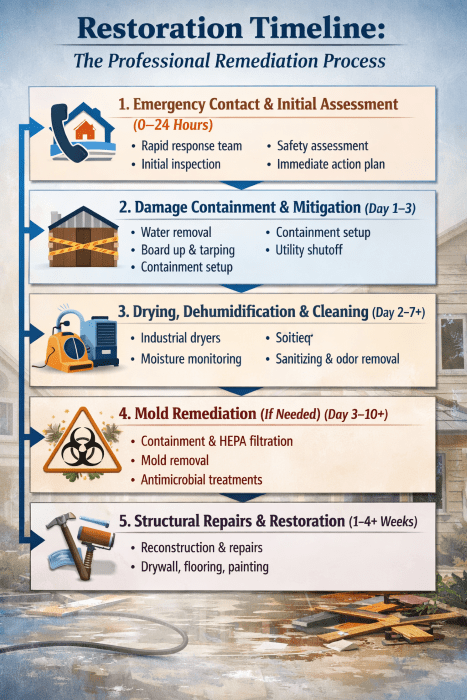
The remediation timeline begins with a detailed onsite assessment. During this phase, trained professionals inspect the affected areas to determine the type, extent, and source of damage. This evaluation helps identify safety concerns, moisture levels, and materials that have been compromised.
Specialized tools such as moisture meters and thermal imaging devices are often used to detect hidden issues behind walls, under flooring, or within ceiling spaces. The information gathered during this inspection guides the restoration strategy and helps establish an estimated timeline.
Clear communication is important during this stage. Property owners are typically informed about immediate risks, recommended next steps, and what areas may need restricted access. A thorough assessment ensures that the remediation addresses both visible damage and underlying problems that could worsen if overlooked.
Site Stabilization and Containment Measures
Once the assessment is complete, the next priority is stabilizing the environment. This step prevents additional damage and limits the spread of contaminants. In water related incidents, this may include stopping the source of intrusion and removing standing water. In other cases, securing compromised structures or isolating affected zones is necessary.
Containment is particularly important when dealing with contaminants such as mold or smoke residue. Barriers and controlled airflow protect unaffected areas and help maintain indoor air quality. These precautions safeguard occupants and technicians while remediation is underway.
At this stage, many property owners choose to work with a local water damage restoration company that understands regional building practices and response requirements. Local expertise can streamline coordination and support efficient progress through the remaining phases.
Removal of Damaged Materials and Drying Phase
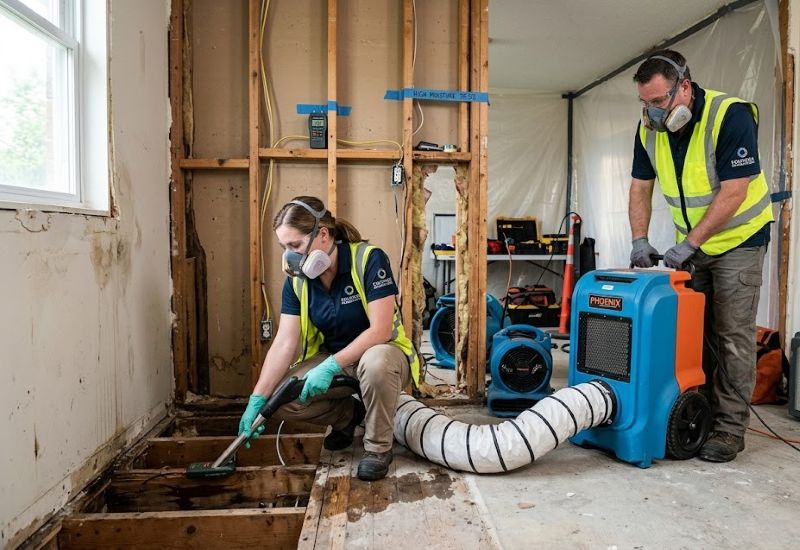
After stabilization, remediation teams begin removing materials that cannot be salvaged. This may include saturated drywall, insulation, flooring, or furnishings that pose health or structural risks. Removing compromised materials creates access to affected building components and allows drying and cleaning to proceed effectively.
The drying phase is one of the most critical parts of the timeline. Industrial air movers, dehumidifiers, and ventilation systems are used to reduce moisture levels throughout the space. Drying is carefully monitored to ensure materials reach appropriate moisture targets before repairs begin.
Rushing through this stage can lead to long term issues such as odor retention, structural weakening, or microbial growth. A methodical drying process protects the integrity of the property and shortens overall recovery time by preventing setbacks.
Cleaning, Disinfection, and Surface Treatment
Once the environment is dry and stable, attention shifts to cleaning and sanitizing remaining surfaces. This step removes residues that could affect health, air quality, or future usability of the space. Depending on the type of damage, cleaning may involve specialized solutions and equipment designed for professional remediation.
Porous and nonporous surfaces are treated differently to ensure safety and effectiveness. Ductwork, fixtures, and structural components may receive additional attention to address contamination that is not visible on the surface.
This phase also helps prepare the property for reconstruction. Cleaning ensures that repaired or replaced materials will not be compromised by leftover contaminants. For occupants, this step provides reassurance that the environment is being restored with care and attention to detail.
Repair, Restoration, and Final Verification
The final stage of the remediation timeline focuses on rebuilding and verification. Repairs may include replacing drywall, reinstalling flooring, repainting surfaces, or restoring structural elements. The goal is to return the property to a condition that matches or exceeds its pre damage state.
After repairs are complete, final inspections are conducted to confirm that all remediation goals have been met. Moisture levels, air quality, and surface conditions are verified to ensure the space is safe for reoccupancy.
Property owners often receive documentation summarizing the work performed and the conditions at completion. This transparency supports peace of mind and helps close out insurance or compliance requirements tied to the remediation project.
Conclusion
A professional remediation follows a structured timeline designed to address damage comprehensively and responsibly. From initial assessment through final verification, each phase builds on the last to protect the property and those who rely on it. Understanding what to expect at each stage allows property owners to make informed decisions, plan around temporary disruptions, and move forward with confidence. With a clear process and experienced guidance, restoration becomes a manageable path toward recovery and stability.
 James Dingman