
6 min read
1032 words
The first major snowfall of the season brings two feelings: seasonal cheer and immediate dread of clearing the driveway. A quality snow blower turns hours of back-breaking labor into minutes of efficient machine work. However, choosing the right machine isn’t just about buying the biggest engine; it’s about matching power and performance to your specific needs, climate, and property size. This comprehensive guide will walk you through the key decisions, ensuring you invest wisely and choose the perfect snow blower that’s ready for whatever winter throws at you.
Step 1: Evaluate Your Home and Climate
Before looking at engine specifications, you must define the job the snow blower needs to do. Your environment dictates machine type, size, and power source.
Identifying Your Typical Snowfall Depth
The severity of your winter dictates the necessary power level:
| Snowfall Category | Typical Depth | Recommended Blower Type |
|---|---|---|
| Light & Occasional | Up to 8 inches | Single-Stage (Electric or Gas) |
| Moderate & Regular | 8 to 16 inches | Two-Stage (Gas Preferred) |
| Heavy & Blizzard-Prone | 16+ inches | High-End Two-Stage or Three-Stage |
Surface Type and Area Size
The surface of your property is a crucial factor, especially regarding the auger (the blade that scoops the snow).
1. Paved Surfaces (Asphalt, Concrete)
If your driveway is smooth and paved, a Single-Stage unit is an excellent choice. Single-stage blowers use the auger to pull the machine forward and clear the snow right down to the pavement, leaving no residue.
2. Unpaved Surfaces (Gravel, Stone)
If you have a gravel driveway, you must choose a Two-Stage or Three-Stage model. These machines feature an elevated intake and do not scrape the ground, preventing them from picking up and launching rocks along with the snow.
3. Lot Size
- Small Driveways/Walkways: Corded electric or a compact single-stage gas blower.
- Medium Driveways (4–8 car capacity): Mid-sized two-stage gas blowers offer the best balance of maneuverability and power.
- Large Estates/Long Driveways: Powerful two-stage or three-stage models with wide clearing widths (30+ inches) and high horsepower.
Step 2: Understanding the Types of Snow Blowers
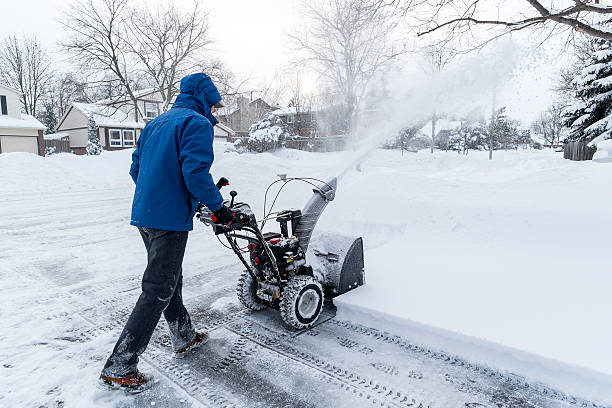
Snow blowers are classified by how many internal stages they use to move the snow from the ground to the discharge chute.
1. Single-Stage Snow Blowers
Single-stage blowers perform all clearing tasks in one motion. The spinning rubber or plastic auger scoops the snow, pulls the machine, and throws the snow out of the chute.
- Pros: Lightweight, affordable, excellent for paved surfaces, easy to store.
- Cons: Cannot handle deep snow (max 10–12 inches), auger contacts the ground.
- Best For: Light snowfall, paved suburban driveways, and decks.
2. Two-Stage Snow Blowers
Two-stage blowers are the most popular choice for general residential use, especially in regions with heavy winter weather.
- Stage One: A heavy-duty metal auger scoops up snow.
- Stage Two: The auger feeds the snow into an impeller (a high-speed fan), which powerfully blasts the snow out of the chute.
- Pros: Self-propelled, powerful enough for wet and icy snow, ideal for gravel/uneven surfaces, handles depths up to 18 inches.
- Cons: Heavier, higher maintenance, more expensive. (Requires engine maintenance).
- Best For: Moderate to heavy snowfall, long driveways, and gravel surfaces.
3. Three-Stage Snow Blowers
These models are built for extreme conditions, using a third accelerator stage located between the auger and the impeller. This accelerator rapidly shreds heavy, densely packed snow and ice before it reaches the fan, increasing throwing distance and working speed dramatically.
- Pros: Unmatched power, clears heavily compacted drifts quickly, exceptionally long throwing distance.
- Cons: Very large, expensive, usually unnecessary for standard residential use.
- Best For: Extreme blizzard zones, commercial properties, or very long farm driveways.
Step 3: Gas Power vs. Electric Convenience
Once you determine the necessary stage type, you must select the power source.
Gas Snow Blowers
Gas-powered engines (measured in cubic centimeters/CCs or horsepower/HP) deliver maximum performance and mobility. They are the only viable option for two- and three-stage models.
- The Advantage: Unlimited range, maximum power for wet snow, faster clearing speed.
- The Drawback: Noise, required maintenance (oil changes, spark plugs), fuel storage, and difficult cold starts.
Cordless Electric Snow Blowers (Battery-Powered)
Utilizing powerful lithium-ion batteries (typically 40V to 80V), these are typically single-stage units designed for efficiency and ease of use.
- The Advantage: Quiet operation, zero maintenance, instant push-button start, no emissions.
- The Drawback: Limited run time (30–60 minutes, depending on battery), less power in heavy/wet snow.
- Best For: Smaller paved driveways, eco-conscious users.
Corded Electric Snow Blowers
These are the lightest and most affordable options, relying on an extension cord.
- The Drawback: Range is severely limited by the length of your cord, only suitable for small patches of light snow.
Step 4: Key Specifications and Features
To fine-tune your selection, look at these important technical details:
1. Clearing Width and Intake Height
- Width: A wider clearing path (24 inches to 30+ inches) means fewer passes, cutting down your total clearing time.
- Intake Height: This measures how tall the snow blower housing is. If you regularly deal with drifts over 18 inches, ensure your machine has an adequate intake height to handle the volume.
2. Self-Propelled Drive Systems
For two- and three-stage models, self-propelled drive is standard and essential. Look for:
- Variable Speed Control: Allows you to slow down when pushing through deeper banks and speed up on lighter patches.
- Power Steering: Separate triggers or levers control the wheels independently, making it easy to pivot heavy machines at the end of the driveway. A critical feature for larger units.
3. Chute Control
The chute controls the direction the snow is thrown. High-end models offer remote electric chute rotation and pitch control located on the dashboard, allowing you to easily adjust direction without stopping the machine.
4. Added Comforts
Features like heated handgrips, bright LED headlights (crucial for clearing before sunrise or after dark), and electric key starts can significantly enhance your user experience, especially in harsh conditions.
Final Tip: Always Buy for the Worst-Case Scenario
When deciding between two models, always opt for the one that can handle slightly more snow than you typically receive. Snowfall is unpredictable, and having extra power and capability ensures that your snow blower won’t bog down when you need it most. By matching your property size, surface type, and climate to the right stage and power source, you are ready to choose the perfect snow blower that will serve you reliably for years to come.
 April Franke
  Leo Allen