
5 min read
926 words
Winter weather brings unique challenges for homeowners, and your roof is often the first line of defence against snow, ice, and freezing temperatures. Choosing the right roofing materials and accessories is crucial for longevity and peace of mind. This guide will explore how snow impacts roofs, the best roofing options for cold climates, and essential protective measures like coatings, snow guards, and ice and water shields.
Navigating Winter: How Snow and Freezing Temperatures Impact Your Roof
The beautiful white blanket of snow can hide significant threats to your home. The primary concerns include:
- Weight Load: Heavy, wet snow can exert immense pressure, testing your roof’s structural integrity.
- Ice Dams: When heat escapes through the roof, it melts snow, which then refreezes at the colder eaves, forming ice dams. These dams prevent melted snow from draining, forcing water under shingles and into your home.
- Freeze-Thaw Cycles: Repeated freezing and thawing can expand and contract materials, leading to cracks, shingle damage, and accelerated wear.
- Moisture Penetration: Snow melt can seep into small cracks or gaps, leading to leaks, rot, and mould issues within your attic and walls.
Choosing Your Winter Champion: What is the Best Type of Roof for Snow?
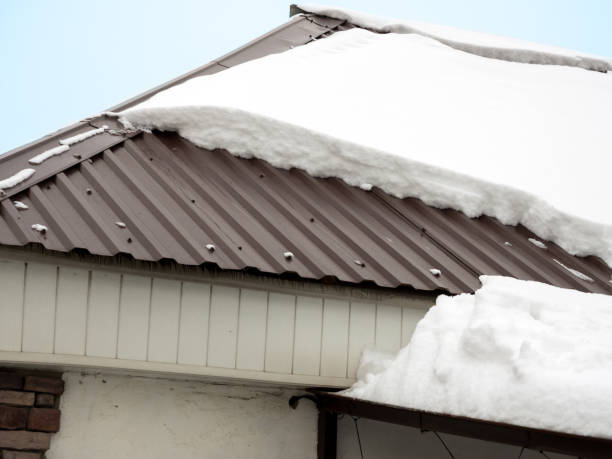
When it comes to handling snow, some roofing materials perform better than others:
- Metal Roofs: Often considered the best roof for snow, metal roofs excel due to their smooth, hard surface. Snow tends to slide off easily, preventing heavy build-up and reducing the risk of ice dams. They are also incredibly durable and can withstand significant snow loads.
- Asphalt Shingles: While common, asphalt shingles are less effective at shedding snow naturally. Their granular surface holds snow, which can increase the likelihood of ice dam formation. A steep roof pitch can help, but additional measures like ice and water shields are often essential.
- Slate and Tile Roofs: These are durable but can be very heavy, requiring robust structural support. Snow can accumulate, and the tiles themselves can be brittle in extreme cold, making them susceptible to damage from sliding ice or heavy loads.
Boosted Protection: The Role of Snow Roof Coatings
Snow roof coatings, often elastomeric or acrylic, can add an extra layer of protection, particularly beneficial for flatter or low-slope roofs where water ponding is a concern. These coatings create a seamless, waterproof membrane that helps:
- Seal Minor Cracks: Preventing moisture infiltration.
- Improve Reflectivity: Reducing heat absorption (though less relevant for snow shedding directly).
- Enhance Water Runoff: Some coatings can create a smoother surface that aids in water drainage once snow melts.
For steeply sloped metal roofs, the inherent smooth surface often makes additional “snow shedding” coatings less critical, but they can still contribute to overall weatherproofing.
Guarding Against Avalanches: Best Snow Guards for Metal Roofs
While metal roofs are great at shedding snow, this rapid release can be dangerous to people, landscaping, and property below. This is where snow guards for metal roofs become indispensable. The best snow guards typically fall into two categories:
- Pad-Style Snow Guards: These individual, often clear polycarbonate or metal, “pads” are installed across the roof surface. They work by creating friction, breaking up large sheets of snow and ice as they move, allowing for a slower, more controlled release.
- Pipe-Style (or Bar-Style) Snow Guards: These systems use continuous bars or pipes installed along the eaves. They create a solid barrier, holding the snow and ice on the roof until it melts, preventing sudden avalanches. These are generally considered more effective for heavy snow retention.
High-quality aluminum or stainless steel guards attached with non-penetrating clamps are ideal for preserving your metal roof warranty.
The Downside: What are the Cons of Snow Guards?
While beneficial, snow guards do have some drawbacks:
- Cost: Both the materials and professional installation can be a significant investment.
- Aesthetics: Some homeowners find the appearance of snow guards detracts from the roof’s clean lines.
- Increased Roof Load: By retaining snow, guards can increase the sustained weight load on your roof. Your roof structure must be designed to handle this additional, prolonged weight.
- Potential for Improper Installation: Poorly installed guards can damage the roof system or fail under heavy loads.
The Ultimate Defense: Should I Put an Ice and Water Shield on My Entire Metal Roof?
An ice and water shield is a self-adhering, waterproof membrane often made of rubberized asphalt. Standard building codes typically mandate its application along the eaves (usually 2-3 feet up from the edge), in valleys, and around penetrations (skylights, vents) in cold climates. This is where ice dams are most likely to form and cause issues.
For a properly installed, sloped metal roof, covering the entire roof deck with an ice and water shield is generally not a strict necessity for waterproofing, as the metal panels themselves form the primary waterproof barrier. However, there are compelling reasons to consider it:
- Enhanced Vapor Barrier: It provides an excellent secondary barrier against wind-driven rain and condensation, which can be a concern with metal roofs.
- Ultimate Protection: In regions with extreme snow and ice or on lower-pitched roofs, it offers unparalleled protection should any water ever breach the primary metal layer due to damage or extreme conditions.
- Noise Reduction: It can offer minor sound dampening against rain and hail.
While it adds to the cost, installing an ice and water shield across the entire deck provides maximum peace of mind and an extra layer of defense against even the most severe winter conditions, effectively creating a “double-roof” system against moisture. Always consult with a local roofing professional to determine the best approach for your specific climate and roof design.
 Carly
Carly  James Dingman