
6 min read
1199 words
Achieving a lush, healthy lawn is a goal for many homeowners, and while proper fertilization and watering play crucial roles, one of the most overlooked yet impactful practices is mowing at the correct height. It might seem like a minor detail, but setting your mower blades to the optimal height can significantly influence your lawn’s resilience, appearance, and overall health. Far from being a purely aesthetic choice, the right mowing height is a foundational element of sound lawn care, protecting your grass from stress, disease, and invasive weeds.
Mowing too short, often referred to as “scalping,” can be detrimental. It weakens the grass plants, forcing them to expend energy on regrowing their blades rather than developing strong, deep root systems. This leaves them vulnerable to drought, heat stress, pests, and diseases. Conversely, allowing your grass to grow excessively long before cutting can also lead to problems, such as matting, fungal issues, and a less desirable appearance. The key lies in finding that sweet spot, which isn’t a fixed measurement but rather a dynamic range influenced by several factors.
The golden rule of mowing is to never remove more than one-third of the grass blade’s total height at any single mowing. If your grass is 6 inches tall, you should only cut off a maximum of 2 inches, leaving it at 4 inches. This rule minimizes the shock to the plant, allowing it to recover quickly and continue photosynthesizing efficiently. Taller grass blades also mean more leaf surface area for photosynthesis, which translates to a more robust root system. Deeper roots enable your lawn to access water and nutrients from further down in the soil, making it more drought-tolerant and less reliant on frequent watering. Furthermore, a slightly taller canopy shades the soil, reducing water evaporation and suppressing the germination of weed seeds by blocking sunlight.
Factors Influencing Your Optimal Mowing Height
Determining the “best” height for your lawn isn’t a one-size-fits-all answer. It largely depends on your specific grass type, current environmental conditions, and the time of year. Understanding these variables is key to adapting your mowing strategy for a truly thriving lawn.
1. Grass Type: Different grass species have varying ideal heights based on their growth habits and biological needs.
- Cool-Season Grasses (e.g., Kentucky Bluegrass, Fescues, Perennial Ryegrass): These grasses thrive in cooler climates and generally prefer a longer cut.
- Recommended Range: 2.5 to 3.5 inches.
- Why: A taller blade helps these grasses develop deeper root systems, increasing their resilience to summer heat and drought. Cutting them too short can severely stress them.
- Warm-Season Grasses (e.g., Bermuda, Zoysia, St. Augustine, Centipede): These grasses flourish in warmer climates and can often tolerate a shorter cut, though still benefit from being on the higher end of their range.
- Bermuda Grass: 1 to 2 inches (can be cut shorter in specific applications like golf courses, but for home lawns, higher is healthier).
- Zoysia Grass: 1 to 2.5 inches.
- St. Augustine Grass: 2.5 to 4 inches (this grass type appreciates a higher cut due to its broader blades).
- Centipede Grass: 1.5 to 2.5 inches.
- Why: While some warm-season grasses can appear healthy when cut short, pushing them to their maximum recommended height within their range promotes better root development and overall vigor, especially during peak summer heat.
2. Time of Year and Environmental Conditions: The seasons and prevailing weather also dictate adjustments to your mowing height.
- Spring: As the grass emerges from dormancy, start with a slightly lower cut (but still adhering to the one-third rule). As it strengthens, gradually raise the blade to its ideal height for the growing season.
- Summer (Heat & Drought Stress): This is when a higher cut is most beneficial. Increase your mowing height by at least half an inch, or even a full inch, above your typical setting. The taller blades shade the soil, reducing water evaporation and keeping the root zone cooler. This helps the grass conserve moisture and reduces heat stress.
- Fall: As temperatures begin to drop, you can gradually lower the cutting height back to the lower end of your grass type’s recommended range for the final two or three mows of the season. This helps prevent matting and fungal diseases over winter, especially in cool-season grasses. However, avoid cutting too short right before winter dormancy, as the grass still needs some blade length for energy storage.
- Shady Areas: Grass growing in shady spots needs to be cut higher than grass in full sun. Taller blades maximize the surface area available for photosynthesis, compensating for the reduced light. Aim for the top end of your grass type’s recommended range, or even slightly above it, in heavily shaded areas.
Practical Steps for Setting Your Mower and Maintaining Health
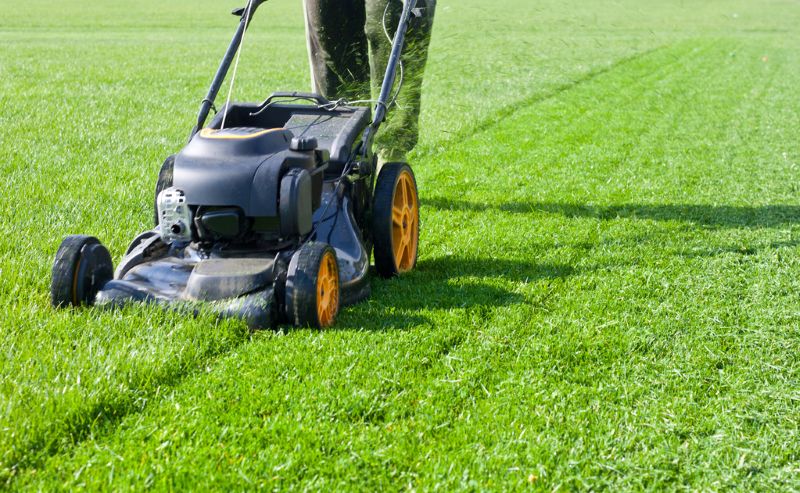
Implementing the correct mowing height requires a few practical considerations to ensure your lawn benefits fully.
1. Accurately Set Your Mower Blade Height: Don’t rely solely on the numerical settings on your mower, as these can vary between models and may not accurately reflect the actual cutting height. Instead, measure the distance from the ground to the bottom edge of your mower’s cutting deck (or the blade itself if it’s horizontal and you’re careful). Better yet, mow a small strip, then measure the height of the cut grass with a ruler. Adjust as needed until you hit your target height. Always ensure your mower is on a flat, hard surface when taking measurements for accuracy.
2. Mow Regularly and Consistently: Adhere to the one-third rule by mowing frequently enough so that you never have to remove more than one-third of the blade. This might mean mowing every 5-7 days during peak growth periods, and less frequently during slower growth phases (like during a drought or in cooler temperatures). Consistent mowing prevents excessive stress on the grass and promotes uniform growth.
3. Keep Your Mower Blades Sharp: Dull blades tear and rip the grass blades rather than cutting them cleanly. This leaves ragged edges that turn brown, making the lawn look unhealthy and providing open wounds for disease pathogens to enter. Sharpen your blades at least twice a season, or more frequently if you notice your grass tips browning after a mow. A clean cut allows the grass to heal quickly and grow vigorously.
4. Mulch Your Clippings: If you’re adhering to the one-third rule, the clippings will be short enough to decompose quickly and return valuable nutrients (nitrogen, phosphorus, potassium) back into the soil. This acts as a natural fertilizer, reducing your reliance on synthetic products and improving soil health. Only bag clippings if they are excessively long or if you are dealing with a significant weed problem that has gone to seed.
5. Observe and Adapt: Your lawn is constantly communicating its needs. Pay attention to its color, density, and overall vigor. If you notice signs of stress (wilting, browning tips, thinning), consider raising your mowing height, even if it’s slightly outside your typical range, as a temporary measure. Adjusting your mowing height is an ongoing process that responds to the dynamic needs of your lawn and its environment.
By understanding the science behind mowing height and applying these practical tips, you’ll be well on your way to cultivating a healthier, more resilient, and visually appealing lawn. It’s a simple change that yields significant, long-term benefits for the vitality of your turf.
 Carly
Carly  Leo Allen
  Ananya