
5 min read
875 words
Navigating the journey to parenthood can sometimes present unexpected paths. For many individuals and couples, In Vitro Fertilization (IVF) has become a beacon of hope, offering a scientifically advanced solution to overcome infertility challenges. If you’re considering IVF or simply curious about this transformative procedure, this guide is designed to provide you with clear, accessible information.
What Exactly is In Vitro Fertilization (IVF)?
In simpler terms, IVF means “fertilization in glass.” It’s a sophisticated assisted reproductive technology (ART) where a woman’s egg is combined with sperm outside of the body, in a laboratory dish. The resulting embryo(s) are then transferred into the uterus with the hope of a successful pregnancy.
IVF is not a single procedure but rather a process involving several distinct steps. Each stage is carefully managed by fertility specialists to maximize the chances of conception.
Who Can Benefit from IVF?
IVF can be a viable option for a wide range of individuals and couples facing fertility issues. This includes, but is not limited to:
- Women with Ovulation Disorders: If a woman has irregular or absent ovulation, IVF can bypass the need for natural ovulation.
- Fallopian Tube Blockages or Damage: When fallopian tubes are blocked, damaged, or absent, IVF allows fertilization to occur outside the tubes, and the embryo is placed directly into the uterus.
- Endometriosis: This condition can affect fertility, and IVF can offer a successful treatment pathway.
- Male Factor Infertility: This encompasses low sperm count, poor sperm motility, or abnormal sperm morphology. Techniques like Intracytoplasmic Sperm Injection (ICSI), often used in conjunction with IVF, can assist fertilization.
- Unexplained Infertility: In cases where the cause of infertility is not readily identifiable, IVF often proves to be an effective solution.
- Genetic Disorders: Preimplantation Genetic Testing (PGT) can be performed on embryos created through IVF to screen for specific genetic abnormalities before implantation.
- Individuals/Couples Preserving Fertility: IVF is crucial for fertility preservation before undergoing treatments like chemotherapy or radiation, or for social reasons.
The In Vitro Fertilization Process: A Step-by-Step Overview
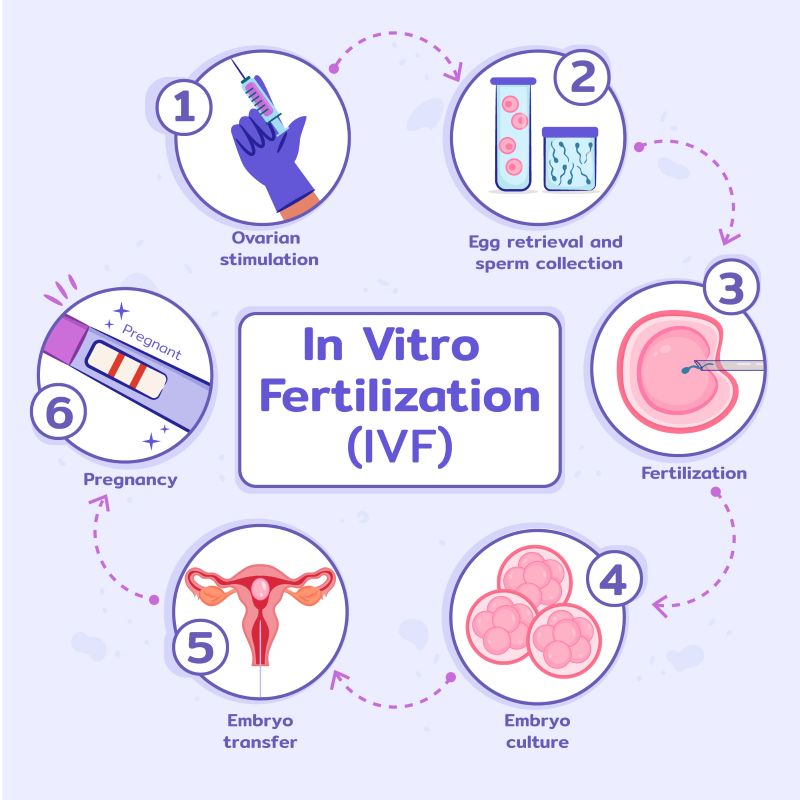
While individual treatment plans may vary, the core IVF process generally involves these key stages:
- Ovarian Stimulation: Unlike a natural cycle where usually only one egg matures, medications (gonadotropins) are administered to stimulate the ovaries to produce multiple mature eggs. This requires close monitoring through ultrasounds and blood tests.
- Egg Retrieval: Once the eggs are mature, a minor surgical procedure called transvaginal ultrasound aspiration is performed. Under sedation or anesthesia, a thin needle guided by ultrasound is used to retrieve the eggs from the follicles in the ovaries.
- Sperm Collection and Preparation: On the same day as egg retrieval, a semen sample is collected from the male partner or a sperm donor. The sperm is then processed in the lab to select the healthiest and most motile sperm.
- Fertilization: In the laboratory, the retrieved eggs are combined with the prepared sperm. Fertilization can occur through standard IVF (where sperm are placed in the dish with the eggs) or ICSI (where a single sperm is injected directly into each egg).
- Embryo Culture: Fertilized eggs develop into embryos. These embryos are cultured in the laboratory for 3 to 5 days. During this time, embryologists monitor their growth and development.
- Embryo Transfer: Once the embryos reach the appropriate stage, one or more healthy embryos are selected and transferred into the woman’s uterus. This is a relatively simple and usually painless procedure, similar to a Pap smear.
- Pregnancy Test: Approximately 9-14 days after the embryo transfer, a blood test is performed to determine if pregnancy has occurred.
What Factors Influence IVF Success Rates?
Several factors can influence the success rates of IVF. These include:
- Age: A woman’s age is a significant factor, as egg quality and quantity generally decline with age.
- Cause of Infertility: The underlying reason for infertility can impact the likelihood of success.
- Embryo Quality: The health and developmental stage of the embryos play a crucial role.
- Lifestyle Factors: Factors like smoking, excessive alcohol consumption, and being significantly overweight or underweight can affect outcomes.
- Clinic Expertise: The experience and success rates of the fertility clinic and its medical team are also important considerations.
Choosing the Right Fertility Clinic is Key
When embarking on an In Vitro Fertilization journey, selecting a reputable fertility clinic is paramount. Look for clinics with:
- Experienced and board-certified reproductive endocrinologists.
- Accredited laboratories with advanced technology.
- High success rates, which are often publicly available.
- A compassionate and supportive care team.
- Clear communication and transparent pricing.
The Emotional and Financial Considerations of IVF
It’s important to acknowledge that In Vitro Fertilization can be both emotionally and financially demanding. The process can involve significant stress, anxiety, and hope. Open communication with your partner, support networks, and your fertility team is vital. Financially, IVF can be a substantial investment, and it’s advisable to discuss costs, insurance coverage, and financing options thoroughly.
Your Path Forward
In Vitro Fertilization represents a remarkable advancement in reproductive medicine, offering hope to many on their journey to build a family. While it involves a structured process and careful considerations, understanding each step can empower you to make informed decisions. If you are considering IVF, the best next step is to consult with a fertility specialist who can assess your individual situation and discuss the most appropriate treatment options for you.
 Emma Lee Scott
  Lisa
Lisa